Ford Galaxy / Ford S-MAX. Manual - part 963
 

  Index      Ford     Ford Galaxy / Ford S-MAX - service repair manual 2006 year


Search            


Content   ..  961  962  963  964   ..


Ford Galaxy / Ford S-MAX. Manual - part 963


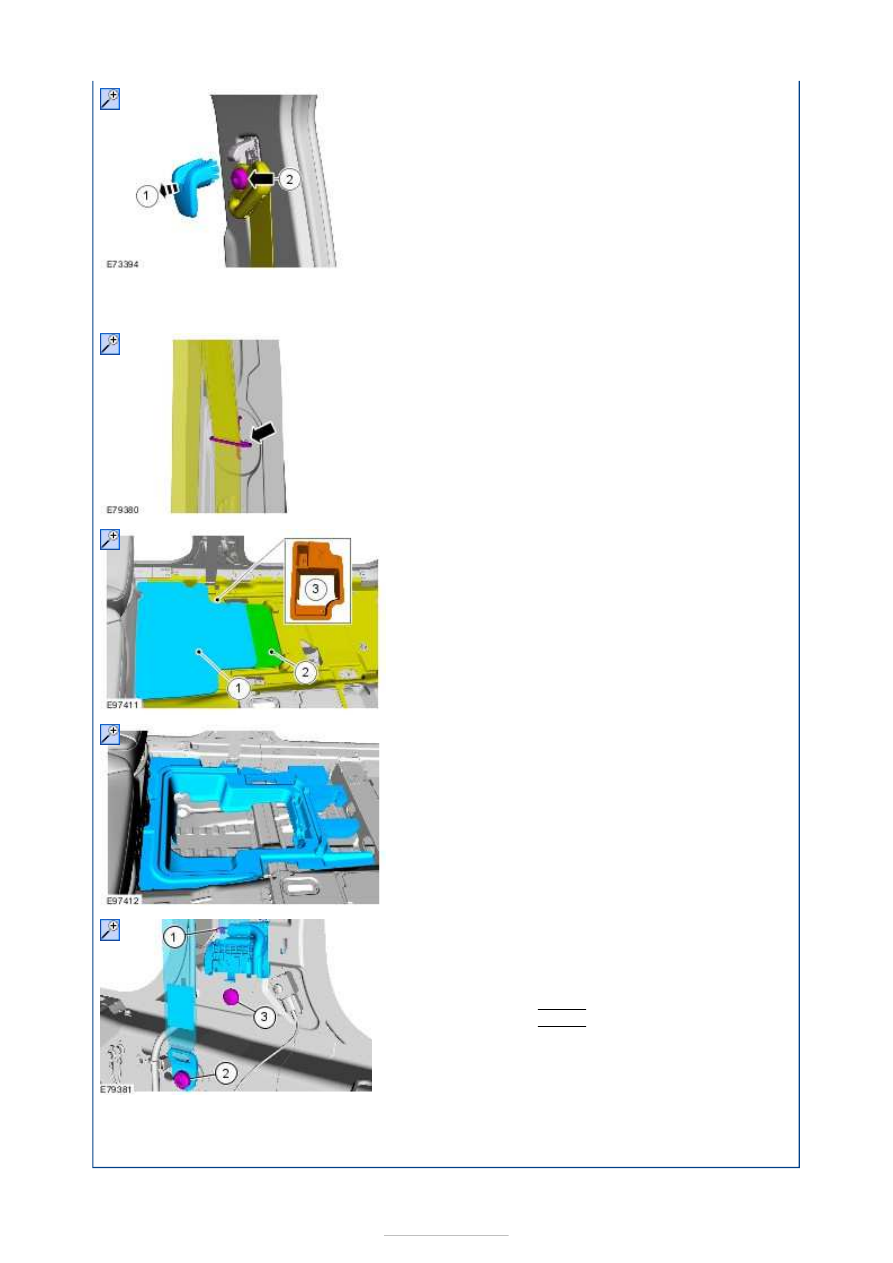
Installation 

5.  

6.  

7.  

8.

NOTE: Note the position of the component 
before removal. 
NOTE: Make sure that this component is 
installed to the noted removal position. 

2. Torque: 35 Nm 
3. Torque: 35 Nm 

1. To install, reverse the removal procedure. 


Supplemental Restraint System - Air Bag 
and Safety Belt Pretensioner 
Supplemental Restraint System (SRS)

S-MAX/Galaxy 2006.5 (02/2006-)


Print


Description and Operation 

System overview 


Description 

Clockspring 

Driver air bag module 

Passenger air bag module 

Passenger air bag deactivation (PAD) switch 

Restraints control module (RCM) 

Driver lower air bag module 

Item

1

2

3

4

5

6


Part Number

-

-

-

-

-

-


Description 

Crash sensor 

Side air bag module 

Side air curtain module 

Side impact sensor 

System Structure 

The following components form part of the supplemental restraint system (SRS): 

RCM  
Single-stage driver and passenger air bag modules  
Driver lower air bag module  
Side air bag modules  
Side air curtain modules  
Crash sensor  
Side impact sensors  
Clockspring  
Front safety belt retractors and pretensioners  
Rear safety belt retractors  
Air bag warning indicator  
Passenger air bag deactivation (PAD) switch (optional) 

RCM 

The RCM is located under the floor console, near to the gearshift lever. Installation direction 

Item

1

2

3

4


Part Number

-

-

-

-

on the module are to make sure it is aligned correctly. 

Electronic sensors are incorporated into the RCM; these measure the vehicle 
acceleration/deceleration in the event of a collision. The calculated value is evaluated by 
the RCM to determine the severity of the impact. 

The RCM compares the values it receives from the crash sensor, side impact sensors and 
the internal electronic sensors. If the deceleration, due to a frontal or side impact, exceeds 
the stored value the RCM will trigger the air bag modules and the safety belt pretensioners 
as required. 

If the vehicle battery is destroyed in the collision, a voltage hold circuit in the RCM will still 
enable the air bag modules to be triggered up to 150 ms after the start of the impact. 

If a system fault is detected by the RCM, the air bag warning lamp is illuminated. The fault 
can be located by carrying out a diagnostics check using the Worldwide Diagnostic System 
(WDS). 

The RCM can be used again after a collision, provided the RCM is not physically damaged 
and it passes a self-test. 

Crash Sensor  

The crash sensor is installed at the front of the vehicle, behind the radiator grille. Data from 
the crash sensor is evaluated by the RCM to assess the severity of a frontal impact. The 
crash sensor transmits digitally encoded acceleration information to the RCM. 

Power is supplied to the crash sensor by the RCM. If a crash sensor fails, the RCM stores a 
Diagnostic Trouble Code (DTC). 

Continued use of the crash sensor is permissible provided it has not been physically 
damaged and it passes a self-test. 

The external shape of the crash sensor prevents it from being installed incorrectly. 

Side Impact Sensors 

The side impact sensors are located at the bottom of the B-pillars and transmit digitally 
encoded acceleration information to the RCM. 


Content   ..  961  962  963  964   ..