Ford Explorer Sport (2003 year). Manual - part 16
 

  Index      Ford     Ford Explorer Sport - service manual 2003 year in english


Search            


Content   ..  14  15  16  17   ..


Ford Explorer Sport (2003 year). Manual - part 16


Tip Slide

Do not drive the vehicle with the tip slide seat unlatched. This
may result in loss of vehicle control and severe personal injury.

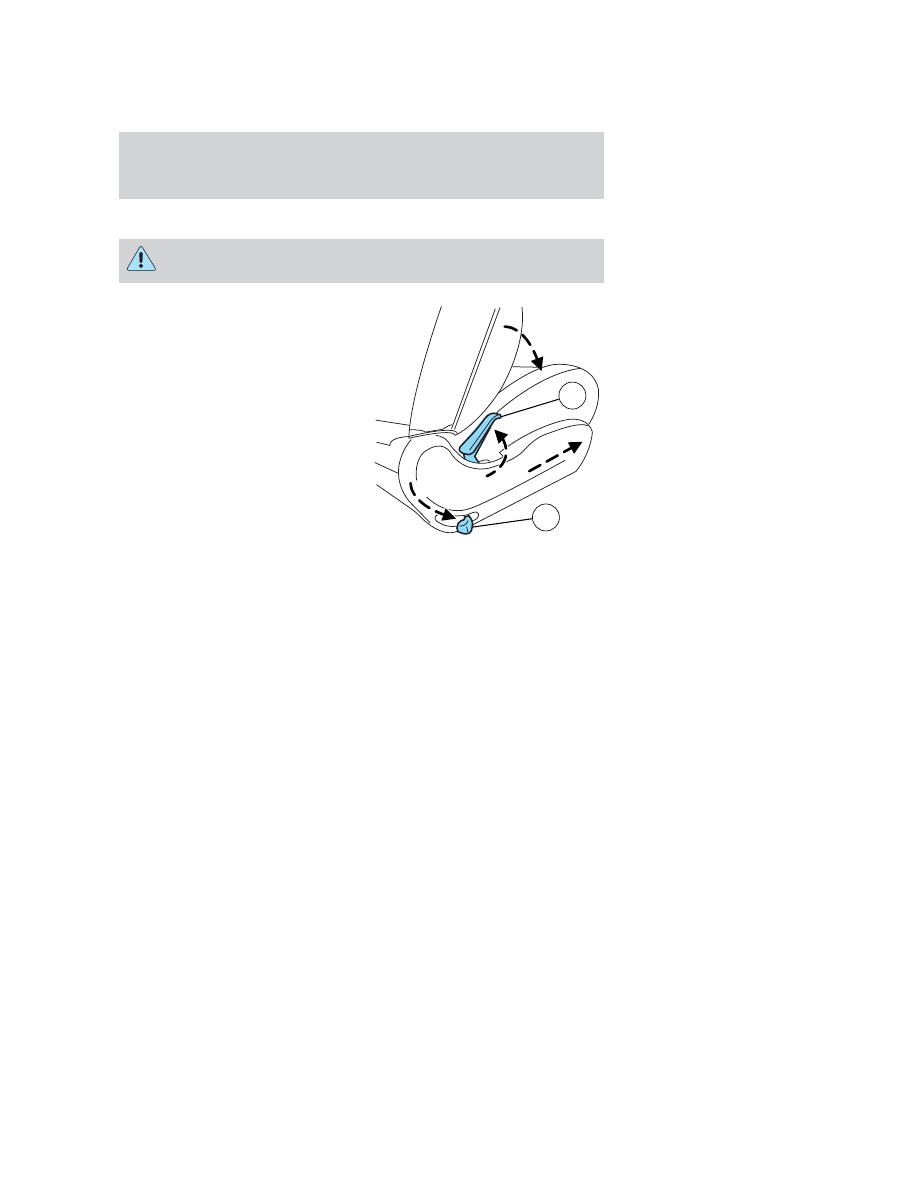
To operate the feature:

1. Lift the seatback control (1) on
the side of the seat or push forward
control (2). The seatback will tilt
forward.

2. Push the seatback to move the
seat forward.

3. Reposition the seatback to the
desired position and pull control (1)
or push control (2) to lock/latch the
seat. The seatback and seat track
will not return to the original
position automatically and must be
adjusted.

Once the tip slide feature has been activated, the seat will not re-latch
until the seatback is moved into the latched upright position by lifting
the seatback control (1). This will engage the seat track locking levers.

The tip slide feature can also be activated from the rear seat position.
Push the lower control on the rear outboard side of the front seat (2)
with your foot and follow steps 2 and 3 listed previously.

REAR SEATS

Adjustable rear head restraints

Lift the head restraint so that it is located directly or as close as possible
behind your head.

1

2

Seating and Safety Restraints

66

Push or pull the head restraint to
the desired position.

Folding rear seats

The rear seat adjustable head restraints should be placed in the full
down position before folding the seat back down.

1. Pull the release up to unlatch the
seatback.

2. While holding the latch handle,
pull the seat cushion up and flip it
forward. The seatback will follow
and fold into the load floor position.

Seating and Safety Restraints

67

3. Press down on the top outboard
area of the seatback until a click is
heard. When you hear the click, the
seat is latched.

To return the seat to the upright
position:
• Pull the release handle up to

unlatch the seat.

• Flip the seatback up until the

seatback until a click is heard.
When you hear the click, the seat
is latched.

SAFETY RESTRAINTS

Safety restraints precautions

Always drive and ride with your seatback upright and the lap
belt snug and low across the hips.

To reduce the risk of injury, make sure children sit where they
can be properly restrained.

Seating and Safety Restraints

68

Never let a passenger hold a child on his or her lap while the
vehicle is moving. The passenger cannot protect the child from

injury in a collision.

All occupants of the vehicle, including the driver, should always
properly wear their safety belts, even when an air bag (SRS) is

provided.

It is extremely dangerous to ride in a cargo area, inside or
outside of a vehicle. In a collision, people riding in these areas

are more likely to be seriously injured or killed. Do not allow people to
ride in any area of your vehicle that is not equipped with seats and
safety belts. Be sure everyone in your vehicle is in a seat and using a
safety belt properly.

In a rollover crash, an unbelted person is significantly more likely
to die than a person wearing a safety belt.

Each seating position in your vehicle has a specific safety belt
assembly which is made up of one buckle and one tongue that

are designed to be used as a pair. 1) Use the shoulder belt on the
outside shoulder only. Never wear the shoulder belt under the arm. 2)
Never swing the safety belt around your neck over the inside shoulder.
3) Never use a single belt for more than one person.

Always transport children 12 years old and under in the back
seat and always properly use appropriate child restraints.

Safety belts and seats can become hot in a vehicle that has been
closed up in sunny weather; they could burn a small child. Check

seat covers and buckles before you place a child anywhere near them.

Energy Management Feature
• This vehicle has a safety belt system with an energy management

feature at the front seating positions to help further reduce the risk of
injury in the event of a head-on collision.

Seating and Safety Restraints

69


Content   ..  14  15  16  17   ..