Content .. 1906 1907 1908 1909 ..
Dodge Ram Truck 1500-2500-3500. Manual - part 1908
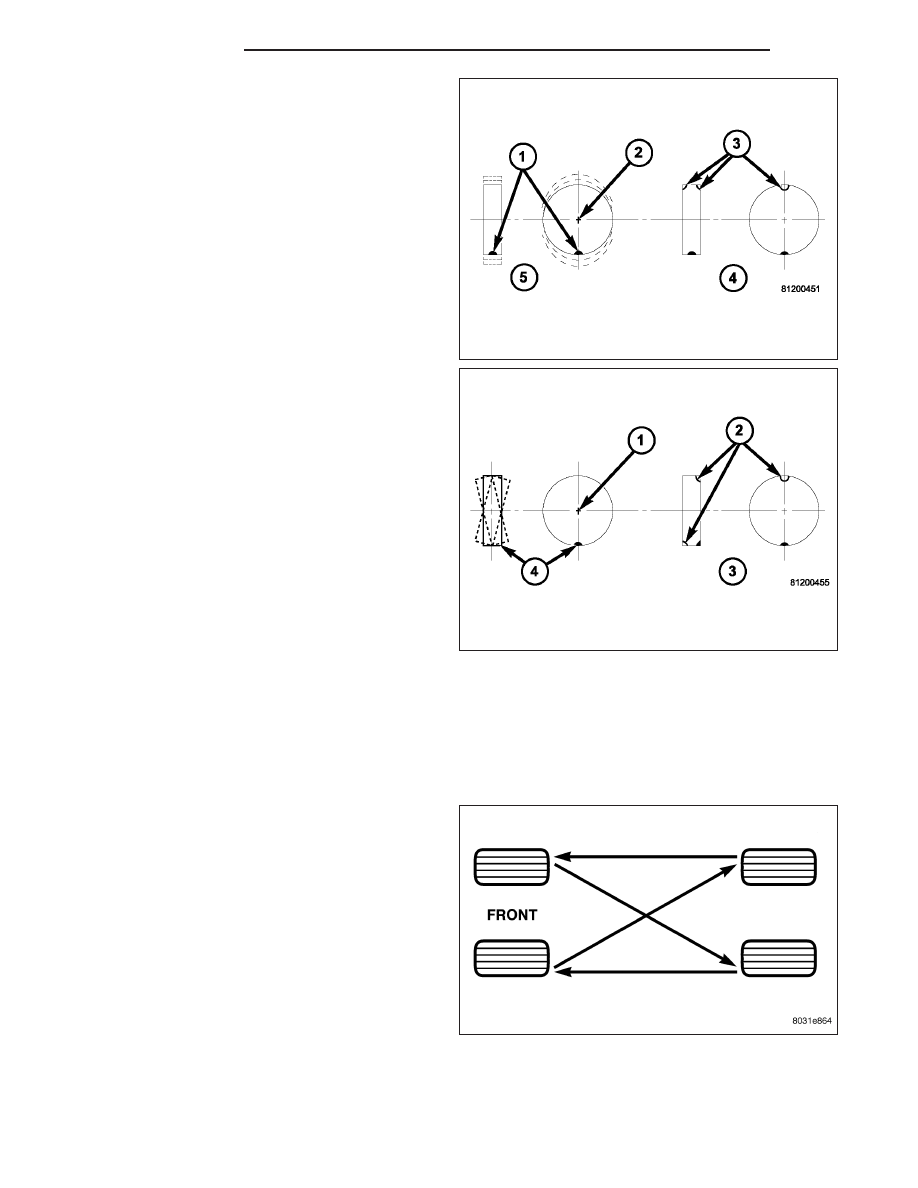
For static balancing, find the location of the heavy
spot (1) causing the imbalance (5). Counter balance
wheel directly opposite the heavy spot. Determine
weight required to counter balance the area of imbal-
ance (4). Place half of this weight on the inner rim
flange (3) and the other half on the outer rim flange
(3).
For dynamic balancing (3), the balancing equipment is
designed to locate the amount of weight to be applied
to both the inner and outer rim flange (2).
TIRE ROTATION
Tires on the front and rear axles operate at different loads and perform different steering, driving, and braking func-
tions. For these reasons, the tires wear at unequal rates. They may also develop irregular wear patterns. These
effects can be reduced by rotating the tires according to the maintenance schedule in the Owners Manual. This will
improve tread life, traction and maintain a smooth quiet ride.
The recommended method of tire rotation for single
rear wheel is. Other methods can be used, but may
not provide the same tire longevity benefits.
22 - 6
TIRES/WHEELS
DR/DH