AHA/ACC SCIENTIFIC STATEMENT (2024) - page 5
JACC VOL.
-, NO. -, 2024
Jneid et al
13
-, 2024:---
2024 ACC/AHA Valvular and Structural Heart Disease Measures
18. Nishimura RA, O’Gara PT, Bavaria JE, et al. 2019
performance indicators for cardiovascular disease. Int J
term follow-up multicenter study. J Am Coll Cardiol.
AATS/ACC/ASE/SCAI/STS expert consensus systems of
Qual Health Care. 1998;10:247-260.
2009;54:1961-1968.
care document: a proposal to optimize care for patients
29. Thomas RJ, Balady G, Banka G, et al. 2018 ACC/
44. Van de Werf F, Brueckmann M, Connolly SJ, et al.
with valvular heart disease: a joint report of the
AHA clinical performance and quality measures for
A comparison of dabigatran etexilate with warfarin in
American Association for Thoracic Surgery, American
cardiac rehabilitation: a report of the American College
patients with mechanical heart valves: the randomized,
College of Cardiology, American Society of Echocardi-
of Cardiology/American Heart Association Task Force
phase II study to evaluate the safety and pharmacoki-
ography, Society for Cardiovascular Angiography and
on Performance Measures. Circ Cardiovasc Qual Out-
netics of oral dabigatran etexilate in patients after
Interventions, and Society of Thoracic Surgeons. J Am
comes. 2018;11:e000037.
heart valve replacement (RE-ALIGN). Am Heart J.
Coll Cardiol. 2019;73:2609-2635.
2012;163:931-937.e931.
30. Chan KL, Teo K, Dumesnil JG, et al. Effect of lipid
19. January CT, Wann LS, Calkins H, et al. 2019 AHA/
45. Tiede DJ, Nishimura RA, Gastineau DA, et al.
lowering with rosuvastatin on progression of aortic
ACC/HRS focused update of the 2014 AHA/ACC/HRS
Modern management of prosthetic valve anti-
stenosis: results of the aortic stenosis progression
guideline for the management of patients with atrial
coagulation. Mayo Clin Proc. 1998;73:665-680.
observation: measuring effects of rosuvastatin
fibrillation: a report of the American College of Cardi-
(ASTRONOMER) trial. Circulation. 2010;121:306-314.
ology/American Heart Association Task Force on Clin-
46. Edmunds LH Jr. Thrombotic and bleeding compli-
31. Cowell SJ, Newby DE, Prescott RJ, et al.
ical Practice Guidelines and the Heart Rhythm Society.
cations of prosthetic heart valves. Ann Thorac Surg.
A randomized trial of intensive lipid-lowering therapy
J Am Coll Cardiol. 2019;74:104-132.
1987;44:430-445.
in calcific aortic stenosis. N Engl J Med. 2005;352:
20. Casey DE Jr, Thomas RJ, Bhalla V, et al. 2019 AHA/
2389-2397.
47. Freeman RV, Otto CM. Spectrum of calcific aortic
ACC clinical performance and quality measures for
valve disease: pathogenesis, disease progression, and
32. Heidenreich PA, Solis P, Estes NAM 3rd, et al. 2016
adults with high blood pressure: a report of the
treatment strategies. Circulation.
2005;111:3316-
ACC/AHA clinical performance and quality measures
American College of Cardiology/American Heart Asso-
3326.
for adults with atrial fibrillation or atrial flutter: a
ciation Task Force on Performance Measures. J Am Coll
report of the American College of Cardiology/American
48. Horstkotte D, Loogen F. The natural history of
Cardiol. 2019;74:2661-2706.
Heart Association Task Force on Performance Mea-
aortic valve stenosis. Eur Heart J. 1988;9(suppl E):57-
21. Powers WJ, Rabinstein AA, Ackerson T, et al.
sures. J Am Coll Cardiol. 2016;68:525-568.
64.
Guidelines for the early management of patients with
33. Cannegieter SC, Rosendaal FR, Briët E. Thrombo-
49. Kvidal P, Bergström R, Hörte LG, et al. Observed
acute ischemic stroke:
2019
update to the
2018
embolic and bleeding complications in patients with
and relative survival after aortic valve replacement.
guidelines for the early management of acute ischemic
mechanical heart valve prostheses. Circulation.
J Am Coll Cardiol. 2000;35:747-756.
stroke: a guideline for healthcare professionals from
1994;89:635-641.
the American Heart Association/American Stroke As-
50. Murphy ES, Lawson RM, Starr A, et al. Severe aortic
sociation. Stroke. 2019;50:e344-e418.
34. Cannegieter SC, Rosendaal FR, Wintzen AR, et al.
stenosis in patients 60 years of age or older: left
Optimal oral anticoagulant therapy in patients with
ventricular function and 10-year survival after valve
22. Powers WJ, Rabinstein AA, Ackerson T, et al. 2018
mechanical heart valves. N Engl J Med. 1995;333:11-17.
replacement. Circulation. 1981;64:II184-II188.
guidelines for the early management of patients with
acute ischemic stroke: a guideline for healthcare pro-
35. Sun JCJ, Davidson MJ, Lamy A, et al. Antith-
51. Rosenhek R, Zilberszac R, Schemper M, et al. Nat-
fessionals from the American Heart Association/
rombotic management of patients with prosthetic
ural history of very severe aortic stenosis. Circulation.
American Stroke Association. Stroke. 2018;49:e46-
heart valves: current evidence and future trends.
2010;121:151-156.
e99.
Lancet. 2009;374:565-576.
52. O’Brien SM, Shahian DM, Filardo G, et al. The So-
36. Eikelboom JW, Connolly SJ, Brueckmann M, et al.
23. Hiratzka LF, Creager MA, Isselbacher EM, et al.
ciety of Thoracic Surgeons 2008 cardiac surgery risk
Dabigatran versus warfarin in patients with mechanical
Surgery for aortic dilatation in patients with bicuspid
models: part 2-isolated valve surgery. Ann Thorac
heart valves. N Engl J Med. 2013;369:1206-1214.
aortic valves: a statement of clarification from the
Surg. 2009;88:S23-S42.
American College of Cardiology/American Heart Asso-
37. Lopez-Marco A, Miller H, Youhana A, et al. Low-
53. Baumgartner H, Hung J, Bermejo J, et al. Echo-
ciation Task Force on Clinical Practice Guidelines. J Am
flow low-gradient aortic stenosis: surgical outcomes
cardiographic assessment of valve stenosis: EAE/ASE
Coll Cardiol. 2016;67:724-731.
and mid-term results after isolated aortic valve
recommendations for clinical practice. Eur J Echo-
replacement. Eur J Cardiothorac Surg. 2016;49:1685-
24. Powers WJ, Derdeyn CP, Biller J, et al.
2015
cardiogr. 2009;10:1-25.
1690.
American Heart Association/American Stroke Associa-
54. Makkar RR, Fontana GP, Jilaihawi H, et al. Trans-
tion focused update of the 2013 guidelines for the
38. Rusinaru D, Bohbot Y, Ringle A, et al. Impact of low
catheter aortic-valve replacement for inoperable se-
early management of patients with acute ischemic
stroke volume on mortality in patients with severe
vere aortic stenosis. N Engl J Med. 2012;366:1696-
stroke regarding endovascular treatment: a guideline
aortic stenosis and preserved left ventricular ejection
1704.
for healthcare professionals from the American Heart
fraction. Eur Heart J. 2018;39:1992-1999.
Association/American Stroke Association. Stroke.
55. Kelly TA, Rothbart RM, Cooper CM, et al. Com-
39. Kapadia SR, Leon MB, Makkar RR, et al. 5-Year
2015;46:3020-3035.
parison of outcome of asymptomatic to symptomatic
outcomes of transcatheter aortic valve replacement
patients older than 20 years of age with valvular aortic
25. January CT, Wann LS, Alpert JS, et al. 2014 AHA/
compared with standard treatment for patients with
stenosis. Am J Cardiol. 1988;61:123-130.
ACC/HRS guideline for the management of patients
inoperable aortic stenosis (PARTNER 1): a randomised
with atrial fibrillation: a report of the American College
controlled trial. Lancet. 2015;385:2485-2491.
56. Otto CM, Pearlman AS. Doppler echocardiography
of Cardiology/American Heart Association Task Force
40. Leon MB, Smith CR, Mack M, et al. Transcatheter
in adults with symptomatic aortic stenosis. Diagnostic
on Practice Guidelines and the Heart Rhythm Society.
aortic-valve implantation for aortic stenosis in patients
utility and cost-effectiveness. Arch Intern Med.
J Am Coll Cardiol. 2014;64:e1-e76.
who cannot undergo surgery. N Engl J Med. 2010;363:
1988;148:2553-2560.
26. Kernan WN, Ovbiagele B, Black HR, et al. Guide-
1597-1607.
57. Pellikka PA, Nishimura RA, Bailey KR, et al. The
lines for the prevention of stroke in patients with
41. Eleid MF, Padang R, Al-Hijji M, et al. Hemodynamic
natural history of adults with asymptomatic, hemody-
stroke and transient ischemic attack: a guideline for
response in low-flow low-gradient aortic stenosis with
namically significant aortic stenosis. J Am Coll Cardiol.
healthcare professionals from the American Heart As-
preserved ejection fraction after TAVR. J Am Coll Car-
1990;15:1012-1017.
sociation/American
Stroke
Association.
Stroke.
diol. 2019;73:1731-1732.
58. Turina J, Hess O, Sepulcri F, et al. Spontaneous
2014;45:2160-2236.
42. Zheng Q, Djohan AH, Lim E, et al. Effects of aortic
course of aortic valve disease. Eur Heart J. 1987;8:471-
27. O’Gara PT, Messe SR, Tuzcu EM, et al. Percuta-
valve replacement on severe aortic stenosis and pre-
483.
neous device closure of patent foramen ovale for
served systolic function: systematic review and
59. Anjan VY, Herrmann HC, Pibarot P, et al. Evaluation
secondary stroke prevention. Circulation. 2009;119:
network meta-analysis. Sci Rep. 2017;7:5092.
of flow after transcatheter aortic valve replacement in
2743-2747.
43. Tribouilloy C, Grigioni F, Avierinos JF, et al. Sur-
patients with low-flow aortic stenosis: a secondary
28. Normand SL, McNeil BJ, Peterson LE, et al. Eliciting
vival implication of left ventricular end-systolic diam-
analysis of the PARTNER randomized clinical trial.
expert opinion using the Delphi technique: identifying
eter in mitral regurgitation due to flail leaflets a long-
JAMA Cardiol. 2016;1:584-592.
14
Jneid et al
JACC VOL.
-, NO. -, 2024
2024 ACC/AHA Valvular and Structural Heart Disease Measures
-, 2024:---
60. Fougères E, Tribouilloy C, Monchi M, et al. Out-
chronic aortic regurgitation. Circulation. 1988;78:1108-
90. Cormier B, Vahanian A, Luxereau P, et al. Should
comes of pseudo-severe aortic stenosis under conser-
1120.
asymptomatic or mildly symptomatic aortic regurgita-
vative treatment. Eur Heart J. 2012;33:2426-2433.
tion be operated on? Z Kardiol. 1986;75(Suppl 2):141-
75. Carabello BA, Williams H, Gash AK, et al. Hemo-
145.
61. Herrmann HC, Pibarot P, Hueter I, et al. Predictors
dynamic predictors of outcome in patients undergoing
of mortality and outcomes of therapy in low-flow se-
valve replacement. Circulation. 1986;74:1309-1316.
91. Bonow RO. Chronic mitral regurgitation and aortic
vere aortic stenosis: a Placement of Aortic Trans-
regurgitation: have indications for surgery changed?
76. Cunha CL, Giuliani ER, Fuster V, et al. Preoperative
catheter Valves (PARTNER) trial analysis. Circulation.
J Am Coll Cardiol. 2013;61:693-701.
M-mode echocardiography as a predictor of surgical
2013;127:2316-2326.
results in chronic aortic insufficiency. J Thorac Car-
92. Ghoreishi M, Evans CF, DeFilippi CR, et al. Pulmo-
62. Monin J-L, Quéré J-P, Monchi M, et al. Low-
diovasc Surg. 1980;79:256-265.
nary hypertension adversely affects short- and long-
gradient aortic stenosis: operative risk stratification
77. Daniel WG, Hood WP Jr, Siart A, et al. Chronic aortic
term survival after mitral valve operation for mitral
and predictors for long-term outcome: a multicenter
regurgitation: reassessment of the prognostic value of
regurgitation: implications for timing of surgery.
study using dobutamine stress hemodynamics. Circu-
preoperative left ventricular end-systolic dimension
J Thorac Cardiovasc Surg. 2011;142:1439-1452.
lation. 2003;108:319-324.
and fractional shortening. Circulation. 1985;71:669-
93. Grigioni F, Tribouilloy C, Avierinos JF, et al. Out-
680.
comes in mitral regurgitation due to flail leaflets a
63. Nishimura RA, Grantham JA, Connolly HM, et al.
Low-output, low-gradient aortic stenosis in patients
78. Forman R, Firth BG, Barnard MS. Prognostic sig-
multicenter European study. J Am Coll Cardiol Img.
with depressed left ventricular systolic function: the
nificance of preoperative left ventricular ejection
2008;1:133-141.
clinical utility of the dobutamine challenge in the
fraction and valve lesion in patients with aortic valve
94. Kang D-H, Kim JH, Rim JH, et al. Comparison of
catheterization laboratory. Circulation. 2002;106:809-
replacement. Am J Cardiol. 1980;45:1120-1125.
early surgery versus conventional treatment in
813.
asymptomatic severe mitral regurgitation. Circulation.
79. Greves J, Rahimtoola SH, McAnulty JH, et al. Pre-
2009;119:797-804.
64. O’Sullivan CJ, Englberger L, Hosek N, et al. Clinical
operative criteria predictive of late survival following
outcomes and revascularization strategies in patients
valve replacement for severe aortic regurgitation. Am
95. Kang D-H, Park S-J, Sun BJ, et al. Early surgery
with low-flow, low-gradient severe aortic valve ste-
Heart J. 1981;101:300-308.
versus conventional treatment for asymptomatic se-
nosis according to the assigned treatment modality.
vere mitral regurgitation: a propensity analysis. J Am
80. Henry WL, Bonow RO, Borer JS, et al. Observations
J Am Coll Cardiol Intv. 2015;8:704-717.
Coll Cardiol. 2014;63:2398-2407.
on the optimum time for operative intervention for
65. Tribouilloy C, Lévy F, Rusinaru D, et al. Outcome
aortic regurgitation. I. Evaluation of the results of
96. Quiñones MA, Douglas PS, Foster E, et al. ACC/
after aortic valve replacement for low-flow/low-
aortic valve replacement in symptomatic patients.
AHA clinical competence statement on echocardiog-
gradient aortic stenosis without contractile reserve
Circulation. 1980;61:471-483.
raphy: a report of the American College of Cardiology/
on dobutamine stress echocardiography. J Am Coll
81. Klodas E, Enriquez-Sarano M, Tajik AJ, et al. Aortic
American Heart Association/American College of
Cardiol. 2009;53:1865-1873.
regurgitation complicated by extreme left ventricular
Physicians-American Society of Internal Medicine Task
dilation: long-term outcome after surgical correction.
Force on Clinical Competence. Developed in collabo-
66. Dujardin KS, Enriquez-Sarano M, Schaff HV, et al.
J Am Coll Cardiol. 1996;27:670-677.
ration with the American Society of Echocardiography,
Mortality and morbidity of aortic regurgitation in
the Society of Cardiovascular Anesthesiologists, and
clinical practice. A long-term follow-up study. Circu-
82. Michel PL, Iung B, Abou Jaoude S, et al. The effect
the Society of Pediatric Echocardiography. J Am Coll
lation. 1999;99:1851-1857.
of left ventricular systolic function on long term sur-
Cardiol. 2003;41:687-708.
vival in mitral and aortic regurgitation. J Heart Valve
67. Bonow RO, Borer JS, Rosing DR, et al. Preoperative
Dis. 1995;4(Suppl 2):S160-S168.
97. Rosen SE, Borer JS, Hochreiter C, et al. Natural
exercise capacity in symptomatic patients with aortic
history of the asymptomatic/minimally symptomatic
regurgitation as a predictor of postoperative left ven-
83. Sheiban I, Trevi GP, Casarotto D, et al. Aortic valve
patient with severe mitral regurgitation secondary to
tricular function and long-term prognosis. Circulation.
replacement in patients with aortic incompetence.
mitral valve prolapse and normal right and left ven-
1980;62:1280-1290.
Preoperative parameters influencing long-term results.
tricular performance. Am J Cardiol. 1994;74:374-380.
Z Kardiol. 1986;75(Suppl 2):146-154.
68. Chaliki HP, Mohty D, Avierinos J-F, et al. Outcomes
98. Rosenhek R, Rader F, Klaar U, et al. Outcome of
after aortic valve replacement in patients with severe
84. Taniguchi K, Nakano S, Hirose H, et al. Preopera-
watchful waiting in asymptomatic severe mitral
aortic regurgitation and markedly reduced left ven-
tive left ventricular function: minimal requirement for
regurgitation. Circulation. 2006;113:2238-2244.
tricular function. Circulation. 2002;106:2687-2693.
successful late results of valve replacement for aortic
regurgitation. J Am Coll Cardiol. 1987;10:510-518.
99. Zilberszac R, Heinze G, Binder T, et al. Long-term
69. Klodas E, Enriquez-Sarano M, Tajik AJ, et al.
outcome of active surveillance in severe but asymp-
Optimizing timing of surgical correction in patients
85. Turina J, Milincic J, Seifert B, et al. Valve replace-
tomatic primary mitral regurgitation. J Am Coll Cardiol
with severe aortic regurgitation: role of symptoms.
ment in chronic aortic regurgitation. True predictors of
Img. 2018;11:1213-1221.
J Am Coll Cardiol. 1997;30:746-752.
survival
after
extended
follow-up.
Circulation.
1998;98:II100-II106.
100. Enriquez-Sarano M, Avierinos J-F, Messika-
70. Tornos P, Sambola A, Permanyer-Miralda G, et al.
Zeitoun D, et al. Quantitative determinants of the
86. de Meester C, Gerber BL, Vancraeynest D, et al. Do
Long-term outcome of surgically treated aortic regur-
outcome of asymptomatic mitral regurgitation. N Engl
gitation: influence of guideline adherence toward early
guideline-based indications result in an outcome pen-
J Med. 2005;352:875-883.
alty for patients with severe aortic regurgitation? J Am
surgery. J Am Coll Cardiol. 2006;47:1012-1017.
Coll Cardiol Img. 2019;12:2126-2138.
101. Enriquez-Sarano M, Tajik AJ, Schaff HV, et al.
71. Bhudia SK, McCarthy PM, Kumpati GS, et al.
Echocardiographic prediction of survival after surgical
87. Murashita T, Schaff HV, Suri RM, et al. Impact of
Improved outcomes after aortic valve surgery for
correction of organic mitral regurgitation. Circulation.
left ventricular systolic function on outcome of
chronic aortic regurgitation with severe left ventricular
1994;90:830-837.
correction of chronic severe aortic valve regurgitation:
dysfunction. J Am Coll Cardiol. 2007;49:1465-1471.
implications for timing of surgical intervention. Ann
102. Gillinov AM, Mihaljevic T, Blackstone EH, et al.
72. Fiedler AG, Bhambhani V, Laikhter E, et al. Aortic
Thorac Surg. 2017;103:1222-1228.
Should patients with severe degenerative mitral
valve replacement associated with survival in severe
regurgitation delay surgery until symptoms develop?
88. Zhang Z, Yang J, Yu Y, et al. Preoperative ejection
regurgitation and low ejection fraction. Heart.
Ann Thorac Surg. 2010;90:481-488.
fraction determines early recovery of left ventricular
2018;104:835-840.
end-diastolic dimension after aortic valve replacement
103. Tribouilloy CM, Enriquez-Sarano M, Schaff HV,
73. Kaneko T, Ejiofor JI, Neely RC, et al. Aortic regur-
for chronic severe aortic regurgitation. J Surg Res.
et al. Impact of preoperative symptoms on survival
gitation with markedly reduced left ventricular func-
2015;196:49-55.
after surgical correction of organic mitral regurgita-
tion is not a contraindication for aortic valve
tion: rationale for optimizing surgical indications. Cir-
89. Bonow RO, Picone AL, McIntosh CL, et al. Survival
replacement. Ann Thorac Surg. 2016;102:41-47.
culation. 1999;99:400-405.
and functional results after valve replacement for
74. Bonow RO, Dodd JT, Maron BJ, et al. Long-term
aortic regurgitation from 1976 to 1983: impact of
104. Schuler G, Peterson KL, Johnson A, et al. Tem-
serial changes in left ventricular function and reversal
preoperative left ventricular function. Circulation.
poral response of left ventricular performance to mitral
of ventricular dilatation after valve replacement for
1985;72:1244-1256.
valve surgery. Circulation. 1979;59:1218-1231.
JACC VOL.
-, NO. -, 2024
Jneid et al
15
-, 2024:---
2024 ACC/AHA Valvular and Structural Heart Disease Measures
105. Tribouilloy C, Rusinaru D, Szymanski C, et al.
conventional risk scores. J Am Coll Cardiol Intv.
135. Kilic A, Shah AS, Conte JV, et al. Operative out-
Predicting left ventricular dysfunction after valve
2018;11:395-403.
comes in mitral valve surgery: combined effect of
repair for mitral regurgitation due to leaflet prolapse:
surgeon and hospital volume in a population-based
120. Arnold SV, Reynolds MR, Lei Y, et al. Predictors of
additive value of left ventricular end-systolic dimen-
analysis. J Thorac Cardiovasc Surg. 2013;146:638-646.
poor outcomes after transcatheter aortic valve
sion to ejection fraction. Eur J Echocardiogr. 2011;12:
replacement: results from the PARTNER (Placement of
136. LaPar DJ, Ailawadi G, Isbell JM, et al. Mitral valve
702-710.
Aortic Transcatheter Valve) trial. Circulation. 2014;129:
repair rates correlate with surgeon and institutional
106. Borow KM, Green LH, Mann T, et al. End-systolic
2682-2690.
experience. J Thorac Cardiovasc Surg. 2014;148:995-
volume as a predictor of postoperative left ventricular
1003.
121. Glower DD, Kar S, Trento A, et al. Percutaneous
performance in volume overload from valvular regur-
mitral valve repair for mitral regurgitation in high-risk
137. Vassileva CM, McNeely C, Spertus J, et al. Hospital
gitation. Am J Med. 1980;68:655-663.
patients: results of the EVEREST II study. J Am Coll
volume, mitral repair rates, and mortality in mitral
107. Crawford MH, Souchek J, Oprian CA, et al. De-
Cardiol. 2014;64:172-181.
valve surgery in the elderly: an analysis of US hospitals
terminants of survival and left ventricular performance
treating Medicare fee-for-service patients. J Thorac
122. Lim DS, Reynolds MR, Feldman T, et al. Improved
after mitral valve replacement. Department of Veter-
Cardiovasc Surg. 2015;149:762-768 e761.
functional status and quality of life in prohibitive sur-
ans Affairs Cooperative Study on Valvular Heart Dis-
gical risk patients with degenerative mitral regurgita-
138. Weiner MM, Hofer I, Lin H-M, et al. Relationship
ease. Circulation. 1990;81:1173-1181.
tion after transcatheter mitral valve repair. J Am Coll
among surgical volume, repair quality, and periopera-
108. Starling MR. Effects of valve surgery on left
Cardiol. 2014;64:182-192.
tive outcomes for repair of mitral insufficiency in a
ventricular contractile function in patients with long-
mitral valve reference center. J Thorac Cardiovasc Surg.
123. Puri R, Iung B, Cohen DJ, et al. TAVI or no TAVI:
term mitral regurgitation. Circulation. 1995;92:811-
2014;148:2021-2026.
identifying patients unlikely to benefit from trans-
818.
catheter aortic valve implantation. Eur Heart J.
139. Chhatriwalla AK, Vemulapalli S, Holmes DR Jr,
109. Arsalan M, Weferling M, Hecker F, et al. TAVI risk
2016;37:2217-2225.
et al. Institutional experience with transcatheter mitral
scoring using established versus new scoring systems:
valve repair and clinical outcomes: insights from the
124. Suri RM, Gulack BC, Brennan JM, et al. Outcomes
role of the new STS/ACC model. EuroIntervention.
TVT registry. J Am Coll Cardiol Intv. 2019;12:1342-1352.
of patients with severe chronic lung disease who are
2018;13:1520-1526.
undergoing transcatheter aortic valve replacement.
140. Holmes DR, Rich JB, Zoghbi WA, et al. The heart
110. Edwards FH, Cohen DJ, O’Brien SM, et al. Devel-
Ann Thorac Surg. 2015;100:2136-2145.
team of cardiovascular care. J Am Coll Cardiol. 2013;61:
opment and validation of a risk prediction model for in-
903-907.
125. Thourani VH, Forcillo J, Beohar N, et al. Impact of
hospital mortality after transcatheter aortic valve
preoperative chronic kidney disease in 2,531 high-risk
141. Clavel MA, Webb JG, Rodés-Cabau J, et al. Com-
replacement. JAMA Cardiol. 2016;1:46-52.
and inoperable patients undergoing transcatheter
parison between transcatheter and surgical prosthetic
111. Greason KL, Eleid MF, Nkomo VT, et al. Predictors
aortic valve replacement in the PARTNER Trial. Ann
valve implantation in patients with severe aortic ste-
of 1-year mortality after transcatheter aortic valve
Thorac Surg. 2016;102:1172-1180.
nosis and reduced left ventricular ejection fraction.
replacement. J Card Surg. 2018;33:243-249.
Circulation. 2010;122:1928-1936.
126. Birkmeyer JD, Siewers AE, Finlayson EVA, et al.
112. Kiani S, Kamioka N, Black GB, et al. Development
Hospital volume and surgical mortality in the United
142. Connolly HM, Oh JK, Orszulak TA, et al. Aortic
of a risk score to predict new pacemaker implantation
States. N Engl J Med. 2002;346:1128-1137.
valve replacement for aortic stenosis with severe left
after transcatheter aortic valve replacement. J Am Coll
ventricular dysfunction. Prognostic indicators. Circula-
127. Carroll JD, Vemulapalli S, Dai D, et al. Procedural
Cardiol Intv. 2019;12:2133-2142.
tion. 1997;95:2395-2400.
experience for transcatheter aortic valve replacement
113. Pilgrim T, Franzone A, Stortecky S, et al. Predicting
and relation to outcomes: the STS/ACC TVT registry.
143. Gotzmann M, Lindstaedt M, Bojara W, et al.
mortality after transcatheter aortic valve replacement:
J Am Coll Cardiol. 2017;70:29-41.
Clinical outcome of transcatheter aortic valve implan-
external validation of the Transcatheter Valve Therapy
tation in patients with low-flow, low gradient aortic
Registry model. Circ Cardiovasc Interv.
2017;10:
128. Russo MJ, McCabe JM, Thourani VH, et al. Case
stenosis. Catheter Cardiovasc Interv. 2012;79:693-701.
e005481.
volume and outcomes after TAVR with balloon-
expandable prostheses: insights from TVT registry.
144. Levy F, Laurent M, Monin JL, et al. Aortic valve
114. Thourani VH, O’Brien SM, Kelly JJ, et al. Devel-
J Am Coll Cardiol. 2019;73:427-440.
replacement for low-flow/low-gradient aortic stenosis
opment and application of a risk prediction model for
operative risk stratification and long-term outcome: a
in-hospital stroke after transcatheter aortic valve
129. Vemulapalli S, Carroll JD, Mack MJ, et al. Proce-
European multicenter study. J Am Coll Cardiol.
replacement: a report from the Society of Thoracic
dural volume and outcomes for transcatheter aortic-
2008;51:1466-1472.
Surgeons/American College of Cardiology Trans-
valve replacement. N Engl J Med. 2019;380:2541-
catheter Valve Therapy Registry. Ann Thorac Surg.
2550.
145. Pai RG, Varadarajan P, Razzouk A. Survival benefit
2019;107:1097-1103.
of aortic valve replacement in patients with severe
130. Badhwar V, Ofenloch JC, Rovin JD, et al. Non-
aortic stenosis with low ejection fraction and low
115. Afilalo J, Alexander KP, Mack MJ, et al. Frailty
inferiority of closely monitored mechanical valves to
gradient with normal ejection fraction. Ann Thorac
assessment in the cardiovascular care of older adults.
bioprostheses overshadowed by early mortality benefit
Surg. 2008;86:1781-1789.
J Am Coll Cardiol. 2014;63:747-762.
in younger patients. Ann Thorac Surg. 2012;93:748-
753.
146. Pereira JJ, Balaban K, Lauer MS, et al. Aortic valve
116. Afilalo J, Lauck S, Kim DH, et al. Frailty in older
replacement in patients with mild or moderate aortic
adults undergoing aortic valve replacement: the
131. Bolling SF, Li S, O’Brien SM, et al. Predictors of
stenosis and coronary bypass surgery. Am J Med.
FRAILTY-AVR study. J Am Coll Cardiol. 2017;70:689-
mitral valve repair: clinical and surgeon factors. Ann
2005;118:735-742.
700.
Thorac Surg. 2010;90:1904-1911.
147. Quéré J-P, Monin J-L, Levy F, et al. Influence of
117. Arnold SV, O’Brien SM, Vemulapalli S, et al. In-
132. Chikwe J, Toyoda N, Anyanwu AC, et al. Relation
preoperative left ventricular contractile reserve on
clusion of functional status measures in the risk
of mitral valve surgery volume to repair rate, dura-
postoperative ejection fraction in low-gradient aortic
adjustment of 30-day mortality after transcatheter
bility, and survival. J Am Coll Cardiol. 2017;69:2397-
stenosis. Circulation. 2006;113:1738-1744.
aortic valve replacement: a report from the Society of
2406.
Thoracic Surgeons/American College of Cardiology TVT
148. Bhattacharyya S, Hayward C, Pepper J, et al. Risk
133. Gammie JS, O’Brien SM, Griffith BP, et al. Influ-
Registry. J Am Coll Cardiol Intv. 2018;11:581-589.
stratification in asymptomatic severe aortic stenosis: a
ence of hospital procedural volume on care process
critical appraisal. Eur Heart J. 2012;33:2377-2387.
118. Lytwyn J, Stammers AN, Kehler DS, et al. The
and mortality for patients undergoing elective surgery
impact of frailty on functional survival in patients 1
for mitral regurgitation. Circulation.
2007;115:881-
149. Gillinov AM, Garcia MJ. When is concomitant
year after cardiac surgery. J Thorac Cardiovasc Surg.
887.
aortic valve replacement indicated in patients with
2017;154:1990-1999.
mild to moderate stenosis undergoing coronary
134. Hart SA, Krasuski RA, Wang A, et al. Pulmonary
revascularization? Curr Cardiol Rep. 2005;7:101-104.
119. Schoenenberger AW, Moser A, Bertschi D, et al.
hypertension and elevated transpulmonary gradient in
Improvement of risk prediction after transcatheter
patients with mitral stenosis. J Heart Valve Dis.
150. Kang D-H, Park S-J, Rim JH, et al. Early surgery
aortic valve replacement by combining frailty with
2010;19:708-715.
versus conventional treatment in asymptomatic very
16
Jneid et al
JACC VOL.
-, NO. -, 2024
2024 ACC/AHA Valvular and Structural Heart Disease Measures
-, 2024:---
severe aortic stenosis. Circulation.
2010;121:1502-
165. Lytvyn L, Guyatt GH, Manja V, et al. Patient values
blockade on heart failure outcomes and mortality in
1509.
and preferences on transcatheter or surgical aortic
patients identified to have aortic regurgitation: a large
valve replacement therapy for aortic stenosis: a sys-
population cohort study. J Am Coll Cardiol. 2011;58:
151. Lancellotti P, Donal E, Magne J, et al. Risk strati-
tematic review. BMJ Open. 2016;6:e014327.
2084-2091.
fication in asymptomatic moderate to severe aortic
stenosis: the importance of the valvular, arterial and
166. Otto CM, Kumbhani DJ, Alexander KP, et al. 2017
179. Evangelista A, Tornos P, Sambola A, et al. Long-
ventricular interplay. Heart. 2010;96:1364-1371.
ACC expert consensus decision pathway for trans-
term vasodilator therapy in patients with severe aortic
catheter aortic valve replacement in the management
regurgitation. N Engl J Med. 2005;353:1342-1349.
152. Otto CM, Burwash IG, Legget ME, et al. Prospec-
of adults with aortic stenosis: a report of the American
tive study of asymptomatic valvular aortic stenosis.
180. Fioretti P, Benussi B, Scardi S, et al. Afterload
College of Cardiology Task Force on Clinical Expert
Clinical, echocardiographic, and exercise predictors of
reduction with nifedipine in aortic insufficiency. Am J
Consensus Documents. J Am Coll Cardiol. 2017;69:
outcome. Circulation. 1997;95:2262-2270.
Cardiol. 1982;49:1728-1732.
1313-1346.
153. Pellikka PA, Sarano ME, Nishimura RA, et al.
181. Lin M, Chiang HT, Lin SL, et al. Vasodilator therapy
167. Van Belle E, Vincent F, Labreuche J, et al. Balloon-
Outcome of 622 adults with asymptomatic, hemody-
in chronic asymptomatic aortic regurgitation: enalapril
expandable versus self-expanding transcatheter aortic
namically significant aortic stenosis during prolonged
versus hydralazine therapy. J Am Coll Cardiol. 1994;24:
valve replacement: a propensity-matched comparison
follow-up. Circulation. 2005;111:3290-3295.
1046-1053.
from the FRANCE-TAVI Registry. Circulation. 2020;141:
154. Rosenhek R, Binder T, Porenta G, et al. Predictors
243-259.
182. Scognamiglio R, Rahimtoola SH, Fasoli G, et al.
of outcome in severe, asymptomatic aortic stenosis.
Nifedipine in asymptomatic patients with severe aortic
168. Adams DH, Popma JJ, Reardon MJ, et al. Trans-
N Engl J Med. 2000;343:611-617.
regurgitation and normal left ventricular function.
catheter aortic-valve replacement with a self-
N Engl J Med. 1994;331:689-694.
155. Smith WT, Ferguson TB Jr, Ryan T, et al. Should
expanding prosthesis. N Engl J Med. 2014;370:1790-
coronary artery bypass graft surgery patients with mild
1798.
183. Søndergaard L, Aldershvile J, Hildebrandt P, et al.
or moderate aortic stenosis undergo concomitant
Vasodilatation with felodipine in chronic asymptomatic
169. Deeb GM, Reardon MJ, Chetcuti S, et al. 3-Year
aortic valve replacement? A decision analysis approach
aortic regurgitation. Am Heart J. 2000;139:667-674.
outcomes in high-risk patients who underwent surgi-
to the surgical dilemma. J Am Coll Cardiol. 2004;44:
cal or transcatheter aortic valve replacement. J Am Coll
184. Sampat U, Varadarajan P, Turk R, et al. Effect of
1241-1247.
Cardiol. 2016;67:2565-2574.
beta-blocker therapy on survival in patients with se-
156. Bohbot Y, de Meester de Ravenstein C, Chadha G,
vere aortic regurgitation results from a cohort of 756
170. Mack MJ, Leon MB, Smith CR, et al. 5-Year out-
et al. Relationship between left ventricular ejection
patients. J Am Coll Cardiol. 2009;54:452-457.
comes of transcatheter aortic valve replacement or
fraction and mortality in asymptomatic and minimally
surgical aortic valve replacement for high surgical risk
symptomatic patients with severe aortic stenosis. J Am
185. Arnett DK, Blumenthal RS, Albert MA, et al. 2019
patients with aortic stenosis (PARTNER 1): a rando-
ACC/AHA guideline on the primary prevention of car-
Coll Cardiol Img. 2019;12:38-48.
mised controlled trial. Lancet. 2015;385:2477-2484.
diovascular disease: a report of the American College
157. Dahl JS, Eleid MF, Michelena HI, et al. Effect of
171. Popma JJ, Deeb GM, Yakubov SJ, et al. Trans-
of Cardiology/American Heart Association Task Force
left ventricular ejection fraction on postoperative
catheter aortic-valve replacement with a self-
on Clinical Practice Guidelines. J Am Coll Cardiol.
outcome in patients with severe aortic stenosis un-
expanding valve in low-risk patients. N Engl J Med.
2019;74:e177-e232.
dergoing aortic valve replacement. Circ Cardiovasc
2019;380:1706-1715.
186. Arora R, Nair M, Kalra GS, et al. Immediate and
Imaging. 2015;8:e002917.
172. Siemieniuk RA, Agoritsas T, Manja V, et al.
long-term results of balloon and surgical closed mitral
158. Ito S, Miranda WR, Nkomo VT, et al. Reduced left
Transcatheter versus surgical aortic valve replacement
valvotomy: a randomized comparative study. Am Heart
ventricular ejection fraction in patients with aortic
in patients with severe aortic stenosis at low and in-
J. 1993;125:1091-1094.
stenosis. J Am Coll Cardiol. 2018;71:1313-1321.
termediate risk: systematic review and meta-analysis.
187. Ben FM, Ayari M, Maatouk F, et al. Percutaneous
159. Taniguchi T, Morimoto T, Shiomi H, et al. Prog-
BMJ. 2016;354:i5130.
balloon versus surgical closed and open mitral com-
nostic impact of left ventricular ejection fraction in
173. Thourani VH, Kodali S, Makkar RR, et al. Trans-
missurotomy: seven-year follow-up results of a ran-
patients with severe aortic stenosis. J Am Coll Cardiol
catheter aortic valve replacement versus surgical valve
domized trial. Circulation. 1998;97:245-250.
Intv. 2018;11:145-157.
replacement in intermediate-risk patients: a propensity
188. Cotrufo M, Renzulli A, Ismeno G, et al. Percuta-
160. Siontis GCM, Overtchouk P, Cahill TJ, et al.
score analysis. Lancet. 2016;387:2218-2225.
neous mitral commissurotomy versus open mitral
Transcatheter aortic valve implantation vs. surgical
174. Baumgartner H, Khan S, DeRobertis M, et al. Ef-
commissurotomy: a comparative study. Eur J Car-
aortic valve replacement for treatment of symptomatic
fect of prosthetic aortic valve design on the Doppler-
diothorac Surg. 1999;15:646-651.
severe aortic stenosis: an updated meta-analysis. Eur
catheter gradient correlation: an in vitro study of
Heart J. 2019;40:3143-3153.
normal St. Jude, Medtronic-Hall, Starr-Edwards and
189. Patel JJ, Shama D, Mitha AS, et al. Balloon val-
vuloplasty versus closed commissurotomy for pliable
Hancock valves. J Am Coll Cardiol. 1992;19:324-332.
161. Foroutan F, Guyatt GH, Otto CM, et al. Structural
mitral stenosis: a prospective hemodynamic study.
valve deterioration after transcatheter aortic valve
175. Burstow DJ, Nishimura RA, Bailey KR, et al.
J Am Coll Cardiol. 1991;18:1318-1322.
implantation. Heart. 2017;103:1899-1905.
Continuous wave Doppler echocardiographic mea-
190. Reyes VP, Raju BS, Wynne J, et al. Percutaneous
162. Abdel-Wahab M, Landt M, Neumann FJ, et al. 5-
surement of prosthetic valve gradients. A simultaneous
balloon valvuloplasty compared with open surgical
year outcomes after TAVR with balloon-expandable
Doppler-catheter
correlative
study.
Circulation.
commissurotomy for mitral stenosis. N Engl J Med.
versus self-expanding valves: results from the
1989;80:504-514.
1994;331:961-967.
CHOICE randomized clinical trial. J Am Coll Cardiol Intv.
176. Dumesnil JG, Honos GN, Lemieux M, et al. Vali-
2020;13:1071-1082.
dation and applications of indexed aortic prosthetic
191. Turi ZG, Reyes VP, Raju BS, et al. Percutaneous
valve areas calculated by Doppler echocardiography.
balloon versus surgical closed commissurotomy for
163. Abdel-Wahab M, Neumann F-J, Mehilli J, et al. 1-
J Am Coll Cardiol. 1990;16:637-643.
mitral stenosis. A prospective, randomized trial. Cir-
year outcomes after transcatheter aortic valve
culation. 1991;83:1179-1185.
replacement with balloon-expandable versus self-
177. Vandervoort PM, Greenberg NL, Powell KA, et al.
expandable valves: results from the CHOICE random-
Pressure recovery in bileaflet heart valve prostheses.
192. Abascal VM, Wilkins GT, O’Shea JP, et al. Predic-
ized clinical trial. J Am Coll Cardiol. 2015;66:791-800.
Localized high velocities and gradients in central and
tion of successful outcome in 130 patients undergoing
side orifices with implications for Doppler-catheter
percutaneous balloon mitral valvotomy. Circulation.
164. Deharo P, Bisson A, Herbert J, et al. Impact of
gradient relation in aortic and mitral position. Circula-
1990;82:448-456.
Sapien 3 balloon-expandable versus Evolut R self-
tion. 1995;92:3464-3472.
expandable transcatheter aortic valve implantation in
193. Cannan CR, Nishimura RA, Reeder GS, et al.
patients with aortic stenosis: data from a nationwide
178. Elder DHJ, Wei L, Szwejkowski BR, et al. The
Echocardiographic assessment of commissural calcium:
analysis. Circulation. 2020;141:260-268.
impact
of
renin-angiotensin-aldosterone
system
a simple predictor of outcome after percutaneous
JACC VOL.
-, NO. -, 2024
Jneid et al
17
-, 2024:---
2024 ACC/AHA Valvular and Structural Heart Disease Measures
mitral balloon valvotomy. J Am Coll Cardiol. 1997;29:
201. Eleid MF, Nishimura RA, Lennon RJ, et al. Left
209. Finnegan JO, Gray DC, MacVaugh Hr, et al. The
175-180.
ventricular diastolic dysfunction in patients with mitral
open approach to mitral commissurotomy. J Thorac
stenosis undergoing percutaneous mitral balloon val-
Cardiovasc Surg. 1974;67:75-82.
194. Wilkins GT, Weyman AE, Abascal VM, et al.
votomy. Mayo Clin Proc. 2013;88:337-344.
Percutaneous balloon dilatation of the mitral valve: an
210. Gross RI, Cunningham JN Jr, Snively SL, et al.
analysis of echocardiographic variables related to
202. Nunes MCP, Tan TC, Elmariah S, et al. Net atrio-
Long-term results of open radical mitral commissur-
outcome and the mechanism of dilatation. Br Heart J.
ventricular compliance is an independent predictor of
otomy: ten year follow-up study of 202 patients. Am J
1988;60:299-308.
cardiovascular death in mitral stenosis. Heart.
Cardiol. 1981;47:821-825.
2017;103:1891-1898.
195. Gajjala OR, Durgaprasad R, Velam V, et al. New
211. Halseth WL, Elliott DP, Walker EL, et al. Open
integrated approach to percutaneous mitral valvulo-
203. Bouleti C, Iung B, Laouénan C, et al. Late results
mitral commissurotomy. A modern re-evaluation.
plasty combining Wilkins score with commissural cal-
of percutaneous mitral commissurotomy up to
20
J Thorac Cardiovasc Surg. 1980;80:842-848.
cium
score
and
commissural
area
ratio.
years: development and validation of a risk score pre-
212. John S, Bashi VV, Jairaj PS, et al. Closed mitral
Echocardiography. 2017;34:1284-1291.
dicting late functional results from a series of 912 pa-
valvotomy: early results and long-term follow-up of
tients. Circulation. 2012;125:2119-2127.
196. Nunes MCP, Tan TC, Elmariah S, et al. The echo
3724 consecutive patients. Circulation. 1983;68:891-
score revisited: impact of incorporating commissural
204. Cardoso LF, Grinberg M, Pomerantzeff PMA, et al.
896.
morphology and leaflet displacement to the prediction
Comparison of open commissurotomy and balloon
213. Mullin MJ, Engelman RM, Isom OW, et al. Expe-
of outcome for patients undergoing percutaneous
valvuloplasty in mitral stenosis. A five-year follow-up.
rience with open mitral commissurotomy in
100
mitral valvuloplasty. Circulation. 2014;129:886-895.
Arq Bras Cardiol. 2004;83:248-252, 243-247.
consecutive patients. Surgery. 1974;76:974-982.
197. Sutaria N, Northridge DB, Shaw TR. Significance of
205. Meneguz-Moreno RA, Costa JR Jr, Gomes NL,
214. Song H, Kang D-H, Kim JH, et al. Percutaneous
commissural calcification on outcome of mitral balloon
et al. Very long term follow-up after percutaneous
mitral valvuloplasty versus surgical treatment in mitral
valvotomy. Heart. 2000;84:398-402.
balloon mitral valvuloplasty. J Am Coll Cardiol Intv.
stenosis with severe tricuspid regurgitation. Circula-
2018;11:1945-1952.
198. Cho I-J, Chang H-J, Lee SY, et al. Differential
tion. 2007;116:I246-I250.
impact of net atrioventricular compliance on clinical
206. Rifaie O, Abdel-Dayem MK, Ramzy A, et al.
215. Reichart DT, Sodian R, Zenker R, et al. Long-term
outcomes in patients with mitral stenosis according to
Percutaneous mitral valvotomy versus closed surgical
(# 50 years) results of patients after mitral valve
cardiac rhythm. J Am Soc Echocardiogr. 2017;30:552-
commissurotomy. Up to 15 years of follow-up of a
commissurotomy-a single-center experience. J Thorac
560.
prospective randomized study. J Cardiol. 2009;53:28-
Cardiovasc Surg. 2012;143:S96-S98.
34.
199. Cho I-J, Hong G-R, Lee SH, et al. Differences in
216. Apostolakis EE, Baikoussis NG. Methods of esti-
characteristics, left atrial reverse remodeling, and
207. Song J-K, Kim M-J, Yun S-C, et al. Long-term
mation of mitral valve regurgitation for the cardiac
functional outcomes after mitral valve replacement in
outcomes of percutaneous mitral balloon valvuloplasty
surgeon. J Cardiothorac Surg. 2009;4:34.
patients with low-gradient very severe mitral stenosis.
versus open cardiac surgery. J Thorac Cardiovasc Surg.
J Am Soc Echocardiogr. 2016;29:759-767.
2010;139:103-110.
200. El Sabbagh A, Reddy YNV, Barros-Gomes S, et al.
208. Ellis LB, Singh JB, Morales DD, et al. Fifteen-to
KEY WORDS ACC/AHA Performance Measures,
Low-gradient severe mitral stenosis: hemodynamic
twenty-year study of one thousand patients undergo-
performance measures, quality indicators,
profiles, clinical characteristics, and outcomes. J Am
ing closed mitral valvuloplasty. Circulation. 1973;48:
quality measures, structural heart disease,
Heart Assoc. 2019;8:e010736.
357-364.
valvular heart disease

18
Jneid et al
JACC VOL.
-, NO. -, 2024
2024 ACC/AHA Valvular and Structural Heart Disease Measures
-, 2024:---
APPENDIX A. VHD MEASURE SET
Performance Measures for VHD
SHORT TITLE: PM-1: VKA for Mechanical Heart Valves (Outpatient Setting)
PM-1: Percentage of Patients With Mechanical Heart Valves Who Are Prescribed Anticoagulation With VKA (Outpatient Setting)
Measure Description: Percentage of patients age $18 y with any mechanical heart valve who are prescribed* a VKA
Numerator
Patients who are prescribed* a VKA
Denominator
Patients age $18 y with any mechanical heart valve or history of mechanical heart valve in the medical record
Denominator Exclusions Hospice, palliative care, or comfort care only
Denominator Exceptions Documentation of medical reason(s) for not prescribing a VKA (eg, major bleeding during the assessment period, patient on heparin because of
pregnancy, or other medical reasons during the assessment period)
Documentation of patient reason(s) for not being on VKA (eg, patient preference, patient lost to follow-up)
Measurement Period
12 mo
Sources of Data
EHR data
Administrative data/claims
Administrative data/claims expanded (multiple sources)
Paper medical records
Attribution
Individual practitioner (eg, cardiologist, primary care physician)
Care Setting
Outpatient
Rationale
All patients with mechanical valves require lifelong anticoagulant therapy with a VKA.33-36,44 In addition to the thrombogenicity of the intravascular prosthetic material,
mechanical valves impose abnormal flow conditions, with zones of low flow within their components, as well as areas of high-shear stress, which can cause platelet
activation that leads to valve thrombosis and embolic events. Therapy with an oral VKA at an INR goal appropriate for the comorbidity of the patient and the type and
position of the mechanical valve prosthesis is required to decrease the incidence of thromboembolism and associated morbidity. Data show that anticoagulation with
a VKA is protective against valve thrombosis (OR: 0.11 [95% CI: 0.07-0.2]) and thromboembolic events (OR: 0.21 [95% CI: 0.16-0.27]). It is preferable to specify a
single INR target for each patient and to recognize that the acceptable range includes 0.5 INR units on each side of this target. A specific target is preferable because
it reduces the likelihood of patients having INR values consistently near the upper or lower boundary of the range. Fluctuations in INR are associated with an increased
incidence of complications in patients with prosthetic heart valves.45,46
Clinical Recommendation(s)
2020 ACC/AHA Guideline for the Management of Patients With Valvular Heart Disease3
1. In patients with a mechanical prosthetic valve, anticoagulation with a VKA is recommended.33-36,44 (Class 1, Level of Evidence: A)
*Prescribed may include prescriptions given to the patient for a VKA at most recent office visit, or documentation that the patient is already taking a VKA.
ACC indicates American College of Cardiology; AHA, American Heart Association; EHR, electronic health record; INR, international normalized ratio; OR, odds ratio; PM, performance
measure; and VKA, vitamin K antagonist.

JACC VOL.
-, NO. -, 2024
Jneid et al
19
-, 2024:---
2024 ACC/AHA Valvular and Structural Heart Disease Measures
APPENDIX A. CONTINUED
SHORT TITLE: PM-2: AV Intervention for Severe Symptomatic AS (Outpatient Setting)
PM-2: Percentage of Patients With Severe Symptomatic AS Who Undergo AV Intervention Within 3 Months of Diagnosis (Outpatient Setting)
Measure Description: Percentage of patients age $18 y diagnosed with severe symptomatic AS who undergo either surgical AVR or TAVI within 3 mo of diagnosis
Numerator
Patients who undergo either surgical AVR or TAVI within 3 mo of diagnosis
Denominator
Patients age $18 y who are diagnosed with severe symptomatic AS who are eligible* for AV intervention
Denominator Exclusions
Hospice, palliative care, or comfort care only
Denominator Exceptions
Documentation of medical reason(s) for not undergoing surgical AVR or TAVI (eg, severe noncardiac organ dysfunction, frailty, expected
minimal improvement in quality of life, contraindications)
Documentation of patient reason(s) for not undergoing surgical AVR or TAVI (eg, patient preference)
Measurement Period
12 mo
Sources of Data
EHR data
Administrative data/claims
Administrative data/claims expanded (multiple sources)
Paper medical record
Attribution
Individual practitioner (eg, cardiologist)
Care Setting
Outpatient
Rationale
Patients with severe symptomatic AS have a high risk of death if AV intervention (eg, SAVR or TAVI) is not performed, as high as 50% at 1 y. Both SAVR and TAVI have
been shown to be effective across the spectrum of surgical risk, with significant improvements in morbidity, death, and functional status.
Symptoms of severe AS may include the following: exertional dyspnea, decreased exercise tolerance, HF symptoms, exertional angina, exertional syncope, or presyncope.
Severe AS is usually defined by the following valve hemodynamics: AV Vmax $4 m/s, mean DP $40 mm Hg, or AVA typically #1.0 cm2 (or AVAi #0.6 cm2/m2) but
may be larger with mixed AS/AR. However, in the setting of low LVEF (<50%), these hemodynamic thresholds may not be achieved, at which time dobutamine stress
echocardiography or other adjunctive diagnostic modalities may be needed to accurately confirm the diagnosis of severe AS.3
In symptomatic patients with severe high-gradient AS (Stage D1), ample evidence demonstrates the beneficial effects of AVR on survival, symptoms, and LV systolic
function.47-51 The most common initial symptom of AS is exertional dyspnea or decreased exercise tolerance. Clinical vigilance is needed to recognize these early
symptoms and proceed promptly to AVR. More severe “classical” symptoms of AS, including HF, syncope, or angina, can be avoided by appropriate treatment at the
onset of even mild symptoms. Outcomes after surgical or transcatheter AVR are excellent in patients who do not have a high procedural risk.47,49,50,52
Outcomes are poor with severe low-gradient AS but are still better with AVR than with medical therapy in those with a low LVEF, particularly when contractile reserve is
present. The document “Echocardiographic Assessment of Valve Stenosis: EAE/ASE Recommendations for Clinical Practice” defines severe AS on dobutamine stress
testing as a maximum velocity >4.0 m/s with a valve area #1.0 cm2 at any point during the test protocol, with a maximum dobutamine dose of 20 mcg/kg/min.53
A subset of patients with severe AS present with symptoms and with a low velocity, low gradient, and low stroke volume index, despite a normal LVEF. Low-flow, low-
gradient severe AS with preserved LVEF should be considered in patients with a severely calcified AV, an AV peak velocity <4.0 m/s (mean pressure gradient <40
mm Hg), and a valve area #1.0 cm2 when stroke volume index is <35 mL/m2. Typically, the LV is small, with thick walls, diastolic dysfunction, and a normal LVEF
($50%).
The survival and symptom reduction benefit of TAVI is seen only in appropriately selected patients. Baseline clinical factors associated with a poor outcome after TAVI
include advanced age, frailty, smoking or chronic obstructive pulmonary disease, pulmonary hypertension, liver disease, previous stroke, anemia, and other systemic
conditions. The STS estimated surgical risk score provides a useful measure of the extent of patient comorbidities and may help identify which patients will benefit
from TAVI. Patients with a mechanical impediment to SAVR, such as a porcelain aorta or previous chest radiation damage, may have better outcomes after TAVI than
do patients who are frail or those with moderate to severe disease in >1 other organ system.39,40,54 The likely benefits and risks of TAVI are considered in weighing
the risk-benefit ratio of intervention in an individual patient. TAVI is not recommended in patients with 1) a life expectancy of <1 y even with a successful procedure;
or 2) those with a chance of “survival with benefit” of <25% at 2 y.
Clinical Recommendation(s)
2020 ACC/AHA Guideline for the Management of Patients With Valvular Heart Disease3
1. In adults with severe high-gradient AS (Stage D1) and symptoms of exertional dyspnea, HF, angina, syncope, or presyncope by history or on exercise testing,
AVR is indicated.39,40,54-58 (Class 1, Level of Evidence: A)
2. In symptomatic patients with low-flow, low-gradient severe AS with reduced LVEF (Stage D2), AVR is recommended.37,59-65 (Class 1, Level of Evidence: B-
NR)
3. In symptomatic patients with low-flow, low-gradient severe AS with normal LVEF (Stage D3), AVR is recommended if AS is the most likely cause of
symptoms.38,41,42 (Class 1, Level of Evidence: B-NR)
4. For symptomatic patients with severe AS for whom predicted post-TAVI or post-SAVR survival is <12 months or for whom minimal improvement in quality of
life is expected, palliative care is recommended after shared decision-making, including discussion of patient preferences and values. (Class 1, Level of
Evidence: C-EO)
*Eligible patients are those with severe AS (Vmax $4 m/s, mean DP $40 mm Hg, or AVA typically #1.0 cm2 [or AVAi #0.6 cm2/m2]; however, in the settings of low LVEF [<50%] or
low stroke volume, these hemodynamic thresholds may not be achieved, at which time dobutamine stress echocardiography or other adjunctive diagnostic modalities are needed) and
accompanying symptoms (eg, exertional dyspnea, decreased exercise tolerance, HF symptoms, exertional angina, exertional syncope, or presyncope).
ACC indicates American College of Cardiology; AHA, American Heart Association; AR, aortic regurgitation; AS, aortic stenosis; ASE, American Society of Echocardiography; AV, aortic
valve; AVA, aortic valve area; AVAi ¼ indexed aortic valve area; AVR, aortic valve replacement; EAE, European Association of Echocardiography; EHR, electronic health record; HF, heart
failure; LV, left ventricle (left ventricular); LVEF, left ventricular ejection fraction; PM, performance measure; SAVR, surgical aortic valve replacement; STS, Society of Thoracic
Surgeons; TAVI, transcatheter aortic valve implantation; and Vmax, maximal velocity.
20
Jneid et al
JACC VOL.
-, NO. -, 2024
2024 ACC/AHA Valvular and Structural Heart Disease Measures
-, 2024:---
APPENDIX A. CONTINUED
SHORT TITLE: PM-3: AV Surgery for Chronic Severe AR (Outpatient Setting)
PM-3: Percentage of Patients With Chronic Severe AR Who Are Eligible for AV Surgery and Undergo AV Surgery Within 3 Months of Diagnosis
(Outpatient Setting)
Measure Description: Percentage of patients age $18 y diagnosed with chronic severe AR who are either symptomatic or asymptomatic with LV systolic
dysfunction (LVEF #55%) who are eligible for AV surgery and who undergo AV surgery within 3 mo of diagnosis
Numerator
Patients who undergo AV surgery within 3 mo of diagnosis
Denominator
Patients age $18 y who are diagnosed with chronic severe AR who are eligible for AV surgery and are: (1) symptomatic or
(2) asymptomatic with LV systolic dysfunction (LVEF #55%)
Denominator Exclusions
Hospice, palliative care, or comfort care only
Denominator Exceptions
Documentation of medical reason(s) for not undergoing AV surgery (eg, comorbidities making AVR extreme or prohibitive risk [such as
severe pulmonary, renal, hepatic disease], contraindications)
Documentation of patient reason(s) for not undergoing AV surgery (eg, patient preference)
Measurement Period
12 mo
Sources of Data
EHR data
Administrative data/claims
Administrative data/claims expanded (multiple sources)
Paper medical records
Attribution
Individual practitioner (eg, cardiologist)
Care Setting
Outpatient
Rationale
Symptoms are an important indication for AVR in patients with chronic severe AR, and the most important aspect of the clinical evaluation is taking a careful, detailed
history to elicit symptoms or diminution of exercise capacity. Patients with chronic severe AR who develop symptoms have a high risk of death if AVR is not
performed,66 and survival and functional status after AVR are related to the severity of preoperative symptoms, assessed either subjectively or objectively with
exercise testing.67-70 Even among symptomatic patients with a severe reduction in LVEF (<35%), AVR results in improved survival rate.71-73
In patients with isolated severe AR who have indications for SAVR and are candidates for surgery, TAVI should not be performed.3
LV systolic function is an important determinant of survival and functional status after AVR.68,70,71,74-85 Outcomes are optimal when surgery is performed before LVEF
decreases below 55%.86-88 In asymptomatic patients with LV systolic dysfunction, postoperative outcomes are better if AVR is performed before onset of
symptoms.74
Symptoms of chronic severe AR may include the following: exertional dyspnea, angina, or more severe HF symptoms. Imaging and/or angiographic criteria defining
severe AR include: a Doppler jet width $65% of LVOT, a vena contracta >0.6 cm, holodiastolic flow reversal in the proximal abdominal aorta, regurgitant
volume $60 mL/beat, regurgitant fraction $50% ERO $0.3 cm2, angiography grade 3 to 4. In addition, diagnosis of chronic severe AR requires evidence of LV
dilation.3
Clinical Recommendation(s)
2020 ACC/AHA Guideline for the Management of Patients With Valvular Heart Disease3
1. In symptomatic patients with severe AR (Stage D), aortic valve surgery is indicated regardless of LV systolic function.67-73 (Class 1, Level of Evidence: B-NR)
2. In asymptomatic patients with chronic severe AR and LV systolic dysfunction (LVEF #55%) (Stage C2), aortic valve surgery is indicated if no other cause for
systolic dysfunction is identified.68,71,78,79,81,89,90 (Class 1, Level of Evidence: B-NR)
ACC indicates American College of Cardiology; AHA, American Heart Association; AR, aortic regurgitation; AV, aortic valve; AVR, aortic valve replacement; EHR, electronic health
record; ERO, effective regurgitant orifice; HF, heart failure; LV, left ventricle (left ventricular); LVEF, left ventricular ejection fraction; LVOT, left ventricular outflow tract; PM,
performance measure; SAVR, surgical aortic valve replacement; and TAVI, transcatheter aortic valve implantation.

JACC VOL.
-, NO. -, 2024
Jneid et al
21
-, 2024:---
2024 ACC/AHA Valvular and Structural Heart Disease Measures
APPENDIX A. CONTINUED
SHORT TITLE: PM-4: TTE for Asymptomatic Chronic Severe Primary MR (Inpatient and Outpatient Setting)
PM-4: Percentage of Asymptomatic Patients With Chronic Severe Primary MR Who Received a TTE Within the Past 12 Months (Inpatient and
Outpatient Setting)
Measure Description: Percentage of patients age $18 y with asymptomatic chronic severe primary MR who received a TTE within the past 12 mo
Numerator
Patients who received a TTE within the past 12 mo
Denominator
Patients age $18 y with asymptomatic chronic severe primary MR (eg, mitral valve with prolapse)
Denominator Exclusions
Hospice, palliative care, or comfort care only
Denominator Exceptions
Documentation of medical reason(s) for not doing a TTE (eg, patient had an alternative imaging modality)
Documentation of patient reason(s) for not doing a TTE (eg, patient preference, patient moved to another facility for care or lost to
follow-up)
Measurement Period
12 mo
Sources of Data
EHR data
Administrative data/claims
Administrative data/claims expanded (multiple sources)
Paper medical records
Attribution
Individual practitioner (eg, cardiologist, primary care physician)
Care Setting
Inpatient
Outpatient
Rationale
TTE provides valuable information for surveillance of LV function (estimated by LVEF and LVESD) and PAP in asymptomatic patients with severe primary MR (Stage C1) if
performed every 6 to 12 mo.91-99 Chronic severe MR is tolerated poorly, reaching a trigger for surgery at an average rate of about 8%/y.91,97 This progression varies
from patient to patient, and because prognosis worsens if correction of MR is delayed beyond the onset of these triggers, referral to a Comprehensive Valve Center
for early repair or careful surveillance is of value. Because echocardiographic measurements are variable, management decisions that rest on these measurements
should be confirmed by repeat sequential TTE. In patients with milder chronic primary MR (Stages A and B), TTE is indicated periodically to evaluate for changes in MR
severity, depending on valve anatomy and other considerations, because regurgitation may worsen over time. Because this process may develop slowly, MR can
become severe and even lead to LV dysfunction in the absence of symptoms or clinical signs.100,101
Imaging and angiographic criteria defining chronic severe MR include the following: central jet MR >40% LA, holosystolic eccentric jet MR, vena contracta $0.7 cm,
regurgitant volume $60 mL, regurgitant fraction $50%, ERO $0.40 cm2, angiographic grade 3þ to 4þ.3
Clinical Recommendation(s)
2020 ACC/AHA Guideline for the Management of Patients With Valvular Heart Disease3
1. For asymptomatic patients with severe primary MR (Stages B and C1), TTE is indicated every 6 to 12 months for surveillance of LV function (estimated by
LVEF, LVEDD, and LVESD) and assessment of pulmonary artery pressure.91-101 (Class 1, Level of Evidence: B-NR)
ACC indicates American College of Cardiology; AHA, American Heart Association; EHR, electronic health record; ERO, effective regurgitant orifice; LA, left atrium (left atrial); LV, left
ventricle (left ventricular); LVEDD, left ventricular end-diastolic dimension; LVEF, left ventricular ejection fraction; LVESD, left ventricular end-systolic dimension; MR, mitral
regurgitation; PAP, pulmonary artery pressure; PM, performance measure; and TTE, transthoracic echocardiogram.
22
Jneid et al
JACC VOL.
-, NO. -, 2024
2024 ACC/AHA Valvular and Structural Heart Disease Measures
-, 2024:---
APPENDIX A. CONTINUED
SHORT TITLE: PM-5: Mitral Valve Intervention for Chronic Severe Primary MR (Outpatient Setting)
PM-5: Percentage of Patients with Chronic Severe Primary MR Who Undergo Mitral Valve Intervention Within 3 Months of Diagnosis (Outpatient
Setting)
Measure Description: Percentage of patients age $18 y diagnosed with chronic severe primary MR who are either symptomatic (regardless of LV systolic function)
or asymptomatic but have LVSD (LVEF #60%), and who are eligible for mitral valve intervention and undergo mitral valve intervention (mitral valve surgery or
TEER) within 3 mo of diagnosis
Numerator
Patients who undergo mitral valve intervention (mitral valve surgery or TEER) within 3 mo of diagnosis
Denominator
Patients age $18 y who are diagnosed with chronic severe primary MR who are eligible for mitral valve intervention and are:
(1) symptomatic, regardless of LV systolic function or (2) asymptomatic with LVSD (LVEF #60%)
Denominator Exclusions
Hospice, palliative care, or comfort care only
Denominator Exceptions
Documentation of medical reason(s) for not undergoing mitral valve intervention (eg, severe comorbidities, limited quality of life, poor
functional status, prohibitive risk for mitral valve surgery and anatomy not amenable for TEER, contraindications)
Documentation of patient reason(s) for not undergoing mitral valve intervention (eg, patient preference)
Measurement Period
12 mo
Sources of Data
EHR data
Administrative data/claims (inpatient or outpatient claims)
Administrative data/claims expanded (multiple sources)
Paper medical record
Attribution
Individual practitioner (eg, cardiologist)
Care Setting
Outpatient
Rationale
Primary MR is a mechanical problem of the leaflet coaptation that only has a mechanical solution-that of mitral valve mechanical intervention. The onset of symptoms
that results from severe MR worsens prognosis even when LV function appears to be normal,102,103 and the negative prognosis extends even to mild symptoms.102
Thus, the onset of symptoms is an indication for prompt mitral valve surgery.
The goal of therapy in MR is to correct it before the onset of LVSD and its subsequent adverse effect on patient outcomes. The ideal time for mitral valve surgery is when
the patient’s LV approaches but has not yet reached the parameters that indicate systolic dysfunction (LVEF #60% or LVESD $40 mm).43,94,98,101,104,105 Because
symptoms do not always coincide with LV dysfunction, imaging surveillance is used to plan surgery before severe dysfunction has occurred. If moderate LV
dysfunction is already present, prognosis is worse after mitral valve operation.43,101,104-107 Thus, further delay (although symptoms are absent) will lead to greater LV
dysfunction and a still worse prognosis. Because the loading conditions in MR allow continued late ejection into a lower-impedance LA, a higher cutoff for “normal”
LVEF is used in MR than in other types of heart disease. Although it is clearly inadvisable to allow patients’ LV function to deteriorate beyond the benchmarks of an
LVEF #60% or LVESD $40 mm, some recovery of LV function can still occur even if these thresholds have been crossed.104,108
Symptoms of chronic severe MR may include decreased exercise tolerance, exertional dyspnea, or more severe HF symptoms. Imaging and angiographic criteria defining
chronic severe MR include the following: central jet MR >40% LA, holosystolic eccentric jet MR, vena contracta $0.7 cm, regurgitant volume $60 mL, regurgitant
fraction $50%, ERO $0.40 cm2, angiographic grade 3þ to 4þ.3
Clinical Recommendation(s)
2020 ACC/AHA Guideline for the Management of Patients With Valvular Heart Disease3
1. In symptomatic patients with severe primary MR (Stage D), mitral valve intervention is recommended irrespective of LV systolic function.102,103 (Class 1,
Level of Evidence: B-NR)
2. In asymptomatic patients with severe primary MR and LV systolic dysfunction (LVEF #60%, LVESD $40 mm) (Stage C2), mitral valve surgery is
recommended.43,94,98,100,101,104,106,107 (Class 1, Level of Evidence: B-NR)
ACC indicates American College of Cardiology; AHA, American Heart Association; EHR, electronic health record; ERO, effective regurgitant orifice; HF, heart failure; LA, left atrium (left
atrial); LV, left ventricle (left ventricular); LVEF, left ventricular ejection fraction; LVESD, left ventricular end-systolic dimension; LVSD, left ventricular systolic dysfunction; MR, mitral
regurgitation; PM, performance measure; and TEER, transcatheter edge-to-edge repair.
JACC VOL.
-, NO. -, 2024
Jneid et al
23
-, 2024:---
2024 ACC/AHA Valvular and Structural Heart Disease Measures
APPENDIX A. CONTINUED
Quality Measures for VHD
SHORT TITLE: QM-1: Documentation of Risk and Heart Team Discussion Before SAVR or TAVI (Inpatient Setting)
QM-1: Percentage of Patients Who Have Documentation of Risk Score(s) and Heart Valve Team Discussion Before SAVR or TAVI (Inpatient Setting)
Measure Description: Percentage of patients age $18 y who have documentation of objective risk score(s) and heart valve team discussion before SAVR or TAVI
Numerator
Patients who have preprocedural documentation of: (1) an objective procedural risk score (eg, STS risk scores) and (2) a heart valve team
discussion
Denominator
Patients age $18 y who underwent SAVR or TAVI
Denominator Exclusions
None
Denominator Exceptions
Documentation of medical reason(s) for not having risk score(s) or heart valve team discussion (eg, cardiogenic shock or acute aortic
dissection requiring emergent procedure)
Measurement Period
During hospitalization or admission for index procedure (SAVR or TAVI)
Sources of Data
EHR data
Administrative data/claims (inpatient or outpatient claims)
Administrative data/claims expanded (multiple sources)
Paper medical records
Attribution
Facility
Individual practitioner (eg, cardiologist, cardiac surgeon)
Care Setting
Inpatient
Rationale
The decision to intervene, as well as the type of procedure recommended, is based on an assessment of patient-specific, procedure-specific, and institution- or operator-
specific short-term risks and long-term benefits. Surgical mortality rate and major morbidity risks can be calculated with a web-based tool derived from the STS Adult
Cardiac Surgery database for 6 specific procedures (http://riskcalc.sts.org/stswebriskcalc/calculate). TAVI-specific risk prediction tools are also available (http://tools.
acc.org/TAVRRisk/#!/content/evaluate/).109-114 Frailty assessment for at-risk patients is routine.115-119 Patients toward the higher end of the risk spectrum, for whom
intervention would be futile or associated with a high likelihood of a poor outcome, should be identified.54,120-125 Risk prediction tools for transcatheter mitral valve
repair are comparatively less robust.13,121,122 The relationship between operator or institutional case volume and outcomes has been explored for surgical126 and
transcatheter127-129 AVR, surgical mitral valve repair and replacement,130-138 and transcatheter mitral valve repair.139 The potential to return to activities of daily living
after an intervention must be considered.
The MDT is an established feature of heart valve programs140 and has been formally endorsed by the ACC, the ASE, the SCAI, the AATS, and the STS.18 Key members of
the MDT include cardiologists with subspecialty expertise in the clinical evaluation of patients with VHD, as well as specialists in advanced cardiovascular imaging. For
the evaluation of the patient with secondary MR and TR, a specialist in HF is included. Interventional cardiologists with training and expertise in VHD and surgeons
experienced in the treatment of VHD anchor the MDT. Other team members include cardiovascular nurses, cardiovascular anesthesiologists, and intensivists involved
in periprocedural care. Finally, the engagement of the primary clinical cardiologist and patient is of critical importance. The MDT facilitates presentation of all
appropriate options for medical, interventional, and surgical treatment to the patient in a balanced manner, using tools and techniques for shared decision-making in
which patient preferences are considered.
Clinical Recommendation(s)
2020 ACC/AHA Guideline for the Management of Patients With Valvular Heart Disease3
1. For patients with VHD for whom intervention is contemplated, individual risks should be calculated for specific surgical and/or transcatheter procedures,
using online tools when available, and discussed before the procedure as a part of a shared decision-making process. (Class 1, Level of Evidence: C-EO)
2. Patients with severe VHD should be evaluated by a Multidisciplinary Heart Valve Team (MDT) when intervention is considered. (Class 1, Level of Evidence: C-
EO)
AATS indicates American Association for Thoracic Surgery; ACC, American College of Cardiology; AHA, American Heart Association; ASE, American Society of Echocardiography; AVR,
aortic valve replacement; EHR, electronic health record; HF, heart failure; MDT, multidisciplinary heart valve team; MR, mitral regurgitation; QM, quality measure; SAVR, surgical aortic
valve replacement; SCAI, Society for Cardiovascular Angiography and Interventions; STS, Society of Thoracic Surgeons; TAVI, transcatheter aortic valve implantation; TR, tricuspid
regurgitation; and VHD, valvular heart disease.
24
Jneid et al
JACC VOL.
-, NO. -, 2024
2024 ACC/AHA Valvular and Structural Heart Disease Measures
-, 2024:---
APPENDIX A. CONTINUED
SHORT TITLE: QM-2: AVR for Asymptomatic AS With LV Systolic Dysfunction (Outpatient Setting)
QM-2: Percentage of Asymptomatic Patients With Severe AS Who Are Eligible for AVR (LVEF <50%) and Who Undergo AVR Within 3 Months of
Diagnosis (Outpatient Setting)
Measure Description: Percentage of patients age $18 y diagnosed with severe AS who are asymptomatic and eligible for AVR (LVEF <50%) who undergo AVR
(SAVR or TAVI) within 3 mo of diagnosis
Numerator
Patients who undergo AVR (SAVR or TAVI) within 3 mo of diagnosis
Denominator
Patients age $18 y who are diagnosed with severe AS who are asymptomatic and are eligible for AVR (LVEF <50%)
Denominator Exclusions
Hospice, palliative care, or comfort care only
Denominator Exceptions
Documentation of medical reason(s) for not undergoing AVR (eg, severe comorbidities, limited quality of life, poor functional status,
contraindications)
Documentation of patient reason(s) for not undergoing AVR (eg, patient preference)
Measurement Period
12 mo
Sources of Data
EHR data
Administrative data/claims
Administrative data/claims expanded (multiple sources)
Paper medical record
Attribution
Individual practitioner (eg, cardiologist)
Care Setting
Outpatient
Rationale
In asymptomatic patients with severe AS and normal LV systolic function, the survival rate during the asymptomatic phase is similar to that of age-matched controls,
with a low risk of sudden death (<1%/y) when patients are followed prospectively and when patients promptly report symptom onset. However, in patients with low
LVEF and severe AS, survival is better in those who undergo AVR than in those treated medically. The depressed LVEF in many patients is caused by excessive
afterload (afterload mismatch), and LV function improves after AVR in such patients. If LV dysfunction is not caused by afterload mismatch, survival is still improved,
likely because of the reduced afterload with AVR, but improvement in LV function and resolution of symptoms might not be complete after AVR.60,62,65,141-147
Prospective clinical studies demonstrate that disease progression occurs in nearly all patients with severe asymptomatic AS. Symptom onset within 2 to 5 y is likely when
AV peak velocity is $4.0 m/s or mean pressure gradient is $40 mm Hg. The additive risk of AVR at the time of other cardiac surgery is less than the risk of reoperation
within 5 y.148-155
Severe AS is usually defined by the following valve hemodynamics: AV Vmax $4 m/s, mean DP $40 mm Hg, or AVA typically #1.0 cm2 (or AVAi #0.6 cm2/m2) but may
be larger with mixed AS and AR. However, in the setting of low LVEF (<50%), these hemodynamic thresholds may not be achieved, at which time dobutamine stress
echocardiography or other adjunctive diagnostic modalities may be needed to accurately confirm the diagnosis of severe AS.3
Clinical Recommendation(s)
2020 ACC/AHA Guideline for the Management of Patients With Valvular Heart Disease3
1. In asymptomatic patients with severe AS and an LVEF <50% (Stage C2), AVR is indicated.156-159 (Class 1, Level of Evidence: B-NR)
ACC indicates American College of Cardiology; AHA, American Heart Association; AR, aortic regurgitation; AS, aortic stenosis; AV, aortic valve; AVA, aortic valve area; AVAi ¼ indexed
aortic valve area; AVR, aortic valve replacement; EHR, electronic health record; LV, left ventricle (left ventricular); LVEF, left ventricular ejection fraction; QM, quality measure; SAVR,
surgical aortic valve replacement; TAVI, transcatheter aortic valve implantation; and Vmax, maximal velocity.
JACC VOL.
-, NO. -, 2024
Jneid et al
25
-, 2024:---
2024 ACC/AHA Valvular and Structural Heart Disease Measures
APPENDIX A. CONTINUED
SHORT TITLE: QM-3: TAVI for Severe Symptomatic AS >80 Years of Age (Outpatient Setting)
QM-3: Percentage of Patients With Severe Symptomatic AS >80 Years of Age Who Undergo TAVI Within 3 Months of Diagnosis (Outpatient Setting)
Measure Description: Percentage of patients age >80 y diagnosed with severe symptomatic AS who are eligible for AV intervention and who undergo TAVI within
3 mo of diagnosis
Numerator
Patients who undergo TAVI within 3 mo of diagnosis
Denominator
Patients >80 y who are diagnosed with severe symptomatic AS and are eligible for AV intervention
Denominator Exclusions
Hospice, palliative care, or comfort care only
Denominator Exceptions
Documentation of medical reason(s) for not undergoing TAVI (eg, anatomic contraindications to transfemoral TAVI, severe comorbidities,
frailty, poor quality of life expected)
Documentation of patient reason(s) for not undergoing TAVI (eg, patient preference)
Measurement Period
12 mo
Sources of Data
EHR data
Administrative data/claims
Administrative data/claims expanded (multiple sources)
Paper medical records
Attribution
Individual practitioner (eg, cardiologist, cardiac surgeon)
Care Setting
Outpatient
Rationale
TAVI is a safe and effective procedure for treatment of severe symptomatic AS in all adults regardless of estimated surgical risk. The mortality rate for transfemoral TAVI
is lower than that for SAVR (HR: 0.88 [95% CI: 0.78-0.99]) in a meta-analysis of RCTs. TAVI also is associated with a lower risk of stroke (HR: 0.81 [95% CI: 0.68-
0.98]; P ¼ 0.028), major bleeding, and AF, as well as a shorter hospital length of stay, less pain, and more rapid return to normal activities.160 Compared with SAVR,
TAVI results in higher rates of vascular complications, paravalvular regurgitation, permanent pacemaker implantation, and valve intervention, but most patients will
consider that the advantages of TAVI outweigh these disadvantages. TAVI valves are durable to at least 5 y, and the limited data on TAVI durability are of less concern
to most patients >80 y of age because the valve durability is likely to be longer than the patient’s life expectancy.161 If significant valve deterioration does occur, a
second TAVI within the first prosthesis (called a valve-in-valve TAVI) is likely to be possible. When a transfemoral approach is not possible, other factors, such as
alternative vascular access, comorbid cardiac and noncardiac conditions, expected functional status and survival after AVR, and patient values and preferences must
be considered. The specific choice of a balloon-expandable valve or self-expanding valve depends on patient anatomy and other considerations.162-167
The survival and symptom reduction benefit of TAVI is seen only in appropriately selected patients. Baseline clinical factors associated with a poor outcome after TAVI
include advanced age, frailty, smoking or chronic obstructive pulmonary disease, pulmonary hypertension, liver disease, previous stroke, anemia, and other systemic
conditions. The STS estimated surgical risk score provides a useful measure of the extent of patient comorbidities and may help identify which patients will benefit
from TAVI. Patients with a mechanical impediment to SAVR, such as a porcelain aorta or previous chest radiation damage, may have better outcomes after TAVI than
do frail patients or those with moderate to severe disease in >1 other organ system.39,40,54 The likely benefits and risks of TAVI are considered in weighing the risk-
benefit ratio of intervention in an individual patient. TAVI is not recommended in patients with 1) a life expectancy of <1 y even with a successful procedure; or 2)
those with a chance of “survival with benefit” of <25% at 2 y.
Clinical Recommendation(s)
2020 ACC/AHA Guideline for the Management of Patients With Valvular Heart Disease3
1. For symptomatic patients with severe AS who are >80 y of age or for younger patients with a life expectancy <10 y and no anatomic contraindication to
transfemoral TAVI, transfemoral TAVI is recommended in preference to SAVR.9,10,168-173 (Class 1, Level of Evidence: A)
2. For symptomatic patients with severe AS for whom predicted post-TAVI or post-SAVR survival is <12 mo or for whom minimal improvement in quality of life
is expected, palliative care is recommended after shared decision-making, including discussion of patient preferences and values. (Class 1, Level of Evidence:
C-EO)
ACC indicates American College of Cardiology; AF, atrial fibrillation; AHA, American Heart Association; AS, aortic stenosis; AV, aortic valve; AVR, aortic valve replacement; EHR,
electronic health record; HR, hazard ratio; QM, quality measure; RCT, randomized controlled trial; SAVR, surgical aortic valve replacement; STS, Society of Thoracic Surgeons; and TAVI,
transcatheter aortic valve implantation.
26
Jneid et al
JACC VOL.
-, NO. -, 2024
2024 ACC/AHA Valvular and Structural Heart Disease Measures
-, 2024:---
APPENDIX A. CONTINUED
SHORT TITLE: QM-4: Post-AVR Echocardiogram (Outpatient Setting)
QM-4: Percentage of Patients Who Have TTE Within 3 Months After TAVI or SAVR (Outpatient Setting)
Measure Description: Percentage of patients age $18 y who have TTE within 3 mo after TAVI or SAVR
Numerator
Patients who have TTE within 3 mo after their procedure or surgery
Denominator
Patients $18 y who underwent TAVI or SAVR
Denominator Exclusions
Hospice, palliative care, or comfort care only
Patients who die or are lost to follow-up within 3 mo after procedure
Denominator Exceptions
Documentation of patient reason(s) for not doing a TTE (eg, patient preference)
Measurement Period
12 mo
Sources of Data
EHR data
Administrative data/claims (inpatient or outpatient claims)
Administrative data/claims expanded (multiple sources)
Paper medical record
Attribution
Individual practitioner (eg, cardiologist, cardiac surgeon)
Care Setting
Outpatient
Rationale
TTE after valve implantation or repair provides an assessment of the procedural results and serves as a baseline against which comparison can be made for any change.
TTE provides accurate measurements of transvalvular velocities and pressure gradients, as well as detection and quantitation of transvalvular and paravalvular
leak.174-177 Normal transvalvular velocities and gradients vary across different types and sizes of prosthetic valves but are also affected by patient-specific factors,
including body size and cardiac output. The postoperative study, recorded when the patient is asymptomatic and hemodynamically stable, provides Doppler flow data
for a specific valve in an individual patient. In addition, TTE provides assessment of other valve disease(s), pulmonary artery pressure, atrial size, LV and RV size and
function, and pericardial disease.
TTE is the primary imaging modality for postoperative assessment of prosthetic valve or repaired native valve function. Additional imaging, such as TEE, cardiac CT, or
fluoroscopy, may be required when valve dysfunction is suspected and in the context of the clinical presentation.3
Clinical Recommendation(s)
2020 ACC/AHA Guideline for the Management of Patients With Valvular Heart Disease3
1. In patients with a surgical or transcatheter prosthetic valve and in patients who have had valve repair, an initial postprocedural TTE study is recommended
for evaluation of valve hemodynamics and ventricular function.174-177 (Class 1, Level of Evidence: B-NR)
ACC indicates American College of Cardiology; AHA, American Heart Association; AVR, aortic valve replacement; CT, computed tomography; EHR, electronic health record; LV, left
ventricle (left ventricular); QM, quality measure; RV, right ventricle (right ventricular); SAVR, surgical aortic valve replacement; TAVI, transcatheter aortic valve implantation; TEE,
transesophageal echocardiography (echocardiogram); and TTE, transthoracic echocardiogram.

JACC VOL.
-, NO. -, 2024
Jneid et al
27
-, 2024:---
2024 ACC/AHA Valvular and Structural Heart Disease Measures
APPENDIX A. CONTINUED
SHORT TITLE: QM-5: Adequate BP Control in AR Patients (Outpatient Setting)
QM-5: Percentage of Patients With Chronic AR and Hypertension Whose Blood Pressure Is Optimally Treated (Outpatient Setting)
Measure Description: Percentage of patients age $18 y diagnosed with chronic AR (Stages B and C) and hypertension (SBP >140 mm Hg) whose blood pressure is
optimally treated
Numerator
Patients with optimal BP treatment*
Denominator
Patients age $18 y who are diagnosed with chronic AR (Stages B and C) and hypertension (SBP >140 mm Hg)
Denominator Exclusions
Hospice, palliative care, or comfort care only
Denominator Exceptions
Documentation of medical reason(s) for not doing optimal BP treatment (eg, contraindications to lower BP such as stroke patients, patient
intolerance)
Documentation of patient reason(s) for not doing optimal BP treatment (eg, patient preference)
Measurement Period
12 mo
Sources of Data
EHR data
Administrative data/claims (outpatient claims)
Administrative data/claims expanded (multiple sources)
Paper medical record
Attribution
Individual practitioner (eg, cardiologist, primary care physician)
Care Setting
Outpatient
Rationale
There is no evidence that vasodilating drugs reduce severity of AR or alter the disease course in patients with significant AR in the absence of systemic hypertension.3
Recommendations for GDMT for hypertension and HF apply to patients with chronic asymptomatic AR as for the general population.
Severe AR is associated with a wide pulse pressure, such that systolic blood pressure is higher than in patients without AR even when systemic vascular resistance is
normal. Transaortic stroke volume increases further with medications that lower heart rate, such as beta-blockers, which may result in a paradoxical apparent increase
in blood pressure. Vasodilating drugs, such as ACE inhibitors or ARBs, do not affect heart rate and thus may reduce systolic blood pressure without a substantial
reduction in diastolic blood pressure in patients with chronic AR.178-183
In symptomatic patients who are candidates for surgery, medical therapy is not a substitute for AVR. However, medical therapy is helpful for alleviating symptoms in
patients who are considered to be at very high surgical risk because of concomitant comorbid medical conditions.178,184
Clinical Recommendation(s)
2020 ACC/AHA Guideline for the Management of Patients With Valvular Heart Disease3
1. In asymptomatic patients with chronic AR (Stages B and C), treatment of hypertension (systolic blood pressure >140 mm Hg) is recommended.179,182,185
(Class 1, Level of Evidence: B-NR)
*Adequate treatment of BP in patients with chronic progressive (stage B) or severe AR (stage C) is for a target systolic BP <140 mm Hg.
ACC indicates American College of Cardiology; ACE, angiotensin-converting enzyme; AHA, American Heart Association; AR, aortic regurgitation; ARB, angiotensin receptor blocker;
AVR, aortic valve replacement; BP, blood pressure; EHR, electronic health record; GDMT, guideline-directed management and therapy; HF, heart failure; QM, quality measure; and SBP,
systolic blood pressure.
28
Jneid et al
JACC VOL.
-, NO. -, 2024
2024 ACC/AHA Valvular and Structural Heart Disease Measures
-, 2024:---
APPENDIX A. CONTINUED
SHORT TITLE: QM-6: Treatment for Symptomatic Severe Rheumatic MS (Outpatient Setting)
QM-6: Percentage of Patients With Symptomatic Severe Rheumatic MS Who Undergo PMBC or Mitral Valve Surgery Within 3 Months of Diagnosis
(Outpatient Setting)
Measure Description: Percentage of patients age $18 y diagnosed with symptomatic severe rheumatic MS (mitral valve area #1.5 cm2, Stage D) who undergo
PMBC or mitral valve surgery within 3 mo of diagnosis
Numerator
Patients who undergo PMBC or mitral valve surgery within 3 mo of diagnosis
Denominator
Patients age $18 y who are diagnosed with symptomatic severe rheumatic MS (mitral valve area #1.5 cm2, Stage D) and are eligible for
PMBC or mitral valve surgery
Denominator Exclusions
Hospice, palliative care, or comfort care only
Denominator Exceptions
Documentation of medical reason(s) for not undergoing PMBC or mitral valve surgery (eg, major contraindication to or prohibitive risk for
procedure or surgery)
Documentation of patient reason(s) for not undergoing PMBC or mitral valve surgery (eg, patient preference)
Measurement Period
12 mo
Sources of Data
EHR data
Administrative data/claims (inpatient or outpatient claims)
Administrative data/claims expanded (multiple sources)
Paper medical records
Attribution
Individual practitioner (eg, cardiologist)
Care Setting
Outpatient
Rationale
The optimal treatment of patients with rheumatic MS is either PMBC or surgery.3
Mitral valve replacement is an option for treatment only if there is no other option and the patient has severe limiting symptoms.
Randomized trials have established the safety and efficacy of PMBC as compared with surgical closed or open commissurotomy in patients with a favorable valve
morphology with less than 2þ MR in the absence of LA thrombus.186-191 PMBC is performed by advancing $1 balloon catheter across the mitral valve and inflating it,
thereby splitting the commissures. Favorable valve morphology consists of mobile and relatively thin valve leaflets, which are free of calcium, in the absence of
significant subvalvular fusion.53,192-194 An anatomic mitral morphology score can be used to determine suitability for PMBC and to evaluate the appearance of the
commissures and degree of calcification.195-197 Clinical factors, such as age, NYHA functional class, and presence or absence of AF, are also predictive of outcome.
Older patients with lower gradients (<10 mm Hg) will not have as good an outcome as patients with higher gradients, probably because of other concomitant
problems that cause symptoms, such as LV diastolic dysfunction and LA noncompliance, measured by net atrial-ventricular compliance.198-202 PMBC should be
performed only by experienced operators, with immediate availability of surgical backup for potential complications. Long-term follow-up has shown 70% to 80% of
patients with an initial good result after PMBC to be free of recurrent symptoms at 10 y, and 30% to 40% are free of recurrent symptoms at 20 y.188,196,203-207
Mitral valve surgery is an established therapy for rheumatic MS, with the preferred approach being commissurotomy (either closed, where the valve is opened blindly
through the LA or LV, or open, which allows more extensive surgery under direct visualization) when anatomy is favorable.208-213 However, in the presence of severe
valvular thickening and subvalvular fibrosis with leaflet tethering, mitral valve replacement may be the best option. In addition to those who have suboptimal valve
anatomy (or failed PMBC), patients with moderate or severe TR may also have a better outcome with a surgical approach that includes tricuspid valve repair.214
Patients undergoing mitral valve surgery at centers with a high level of expertise may have better long-term outcomes than those undergoing PMBC.188,207 Because
the natural history of rheumatic MS is one of slow progression over decades, surgery should be delayed until the patient has severe limiting symptoms (NYHA
functional class III or IV), particularly if mitral valve repair is contemplated.
Clinical Recommendation(s)
2020 ACC/AHA Guideline for the Management of Patients With Valvular Heart Disease3
1. In symptomatic patients (NYHA functional class II, III, or IV) with severe rheumatic MS (mitral valve area #1.5 cm2, Stage D) and favorable valve morphology
with less than moderate (2þ) MR* in the absence of LA thrombus, PMBC is recommended if it can be performed at a Comprehensive Valve
Center.186-191,196,203-207 (Class 1, Level of Evidence: A)
2. In severely symptomatic patients (NYHA class III or IV) with severe rheumatic MS (mitral valve area #1.5 cm2, Stage D) who 1) are not candidates for PMBC; 2)
have failed a previous PMBC; 3) require other cardiac procedures; or 4) do not have access to PMBC, mitral valve surgery (repair, commissurotomy, or valve
replacement) is indicated.188,207,215 (Class 1, Level of Evidence: B-NR)
*2þ on a 0 to 4þ scale according to Sellers’ criteria or less than moderate by Doppler echocardiography.216
ACC indicates American College of Cardiology; AF, atrial fibrillation; AHA, American Heart Association; EHR, electronic health record; LA, left atrium (left atrial); LV, left ventricle/
ventricular; MR, mitral regurgitation; MS, mitral stenosis; NYHA, New York Heart Association; PMBC, percutaneous mitral balloon commissurotomy; QM, quality measure; and TR,
tricuspid regurgitation.

APPENDIX B. AUTHOR RELATIONSHIPS WITH INDUSTRY AND OTHER ENTITIES (COMPREHENSIVE)-2024 ACC/AHA CLINICAL PERFORMANCE
AND QUALITY MEASURES FOR VALVULAR AND STRUCTURAL HEART DISEASE
Ownership/
Institutional,
Partnership/
Personal
Organizational, or
Expert
Committee Member
Employment
Consultant
Speakers Bureau
Principal
Research
Other Financial Benefit
Witness
Hani Jneid, Chair, JCCDS Liaison,
University of Texas Medical Branch-John
None
None
None
None
None
None
SCAI Representative
Sealy Distinguished Centennial Chair in
Cardiology; Professor & Chief, Division of
Cardiology; Medical Director, Cardiovascular
Service Line
Joanna Chikwe, Vice Chair
Cedars-Sinai Medical Center-The Irina and
None
None
None
None
Not relevant:
None
George Schaeffer Distinguished Chair in
n Cedars-Sinai Medical Center*
Cardiac Surgery; Professor and Chairman,
n Edwards Lifesciences†
Department of Cardiac Surgery Smidt
Heart Institute
Suzanne V. Arnold
Saint Luke’s Mid America Heart Institute-
None
None
None
None
Not relevant:
None
Clinical Scholar and Cardiologist; University
n Heart Journal
of Missouri-Kansas City-Associate
Professor Department of Medicine
Robert O. Bonow,
Northwestern Memorial Hospital-Goldberg
None
None
None
None
Not relevant:
None
2020 ACC/AHA VHD Guideline
Distinguished Professor of Cardiology
n JAMA*
Liaison
Northwestern University
n NHLBI
Feinberg School of Medicine
Steven M. Bradley
Minneapolis Heart Institute-
Not relevant:
None
None
None
Not relevant:
None
General Cardiologist
n JAMA*
n ACC‡
n AHA‡
n CardioHealth Alliance‡
n JAMA*
n Medtronic†
Edward P. Chen
Duke University Medical Center-Professor
None
None
None
Not relevant:
Not relevant:
None
of Surgery and Chief, Division of
n NHLBI, CTSN Working
n Allergan†
Cardiovascular and Thoracic Surgery,
Group‡
n Artivion†
Section of Surgical Disciplines
Relevant:
n Bolton Medical†
n Bolton Medical‡
n Edwards Lifesciences†
n Medtronic Cardiovascular†
n Medtronic Endovascular†
n NHLBI/Icahn School of Medicine
at Mount Sinai†
n NIH/Duke University†
n NIH/NHLBI/Emory University†
n On-X Life Technologies†
n Quark Pharmaceuticals†
n The Journal of Thoracic and Car-
diovascular Surgery‡
n W.L. Gore and Associates†
Continued on the next page
APPENDIX B. CONTINUED
Ownership/
Institutional,
Partnership/
Personal
Organizational, or
Expert
Committee Member
Employment
Consultant
Speakers Bureau
Principal
Research
Other Financial Benefit
Witness
Rebecca L. Diekemper§
AHA/ACC-Science and Health Advisor,
None
None
None
None
Not relevant:
None
Performance Measures
n AHA/ACC salaried employee
Setri Fugar
Medical College of Wisconsin-
None
None
None
None
None
None
Interventional Cardiology Fellow
Douglas R. Johnston, AATS
Northwestern Medicine Feinberg School of
Not relevant:
None
Not relevant:
Relevant:
Not relevant:
None
Representative
Medicine-Chief of Cardiac Surgery,
n Gore‡
n JACE Medical n Artivion‡
n Beyond Limits, Inc.*
Department of Surgery; Professor of
Relevant:
n Medtronic‡
n HD Medical*
Surgery (Cardiac Surgery)
n Abbott
Relevant:
n Edwards
n Artivion*
Lifesciences*
n Edwards Lifesciences*
n LivaNova
n LivaNova
n Terumo Aortic
(Bolton Medical)
Dharam J. Kumbhani
University of Texas Southwestern Medical
Not relevant:
None
None
None
Not relevant:
None
Center-Associate Professor of Medicine;
n ACC*
n Circulation, Associate Editor*
William Clements University Hospital-
Section Chief, Interventional Cardiology
Cath Lab Director
APPENDIX B. CONTINUED
Ownership/
Institutional,
Partnership/
Personal
Organizational, or
Expert
Committee Member
Employment
Consultant
Speakers Bureau
Principal
Research
Other Financial Benefit
Witness
Roxana Mehran
Icahn School of Medicine at Mount Sinai-
Not relevant:
None
Not relevant:
Not relevant:
Not relevant:
None
Mount Sinai Professor in Cardiovascular
n Cine-Med Research
n Applied
n
Abiomed*
n AMA*
Clinical Research and Outcomes; Director,
Institute
Therapeutics*
n
Alleviant Medical
n ACC
Interventional Cardiovascular Research and
n Idorsia Pharmaceu-
n Controlrad*
n
Amgen
n Applied Therapeutics*
Clinical Trials
ticals Ltd‡
n Elixir Medical
n
AM-Pharma
n Cardiovascular Research
n Ionis Pharma
n Stel
n
Arena*
Foundation‡
n JAMA*
Relevant:
n
AtriCure
n Elixir Medical
n Novo Nordisk
n Boston
n
Baim Institute for Clin-
n Stel
n Penumbra*
Scientific*
ical Research*
n WebMD*
n Protembis*
n Claret Medi-
n
Beth Israel Deaconess
Relevant:
n SCAI
cal, Inc.*
Medical Center*
n Boston Scientific*
n Vectura*
n
Biosensors*
Relevant:
n
Biotronik
n Bayer
n
Bristol-Myers Squibb*
n Boston Scientific
n
Cardiovascular Research
n Janssen
Foundation‡
Pharmaceuticals
n
CellAegis*
n Novartis
n
CeloNova BioSciences
n
Cerecor*
n
Chiesi*
n
Concept Medical*
n
Cytosorbents*
n
Daiichi Sankyo*
n
DSI Medical Services, Inc.*
n
Duke University*
n
Element Science
n
Faraday Pharmaceuticals
n
Humacyte
n
Idorsia Pharmaceuticals
n
Insel Gruppe AG*
n
Janssen Pharmaceutical*
n
Magenta
n
Mediasphere
n
Medintelligence
n
Phasebio
n
Pi-Cardia
n
RenalPro
n
RM Global
n
Shockwave
n
Vivasure
n
WebMD*
n
Zoll
Relevant:
n Abbott*
n AstraZeneca*
n Bayer*
n Boston Scientific*
n CardiaWave*
n CSL Behring*
n Medtronic*
n Novartis*
n OrbusNeich*
n Philips*
Continued on the next page
APPENDIX B. CONTINUED
Ownership/
Institutional,
Partnership/
Personal
Organizational, or
Expert
Committee Member
Employment
Consultant
Speakers Bureau
Principal
Research
Other Financial Benefit
Witness
Arunima Misra
Michael E DeBakey VA Medical Center
None
None
None
None
None
None
Cardiology Section-Associate Professor,
Baylor College of Medicine; Houston VA
Medical Center-Director of the
Echo Laboratory
Manesh R. Patel,
Duke University School of Medicine-Richard
Not relevant:
None
None
Not relevant:
Relevant:
None
JCPM Liaison
S. Stack Distinguished Professor;
n Duke CME
n Medtronic†
n
Amgen*
Chief, Division of Cardiology;
n Medscape*
n NHLBI*
Co-Director Duke Heart Center,
Relevant:
n Novartis*
Duke Clinical Research Institute
n Amgen
n PCORI
n Bayer*
Relevant:
n Janssen
n Heartflow*
Pharmaceuticals*
n Johnson and Johnson*
Ranya N. Sweis
Division of Cardiology, Department of
Relevant:
Relevant:
None
None
None
None
Medicine Northwestern University Feinberg
n Merck
n Edwards
School of Medicine-Associate Professor of
Lifesciences*
Medicine, Interventional Cardiology;
Clinical Practice Director,
Outpatient Cardiology Practice
Molly Szerlip
Baylor Scott & White The Heart Hospital-
Relevant:
Not relevant:
None
Relevant:
Not relevant:
None
Plano-Interventional Cardiology, Medical
n Abbott
n Abiomed‡
n Abbott
n
Abbott†
Director of Percutaneous Valve Program;
n Edwards
Relevant:
n Bayer
n
Bayer†
Program Director of the Structural Heart
Lifesciences*
n Boston
n Boston Scientific
n
Conformal†
Fellowship Program
n Medtronic
Scientific
n Conformal
n
Edwards Lifesciences†
n Edwards
n Edwards Lifesciences
n
Medtronic†
Lifesciences‡
n Medtronic
n
Shockwave Medical
Relevant:
n Heartflow
APPENDIX B. CONTINUED
Ownership/
Institutional,
Partnership/
Personal
Organizational, or
Expert
Committee Member
Employment
Consultant
Speakers Bureau
Principal
Research
Other Financial Benefit
Witness
Poonam Velagapudik
University of Nebraska Medical Center-
None
Not relevant:
None
None
Not relevant:
None
Chair, Early Career Section of the American
n Abiomed
n Abiomed
College of Cardiology; Co-Chair, SCAI
Relevant:
n Chiesi
Education Committee; Assistant Professor
n Opsens
Relevant:
of Medicine; Associate Program Director,
Medical
n Boston Scientific
Cardiovascular Medicine Fellowship;
n Medtronic
Director, Digital Innovation & Social Media
Strategy, Division of Cardiology
This table represents all relationships of committee members with industry and other entities that were reported by authors, including those not deemed to be relevant to this document, at the time this document was under development. The table does
not necessarily reflect relationships with industry at the time of publication. A person is deemed to have a significant interest in a business if the interest represents ownership of $5% of the voting stock or share of the business entity or ownership
of $$5,000 of the fair market value of the business entity; or if funds received by the person from the business entity exceed 5% of the person’s gross income for the previous year. Relationships that exist with no financial benefit are also included for the
purpose of transparency. Relationships in this table are modest unless otherwise noted. Please refer to https://www.acc.org/guidelines/about-guidelines-and-clinical-documents/relationships-with-industry-policy for definitions of disclosure categories
or additional information about the ACC/AHA Disclosure Policy for Writing Committees.
*Significant relationship.
†This disclosure was entered under the Clinical Trial Enroller category in the ACC’s disclosure system. To appear in this category, the author acknowledges that there is no direct or institutional relationship with the trial sponsor as defined in the (ACCF or
AHA/ACC) Disclosure Policy for Writing Committees.
‡No financial benefit.
§Rebecca Diekemper is an AHA/ACC joint staff member and acts as the Science and Health Advisor for the “2024 ACC/AHA Clinical Performance and Quality Measures for Adults With Valvular and Structural Heart Disease.” No relevant relationships to
report. Nonvoting author on measures and not included/counted in the RWI balance for this committee.
kDuring a quarterly review of writing committee member disclosures in August 2021, Dr. Velagapudi reported receiving a speaker’s fee from Opsens Medical for a presentation on physiology-related late breaking trials. When the disclosure was reviewed
using specific ACC/AHA criteria, it was considered to represent a relevant relationship with industry. Given the current policy that at least 51% of the writing committee must be free of relevant RWI, the decision was made to remove Dr. Velagapudi from
the writing committee. The only measure that was drafted by Dr. Velagapudi was previously removed from the measure set, and she did not participate in any further discussions or review of the manuscript.
AATS indicates American Association for Thoracic Surgery; ACC, American College of Cardiology; AHA, American Heart Association; AMA, American Medical Association; CME, continuing medical education; CTSN, Cardiothoracic Surgical Trials Network;
JAMA, Journal of the American Medical Association; JCCDS, Joint Committee on Clinical Data Standards; JCPM, Joint Committee on Performance Measures; NHLBI, National Heart, Lung, and Blood Institute; NIH, National Institutes of Health; PCORI,
Patient-Centered Outcomes Research Institute; SCAI, Society for Cardiovascular Angiography and Intervention; VA, U.S. Department of Veterans Affairs; and VHD, valvular heart disease.

APPENDIX C. REVIEWER RELATIONSHIPS WITH INDUSTRY AND OTHER ENTITIES (COMPREHENSIVE)-2024 ACC/AHA CLINICAL PERFORMANCE
AND QUALITY MEASURES FOR VALVULAR AND STRUCTURAL HEART DISEASE
Institutional,
Speakers
Ownership/
Personal
Organizational, or
Reviewer
Representation
Employment
Consultant
Bureau
Partnership/Principal
Research
Other Financial Benefit
Expert Witness
Leonard N. Girardi
AATS Official Reviewer
Weill Cornell Medicine
None
None
None
None
None
None
Saurabh Gupta
ACC Official Reviewer
St. Charles Health System
n
Edwards
None
None
None
None
None
Lifesciences*
n
Medtronic*
Saibal Kar
SCAI Official Reviewer
HCA Healthcare
n
Abbott
None
n Valcare†
None
None
None
Vascular*
n
Boston
Scientific*
n
Gore*
n
Medtronic*
n
V-Wave*
Shahar Lavi
ACC Official Reviewer
London Health Sciences Centre
None
None
None
None
None
None
Clauden Louis
AHA Official Reviewer
BayCare Medical System
None
None
None
None
None
None
Puja Parikh
AHA Official Reviewer
Stony Brook University
n
Medtronic
None
None
n
Abbott†
None
None
Renaissance School of Medicine
n
Boehringer
Ingelheim†
n
Edwards
Lifesciences†
Marcella Calfon
ACC/AHA Content Reviewer
UCLA Health
n
Abbott
None
None
None
n
Cardiac Dimensions‡
None
Press
n
Edwards Lifesciences‡
Marc Ruel
ACC/AHA Content Reviewer
University of Ottawa Heart
n
Edwards
None
None
n
Artivion†
n
AbbVie/Allergan‡
None
Institute
Lifesciences
n
Medtronic†
n
Artivion‡
n
Medtronic
n
AstraZeneca‡
n
Xylocor
n
Medtronic‡
n
PhaseBio‡
Jason H. Wasfy
ACC Official Reviewer
Harvard Medical School and
n
ICER*
None
None
n
AHA*
n
AHA*
n
Plaintiff,
Massachusetts General Hospital
n
Pfizer
n
NFLPA*
n
Massachusetts General
quality
n
NIH*
Physicians Organization*
measurement,
2022*
Jonathan Weinsaft
AHA Official Reviewer
Weill Cornell Medicine
n
Annapurna
n
General
None
None
n
Lantheus Pharmaceutical‡
n
Defendant,
Therapeutics*
Electric
n
Memorial Sloan Kettering
Cardiac
n
Bitterroot Bio
Cancer Center*
imaging, 2022
n
Lexeo
n
Weill Cornell Medicine*
Therapeutics*
APPENDIX C. CONTINUED
Institutional,
Speakers
Ownership/
Personal
Organizational, or
Reviewer
Representation
Employment
Consultant
Bureau
Partnership/Principal
Research
Other Financial Benefit
Expert Witness
Marlene Williams
AHA/ACC JCPM Lead Reviewer Johns Hopkins Bayview Medical
n Haemonetics*
n NACE
None
None
None
None
Center
This table represents the relationships of reviewers with industry and other entities that were disclosed at the time of peer review and determined to be relevant. It does not necessarily reflect relationships with industry at the time of publication. A person
is deemed to have a significant interest in a business if the interest represents ownership of $5% of the voting stock or share of the business entity, or ownership of $$5000 of the fair market value of the business entity; or if funds received by the person
from the business entity exceed 5% of the person’s gross income for the previous year. A relationship is considered to be modest if it is less than significant under the preceding definition. Relationships that exist with no financial benefit are also included
for the purpose of transparency. Relationships in this table are modest unless otherwise noted.
*Significant (>$5,000) relationship.
†No financial relationship.
‡This disclosure was entered under the Clinical Trial Enroller category in the ACC’s disclosure system.
AATS indicates American Association for Thoracic Surgery; ACC, American College of Cardiology; AHA, American Heart Association; HCA, Hospital Corporation of America; ICER, Institute for Clinical and Economic Review; JCPM, Joint Committee on
Performance Measures; NACE, National Association for Continuing Education; NFLPA, National Football League Players Association; NIH, National Institutes of Health; SCAI, Society for Cardiovascular Angiography and Interventions; and UCLA, University
of California, Los Angeles.
JOURNAL OF THE AMERICAN COLLEGE OF CARDIOLOGY
VOL.
-, NO. -, 2024
ª 2024 BY THE AMERICAN COLLEGE OF CARDIOLOGY FOUNDATION
PUBLISHED BY ELSEVIER
EXPERT CONSENSUS DECISION PATHWAY
2024 ACC Expert Consensus Decision
Pathway for Treatment of Heart Failure
With Reduced Ejection Fraction
A Report of the American College of Cardiology Solution Set Oversight Committee
Writing
Thomas M. Maddox, MD, MSC, FACC, Chair
Nasrien E. Ibrahim, MD, MPH, FACC
Committee
James L. Januzzi JR, MD, FACC, Vice Chair
JoAnn Lindenfeld, MD, FACC
Frederick A. Masoudi, MD, MSPH, MACC
Larry A. Allen, MD, MHS, FACC
Shweta R. Motiwala, MD, MPH, FACC
Khadijah Breathett, MD, MS, FACC
Estefania Oliveros, MD, MSC, FACC
Sara Brouse, PHARMD, BCCP, BCPS, FACC
Mary Norine Walsh, MD, MACC
Javed Butler, MD, MBA, MPH, FACC
Alan Wasserman, MD, FACC
Leslie L. Davis, PHD, RN, ANP-BC, FACC
Clyde W. Yancy, MD, MSC, MACC
Gregg C. Fonarow, MD, FACC
Quentin R. Youmans, MD, MSC
Solution Set
Nicole M. Bhave, MD, FACC, Chair
Dharam J. Kumbhani, MD, SM, FACC
Oversight
Gurusher S. Panjrath, MBBS, FACC
Committee
Niti R. Aggarwal, MD, FACC
Barbara Wiggins, PHARMD, FACC
Katie Bates, ARNP, DNP
David E. Winchester, MD, MS, FACC
Biykem Bozkurt, MD, PHD, FACC
Megan Coylewright, MD, MPH,
John P. Erwin III, MD, FACC
FACC-Ex Officio
TABLE OF CONTENTS
OVERVIEW
-
2.2 Definitions
-
3.PATHWAY SUMMARY GRAPHIC
-
1.INTRODUCTION
-
Figure 1. Ten Pivotal Issues About HFrEF
-
2.ASSUMPTIONS AND DEFINITIONS
-
4.DESCRIPTION AND RATIONALE: ANSWERS TO 10
2.1. General Clinical Assumptions
-
PIVOTAL ISSUES IN HF
-
This document was approved by the American College of Cardiology Clinical Policy Approval Committee in February 2024.
The American College of Cardiology requests that this document be cited as follows: Maddox TM, Januzzi JL Jr, Allen LA, Breathett K, Brouse S, Butler
J, Davis LL, Fonarow GC, Ibrahim NE, Lindenfeld J, Masoudi FA, Motiwala SR, Oliveros E, Walsh MN, Wasserman A, Yancy CW, Youmans QR. 2024 ACC
expert consensus decision pathway for treatment of heart failure with reduced ejection fraction: a report of the American College of Cardiology Solution
Set Oversight Committee. J Am Coll Cardiol 2024;XX:XXX-XX.
Copies: This document is available on the website of the American College of Cardiology (www.acc.org ). For copies of this document, please contact
Elsevier Inc. Reprint Department via fax (212-633-3820) or e-mail (reprints@elsevier.com).
Permissions: Multiple copies, modification, alteration, enhancement, and/or distribution of this document are not permitted without the express
permission of the American College of Cardiology. Requests may be completed online via the Elsevier site (https://www.elsevier.com/about/policies/
copyright/permissions).
ISSN 0735-1097/$36.00
2
Maddox et al
JACC VOL.
-, NO. -, 2024
ACC Expert Consensus Decision Pathway for Treatment of HFrEF
-, 2024:---
4.1.
How to Initiate, Add, or Switch to Evidence-Based
5.DISCUSSIONS AND IMPLICATIONS OF PATHWAY . -
Guideline-Directed Therapy for HFrEF
-
4.1.1 Initiating GDMT
-
REFERENCES
-
Figure 2. Treatment Algorithm for GDMT
-
Figure 3. GDMT, Including Newer Therapies in
APPENDIX 1
the ECDP for Chronic HF
-
Author Relationships With Industry and
4.1.2 Angiotensin Receptor/Neprilysin Inhibitor . . -
Other Entities (Relevant)
-
4.1.3 Initiation of an ARNI De Novo Without Prior
Exposure to an ACE Inhibitor or ARB
-
APPENDIX 2
4.1.4 SGLT Inhibitors
-
Peer Reviewer Relationships With Industry and
4.1.5 Ivabradine
-
Other Entities (Comprehensive)
-
4.1.6 Vericiguat
-
4.1.7 Consensus Pathway Algorithm for Initiation
APPENDIX 3
and Titration of HFrEF Therapies
-
Abbreviations
-
4.1.8 Mitral Regurgitation and the Use of
Transcatheter Mitral Valve Repair
-
4.1.9 Patients in Whom New Therapies May Not
OVERVIEW
Be Indicated
-
The 2021 Update to the 2017 American College of Cardi-
4.2
How to Achieve Optimal Therapy Given Multiple
ology (ACC) Expert Consensus Decision Pathway for
Drugs for HF, Including Augmented Clinical
Optimization of Heart Failure Treatment: Answers to 10
Assessment That May Trigger Additional Changes
in GDMT (eg, Imaging Data, Biomarkers, and
Pivotal Issues About Heart Failure With Reduced Ejection
Filling Pressures)
-
Fraction1 provided a practical, streamlined resource for
4.2.1 Target Doses
-
clinicians managing patients with heart failure with
4.2.2 Barriers to Medication Titration
-
reduced ejection fraction (HFrEF). The expert consensus
decision pathway (ECDP) provided guidance on intro-
4.2.3 Clinical Assessment
-
ducing
the
numerous
evidence-based
therapies,
Figure 4. Testing and Medication Titration
Following Diagnosis of HFrEF
-
improving adherence, overcoming treatment barriers,
acknowledging contraindications and situations for which
4.2.4 When to Order an Echocardiogram
-
little data exist, affording expensive therapies, treating
4.2.5 Biomarkers-When to Order
Natriuretic Peptides
-
special cohorts, and making the transition to palliative
care. Rather than focusing on extensive text, the docu-
4.2.6 Filling Pressure Assessment-When and
How to Measure Filling Pressures
-
ment provided practical tips, tables, and figures to make
clear the steps, tools, and provisos needed to treat the
4.3
When to Refer to an HF Specialist
-
patient with HFrEF successfully and expeditiously. Many
4.4
How to Optimize Care Coordination
-
of the pivotal issues addressed in the ECDP were not the
substance of clinical trials; rather, they represent the
4.5
How to Improve Adherence
-
challenge of clinical practice.
4.5.1 Medication Nonadherence
-
Since publication of the 2021 ECDP, new data have
4.5.2 General Approaches to
developed that necessitate an update to the ECDP,
Improving Adherence
-
including publication of the 2022 AHA/ACC/HFSA Guide-
4.5.3 Systems and Policies to
line for the Management of Heart Failure.2 This update
Promote Adherence
-
thus serves as updated guidance to clinicians based on
4.6
What is Needed in Specific Patient Cohorts:
contemporary knowledge. The treatment of HFrEF can
African-American Populations, Older Adults, and
feel overwhelming, and many opportunities to improve
Patients Living With Frailty
-
patient outcomes are being missed; hopefully, this ECDP
4.7
How to Manage Patients’ Costs and Access to
will streamline care to realize the best possible patient
HF Medications
-
outcomes in HF (heart failure).
4.8
How to Manage the Increasing Complexity of
HF Management
-
1. INTRODUCTION
4.9
How to Manage Common Comorbidities
-
The prevalence of HF is escalating rapidly, with a pro-
4.10
How to Integrate Palliative Care and Transition to
jected increase of
34% in upcoming decades.3,4 Com-
Hospice Care
-
pounding this, HF is a syndrome that consumes
JACC VOL.
-, NO. -, 2024
Maddox et al
3
-, 2024:---
ACC Expert Consensus Decision Pathway for Treatment of HFrEF
substantial health care resources, inflicts considerable
with left ventricular ejection fractions (LVEFs) higher
morbidity and mortality, and adversely affects quality of
than 40%, this document focuses primarily on the
life. Important breakthroughs have redefined opportu-
management of patients with chronic HFrEF with
nities to change the natural history of HF with a broad
LVEF #40% in the ambulatory setting and without
range of medical therapies, devices, and care strategies.
symptoms or signs of clinical instability. For a patient
The purpose of this document is to update the 2021
presenting with symptoms of orthopnea or uncom-
ECDP with further data from recent studies and to provide
fortable peripheral edema, the initial therapy would
succinct, practical guidance for managing patients with
include diuretic agent therapy with early follow-up to
HFrEF. The format of the
10
Pivotal Issues in the
ensure progress toward decongestion; following that,
prior versions of this ECDP was preserved, and their
the steps outlined in this document would apply. For
associated treatment algorithms and tables have been
more information on care of worsening HF/congestion,
updated to accommodate the evolving evidence. The
the reader is directed to the ACC ECDP on Risk
Preface and Methods sections are accessible online in the
Assessment, Management, and Clinical Trajectory of
Supplemental Appendix.
Patients Hospitalized with HF.6
3. The expert consensus Writing Committee endorses the
Ten Pivotal Issues in HFrEF
evidence-based approaches to HF therapy and man-
agement enumerated in the 2022 AHA/ACC/HFSA HF
1. How to initiate, add, or switch therapies with
2
guideline.
consideration of newer evidence-based guideline-
4. These algorithms assume the clinician will seek input
directed treatments for HFrEF.
as needed from a pharmacist, a cardiologist, an HF
2. How to achieve optimal therapy given multiple drugs
specialist, and/or a disease management program, and/
for HF, including augmented clinical assessment (eg,
or other relevant specialists (eg, endocrinologists or
imaging data, biomarkers, and filling pressures) that
nephrologists) to guide clinical management.
may trigger modifications in guideline-directed
5. In all cases, patient preferences and values, in addition
therapy.
to evidence-based clinical judgment, should guide
3. When to refer to an HF specialist.
clinical decision-making.
4. How to enhance care coordination.
6. At any point in time, these suggestions and algorithms
5. How to improve medication adherence.
6. How to tailor treatment in specific patient cohorts:
may be superseded by new data.
African-American patients, older adults, and patients
with frailty.
2.2. Definitions
7. How to manage patients’ costs and increase access to
AHA/ACC/HFSA Stages of HF:
HF medications.
n Stage A: At risk for HF but without symptoms, struc-
8. How to manage the increasing complexity of HF.
tural heart disease, or cardiac biomarkers of stretch or
9. How to manage common comorbidities.
injury (eg, patients with hypertension, atherosclerotic
10. How to integrate palliative care and the transition to
cardiovascular disease, diabetes, metabolic syndrome
hospice care.
and obesity, exposure to cardiotoxic agents, genetic
variant for cardiomyopathy, or positive family history
2. ASSUMPTIONS AND DEFINITIONS
of cardiomyopathy).
n Stage B: Structural heart disease but no prior or current
To limit inconsistencies in interpretation, specific as-
signs or symptoms of HF. Structural heart disease may
sumptions (eg, treatment effects in varied populations)
include reduced left or right ventricular function, left
were considered by the writing group in development of
ventricular (LV) hypertrophy, chamber enlargement,
the ECDP. References are supplied when applicable or
wall motion abnormalities, or valvular heart disease.
appropriate.
Additionally, evidence for increased filling pressures by
invasive hemodynamic measurements or imaging as
2.1. General Clinical Assumptions
well as elevated concentrations of B-type natriuretic
1. Although many topics are generalizable to all patients
peptide (BNP)/N-terminal pro-B-type natriuretic pep-
with HF, the focus of this effort is on patients with
tide (NT-proBNP) or high-sensitivity cardiac troponins.
HFrEF. The reader is directed to the 2023 ACC ECDP on
n Stage C: Structural heart disease with prior or current
Management of HFpEF for more focused details on
symptoms of HF.
care for this population.5
n Stage D: Marked HF symptoms that interfere with daily
2. Although some of the recommendations may be rele-
life, with recurrent hospitalizations despite attempts to
vant to patients hospitalized with acute HF or in those
optimize GDMT.
4
Maddox et al
JACC VOL.
-, NO. -, 2024
ACC Expert Consensus Decision Pathway for Treatment of HFrEF
-, 2024:---
GDMT: Guideline-directed medical therapy, repre-
of the “4 pillars” of GDMT to maximize the early benefits
senting treatment options supported for use by clinical
of improvement in patient-reported outcomes, reduction
practice guidelines.
in HF hospitalizations, reduction in mortality, and
HFrEF: Clinical HF and LVEF #40%.
improved adherence to GDMT.8-14 When using the thera-
New York Heart Association (NYHA) functional
peutic standard of a 4-drug regimen (ARNI, beta-blocker,
classification:
mineralocorticoid antagonist, SGLT inhibitor), there is an
aggregate treatment effect that includes increasing years
n Class I: No limitation of physical activity. Ordinary
of survival and years free from cardiovascular (CV) death
physical activity does not cause symptoms of HF.
As an example, 4-class medica-
or HF hospitalizations.15
n Class II: Slight limitation of physical activity. Comfort-
tion initiation reduced the hazard of CV death or hospital
able at rest, but ordinary physical activity results in
admission for HF significantly (HR: 0.38; 95% CI: 0.3-0.47)
symptoms of HF.
compared with therapy with just an ACE inhibitor/ARB
n Class III: Marked limitation of physical activity.
plus a beta-blocker.15-18
Comfortable at rest, but less than ordinary activity
Another important development since the publication
causes symptoms of HF.
of the 2021 ECDP is the growing recognition of the safety
n Class IV: Unable to perform any physical activity
and urgency of initiating therapies rapidly. As an
without symptoms of HF, or symptoms of HF at rest.
example, the STRONG-HF (Safety, Tolerability, and Effi-
Optimal therapy: GDMT provided at either the target or
cacy of Rapid Optimization, Helped by NT-proBNP
the highest-tolerated dose for a given patient.
Testing, of Heart Failure Therapies) trial showed that
Target doses: Doses targeted in clinical trials.
among patients admitted to the hospital with acute HF,
high-intensity management that included rapid up-
3. PATHWAY SUMMARY GRAPHIC
titration of GDMT and close follow-up, with a goal of
reaching target doses within 6 weeks of discharge after
Figure 1 is an update of the 2017 ACC ECDP Summary
hospitalization, was safe, well-tolerated, and associated
Graphic outlining the 10 pivotal issues about HFrEF.
with a reduced risk of 180-day all-cause death or HF
readmission compared with usual care.18,19
4. DESCRIPTION AND RATIONALE: ANSWERS
Finally, the VICTORIA (Vericiguat Global Study in Pa-
TO 10 PIVOTAL ISSUES IN HF
tients With Heart Failure and Reduced Ejection Fraction)
trial showed that in higher-risk patients with HFrEF
4.1. How to Initiate, Add, or Switch to Evidence-Based
already on GDMT with worsening symptoms, the oral
Guideline-Directed Therapy for HFrEF
soluble guanylyl cyclase stimulator vericiguat was supe-
Although loop diuretic agents are an important part of the
rior to placebo in reducing the risk of HF hospitalization
treatment of congestion in the individual with HFrEF,
and/or CV death.20 Subsequently, vericiguat was given a
once approaching or achieving euvolemia, it is critical to
Class 2b recommendation in the updated 2022 AHA/ACC/
add and optimize therapies proven to reduce morbidity
HFSA HF guideline.2 In light of these developments, an
and mortality. Established pharmacological therapies for
update on when and how to add, switch, and titrate all
chronic HFrEF include renin-angiotensin inhibitors such
HFrEF therapies to maximally tolerated and, ideally,
as angiotensin II receptor/neprilysin inhibitors (ARNIs),
target doses (Figure 1, Table 1) was deemed important.
angiotensin-converting enzyme (ACE) inhibitors, and
HF is a complex clinical syndrome typically associated
angiotensin receptor blockers (ARBs), along with
with multiple comorbidities; most patients are on multi-
evidence-based beta-blockers, sodium-glucose cotrans-
ple medications. No clinical trials have specifically eval-
porter (SGLT) inhibitors, mineralocorticoid antagonists,
uated the potential for greater benefit or excessive risk of
loop diuretic agents, hydralazine/isosorbide dinitrate
indicated therapies among patients with multimorbidity.
(HYD/ISDN), ivabradine, and vericiguat. With the excep-
To assess tolerability of medications and best assess the
tion of loop diuretic agents, all of these therapies have
trajectory of HF, it is often necessary for patients to have
been shown in randomized controlled trials to improve
more frequent follow-ups, especially after initiation or
symptoms, reduce hospitalizations, and/or prolong sur-
titration of therapy. These follow-ups may be in-person or
vival.2,7 In contrast, use of digoxin as a treatment for
virtual on a case-by-case basis and depending on patient
HFrEF lacks contemporary data; most of its use in modern
stability and adjustment(s) made.
HFrEF management focuses on its role as a rate control
agent for atrial fibrillation (AF) in those with low blood
4.1.1. Initiating GDMT
pressure.
Recommendations for starting GDMT in a patient with a
Since the publication of the 2021 ECDP, more data have
new diagnosis of symptomatic HFrEF are detailed in
emerged to support early and rapid initiation and titration
Figure 2.
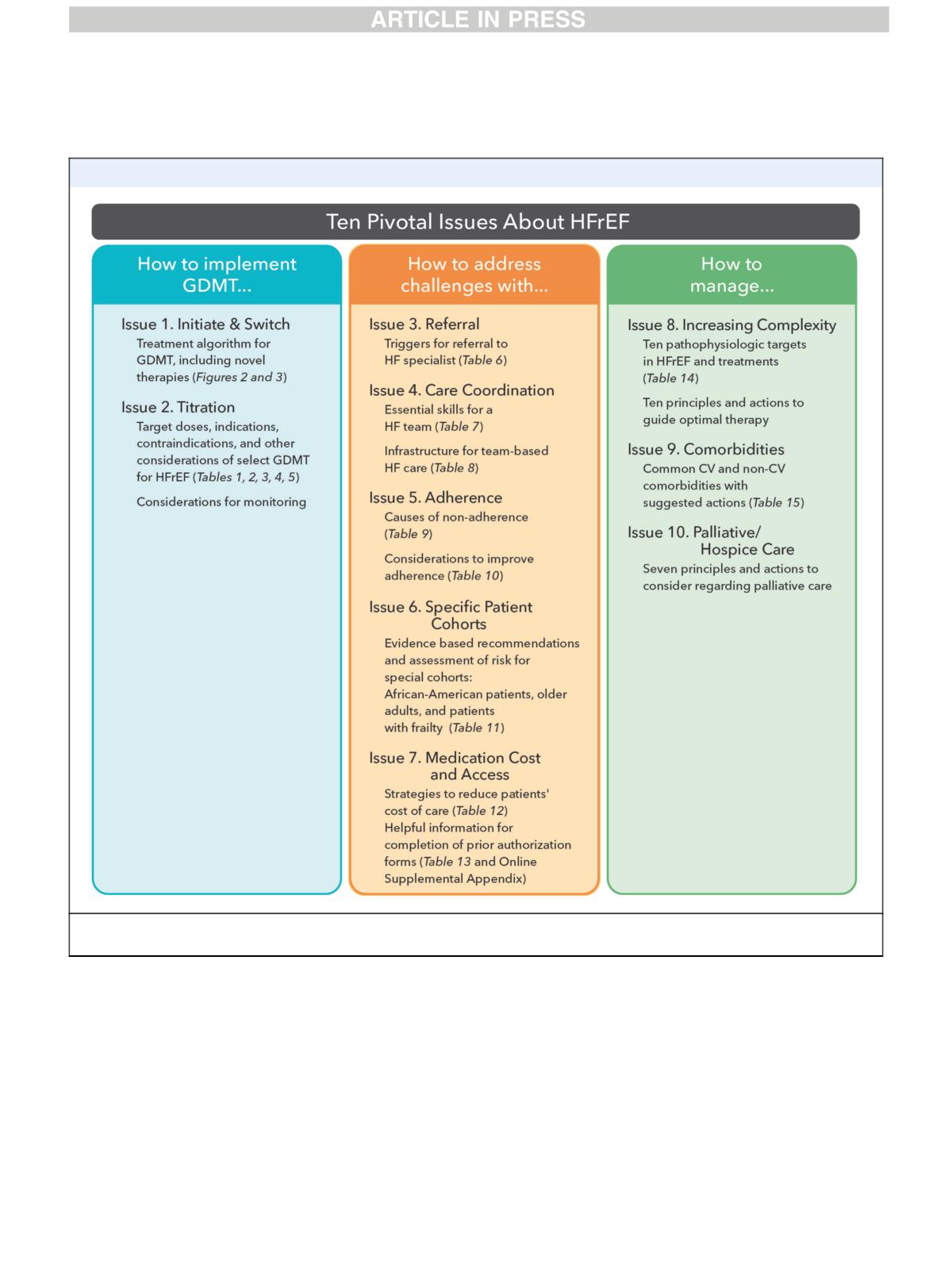
JACC VOL.
-, NO. -, 2024
Maddox et al
5
-, 2024:---
ACC Expert Consensus Decision Pathway for Treatment of HFrEF
FIGURE 1
Ten Pivotal Issues About HFrEF
CV ¼ cardiovascular; GDMT, guideline-directed medical treatment; HF ¼ heart failure; HFrEF ¼ heart failure with reduced ejection fraction.
In a patient with new-onset Stage C HFrEF, a com-
and titration of GDMT should be early and as rapid as
mon question is which medication class to initiate first,
possible with a goal to use the 4 key medication classes
and a common second question is how rapidly to add
in each patient.
additional agents and titrate medication doses. There is
For the person with de novo HFrEF, therapies should
no optimal order of initiation and/or titration, so the
be initiated with a goal of reaching target or maximally
Writing Committee recommends that clinicians will
tolerated doses of the 4 key medication classes as soon
need to approach each patient in an individual
as possible, and ideally no longer than 3 months. In
fashion to decide on which agents to titrate and when
many individuals, some GDMT may already be in place,
to do so. The Writing Committee also recommends that
and the Writing Committee recommends initiation and
regardless of the sequencing of agents, careful initiation
titration of missing key therapies as rapidly as possible,

6
Maddox et al
JACC VOL.
-, NO. -, 2024
ACC Expert Consensus Decision Pathway for Treatment of HFrEF
-, 2024:---
Starting and Target Doses of GDMT for HF (Choice and timing of each therapy and who should have them added are
TABLE 1
discussed in the text)*
Starting Dose
Target Dose
Beta-blockers
Bisoprolol
1.25 mg once daily
10 mg once daily
Carvedilol
3.125 mg twice daily
25 mg twice daily for weight <85 kg
and 50 mg twice daily for weight $85 kg
Metoprolol succinate
12.5-25 mg daily
200 mg daily
ARNI
Sacubitril/valsartan
24/26 mg to 49/51 mg twice daily
97/103 mg twice daily
ACE inhibitors
Captopril
6.25 mg 3 daily
50 mg 3
daily
Enalapril
2.5 mg twice daily
10-20 mg twice daily
Lisinopril
2.5-5 mg daily
20-40 mg daily
Ramipril
1.25 mg daily
10 mg daily
ARBs
Candesartan
4-8 mg daily
32 mg daily
Losartan
25-50 mg daily
150 mg daily
Valsartan
40 mg twice daily
160 mg twice daily
Mineralocorticoid antagonists
Eplerenone
25 mg daily
50 mg daily
Spironolactone
12.5-25 mg daily
25-50 mg daily
SGLT inhibitors
Dapagliflozin
10 mg daily
10 mg daily
Empagliflozin
10 mg daily
10 mg daily
Sotagliflozin
200 mg daily
400 mg daily
Vasodilators
Hydralazine
25 mg 3
daily
75 mg 3
daily
Isosorbide dinitrate†
20 mg 3
daily
40 mg 3
daily
Fixed-dose combination isosorbide dinitrate/hydralazine‡
20 mg/37.5 mg (one tab) 3 daily
2 tabs 3
daily
Ivabradine
Ivabradine
2.5-5 mg twice daily
Titrate to heart rate 50-60 beats/min.
Maximum dose 7.5 mg twice daily
Oral soluble guanylyl cyclase stimulator
Vericiguat
2.5 mg daily
10 mg daily
*Digoxin remains indicated for HFrEF, but there are no contemporary data to warrant additional comment in this document. The reader is referred to already available guideline
statements.2
†Isosorbide mononitrate is not recommended by the 2022 ACC/AHA/HFSA HF guideline.2
‡The 2022 ACC/AHA/HFSA HF guideline2 considers either the fixed-dose combination or the separate combination of isosorbide dinitrate and hydralazine as appropriate guideline-
directed therapy for HF.
ACC ¼ American College of Cardiology; ACE ¼ angiotensin-converting enzyme; AHA ¼ American Heart Association; ARB ¼ angiotensin receptor blocker; ARNI ¼ angiotensin re-
ceptor/neprilysin inhibitor; GDMT ¼ guideline-directed medical therapy; HF ¼ heart failure; HFrEF ¼ heart failure with reduced ejection fraction; HFSA ¼ Heart Failure Society of
America; SGLT ¼ sodium-glucose cotransporter; tab ¼ tablet.
with a goal of reaching target or maximally tolerated
antagonists. Importantly, the STRONG-HF trial had very
doses in an even shorter period. These recommenda-
limited use of ARNI, and SGLT2 inhibitor use was not
tions are because the STRONG-HF trial showed safety
prioritized. Accordingly, recognizing the challenges
and efficacy of a goal of 50% of target doses by hospital
introduced by the additional complexity of GDMT and
discharge and
100% of target doses by
2
weeks
potential hemodynamic impact of the preferred ARNI
following discharge from the hospital, focusing on an
class, a longer time horizon may be necessary. The
approach that used mostly ACE inhibitors/ARBs,
Writing Committee affirms potential value from more
evidence-based beta-blockers, and mineralocorticoid
rapid titration, if safely possible. In some cases, the
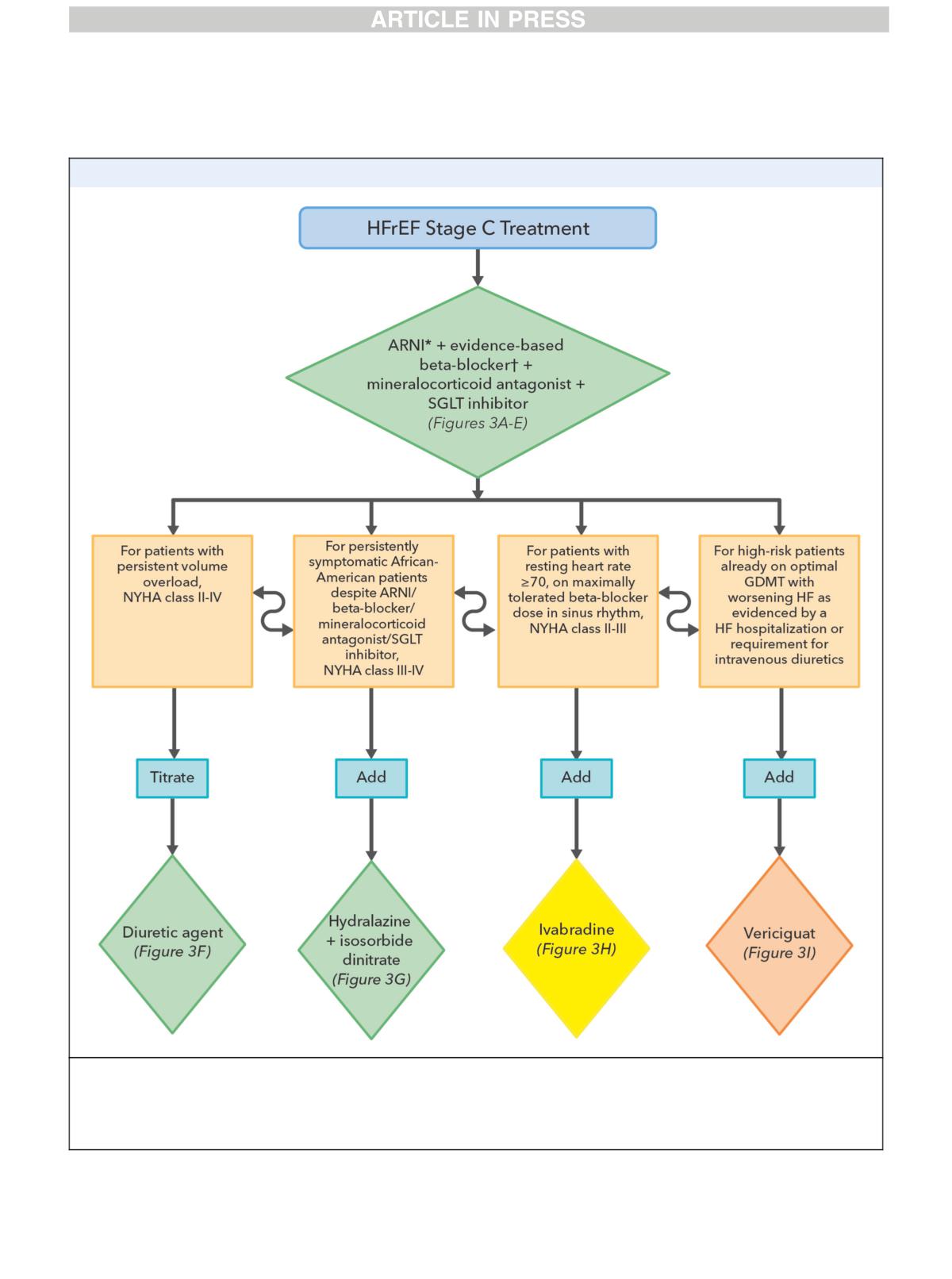
JACC VOL.
-, NO. -, 2024
Maddox et al
7
-, 2024:---
ACC Expert Consensus Decision Pathway for Treatment of HFrEF
FIGURE 2
Treatment Algorithm for Guideline-Directed Medical Therapy
*ACE inhibitors/ARBs should only be considered in patients with contraindications, intolerance, or inaccessibility to ARNI. In those instances, please consult Figure 3 and
the text for guidance on initiation. †Carvedilol, metoprolol succinate, or bisoprolol. Colors correspond to ACC/AHA Class of Recommendation. Green ¼ Class 1 (strong);
Yellow ¼ Class 2a (moderate); Orange ¼ Class 2b (weak). ARNI ¼ angiotensin receptor/neprilysin inhibitors; ACC ¼ American College of Cardiology; AHA ¼ American
Heart Association; HF ¼ heart failure; HFrEF ¼ heart failure with reduced ejection fraction; NYHA ¼ New York Heart Association; SGLT ¼ sodium-glucose cotransporter.