Boeing 737 - 600/700/800/900. Operations Manual (1997 year) - page 10
Normal Procedures -
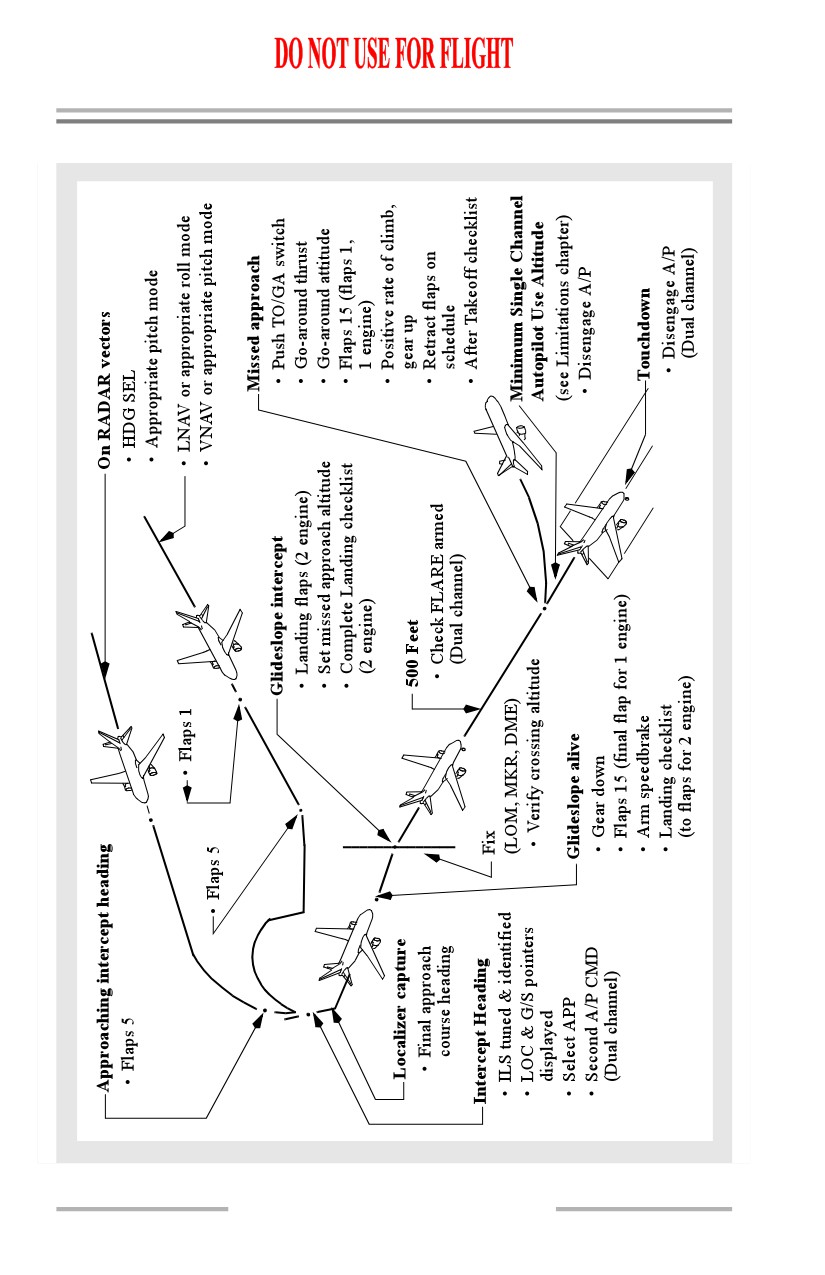
Flight Patterns
Boeing 737 Operations Manual
ILS Approach
NP.30.2
Normal Procedures -
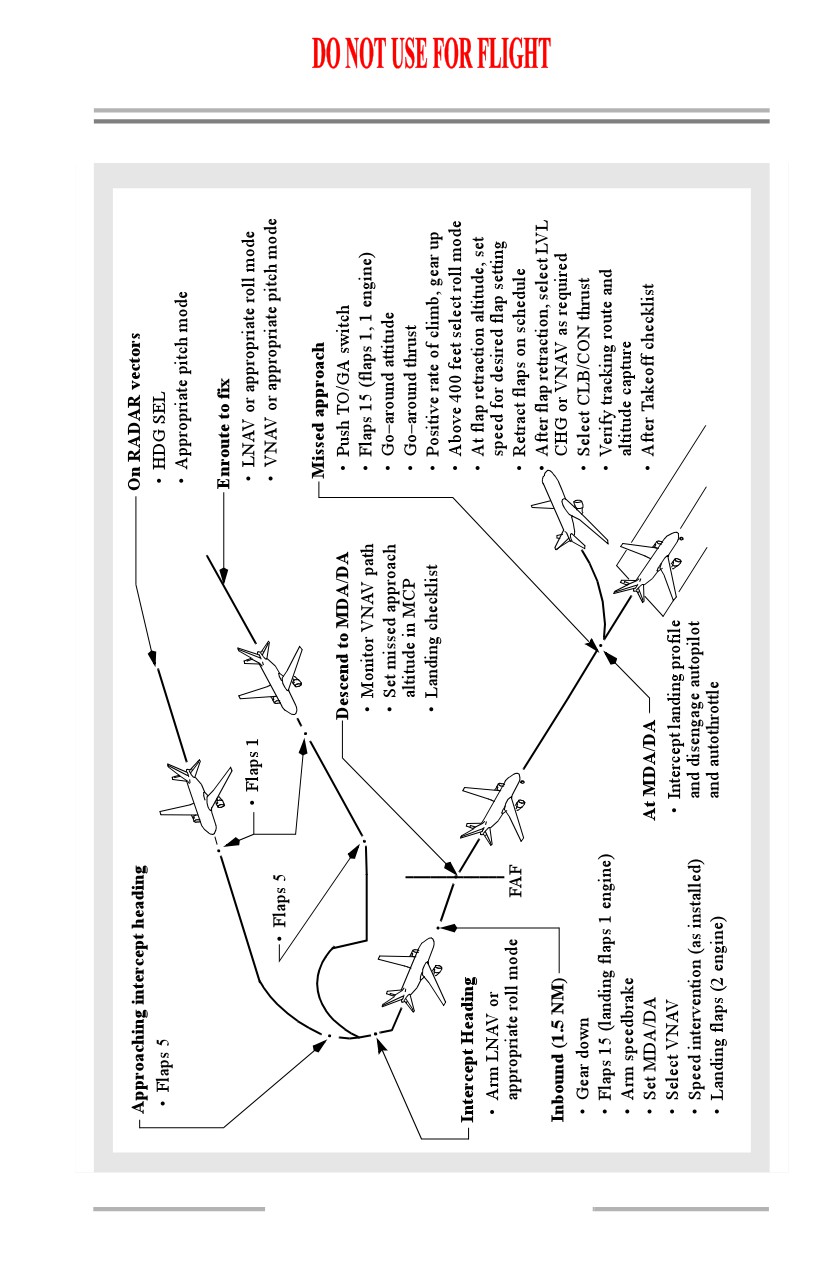
Flight Patterns
Boeing 737 Operations Manual
Instrument Approach using VNAV
NP.30.3
Normal Procedures -
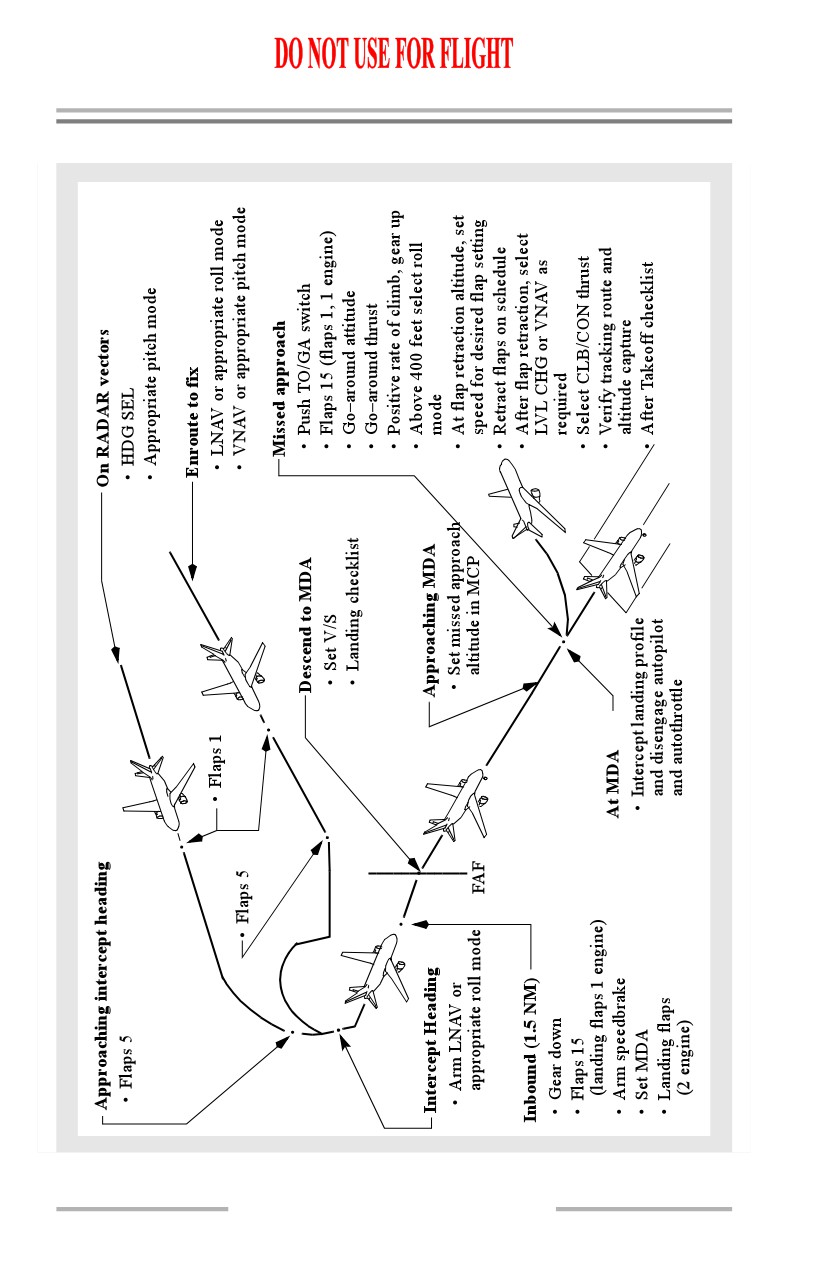
Flight Patterns
Boeing 737 Operations Manual
Instrument Approach using V/S
NP.30.4
Normal Procedures -
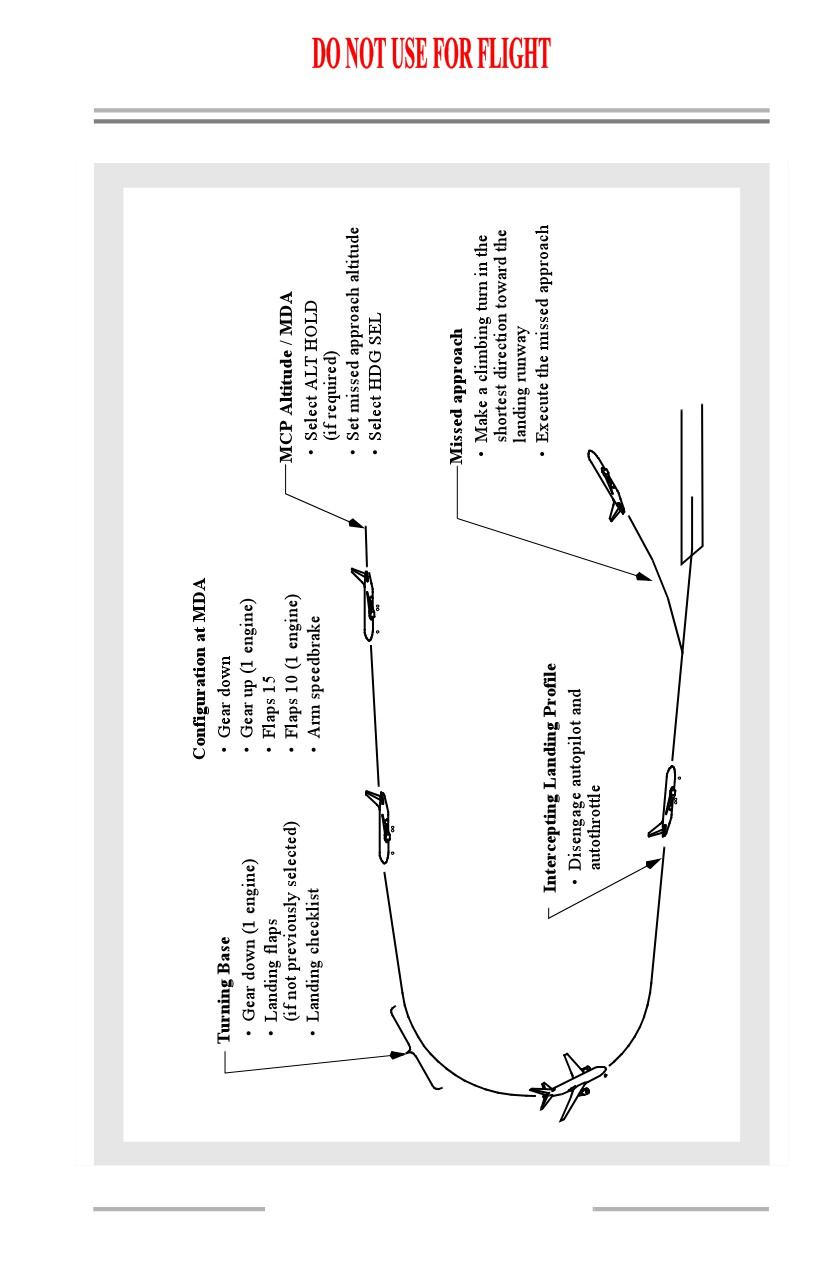
Flight Patterns
Boeing 737 Operations Manual
Circling Approach
NP.30.5
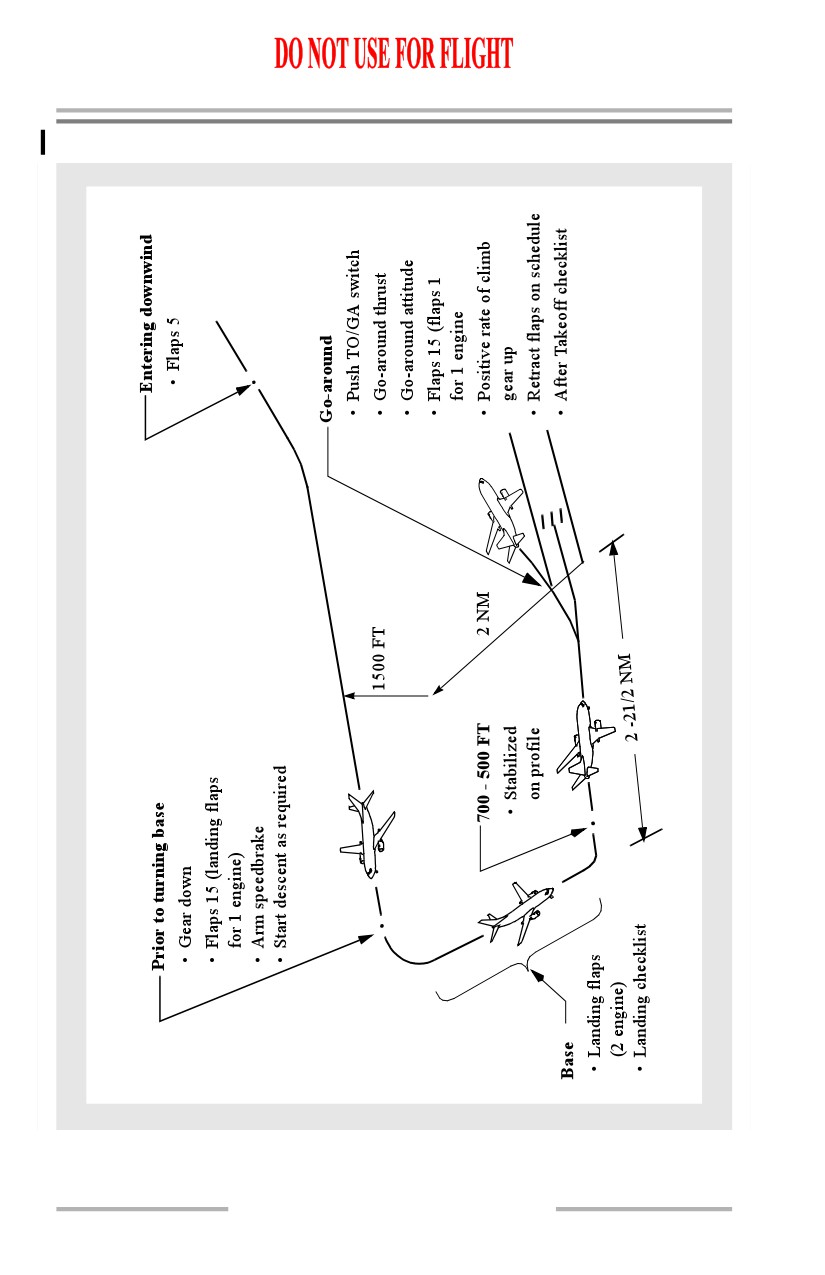
Normal Procedures -
Flight Patterns
Boeing 737 Operations Manual
Visual Traffic Pattern
NP.30.6
Boeing 737 Operations Manual
Supplementary Procedures
Chapter SP
Table of Contents
Section 0
SP.0 Supplementary Procedures-Table of Contents
Introduction
SP.05.1
General
SP.05.1
Airplane General, Emergency Equipment, Doors,
Windows
SP.1.1
Interior Inspection
SP.1.1
Water System Draining
SP.1.1
Forward Airstair Operation
SP.1.3
Interior Control
SP.1.3
Exterior Control
SP.1.4
Air Systems
SP.2.1
Wing-Body Overheat Test
SP.2.1
External Air Cart Use
SP.2.1
Ground Air Conditioning Cart Use
SP.2.2
Isolated Pack Operation during Engine Start
SP.2.2
Pressurization System Manual Mode Test
SP.2.2
Manual Mode Operation
SP.2.3
During Descent
SP.2.4
Pressurization Control Operation - Landing at Alternate
Airport
SP.2.4
Automatic Pressurization Control - Landing Airport
Elevation Above 6000 Feet
SP.2.4
Unpressurized Takeoff and Landing
SP.2.5
Takeoff
SP.2.5
After Takeoff
SP.2.5
Landing
SP.2.5
No Engine Bleed Takeoff and Landing
SP.2.5
Takeoff
SP.2.6
After Takeoff
SP.2.6
SP.TOC.0.1
Supplementary Procedures -
Table of Contents
Boeing 737 Operations Manual
Landing
SP.2.6
Anti-Ice, Rain
SP.3.1
Anti-Ice Operation
SP.3.1
Window Heat System Tests
SP.3.1
Overheat Test
SP.3.1
Power Test
SP.3.1
Power Test
SP.3.2
Automatic Flight
SP.4.1
Level Change Climb/Descent
SP.4.1
Vertical Speed (V/S) Climb/Descent
SP.4.1
Temporary Level-Off during Climb or Descent (Not at
FMC Cruise Altitude)
SP.4.2
Intervention of FMC Altitude Constraints during VNAV
Climb
SP.4.2
Intervention of FMC Cruise Altitude during VNAV
Cruise
SP.4.2
Intervention of FMC Altitude Constraints during VNAV
Descent
SP.4.3
Intervention of FMC Airspeed Constraints during VNAV
SP.4.3
Altitude Hold
SP.4.3
Heading Select
SP.4.3
VOR Navigation
SP.4.4
Instrument Approach using VNAV
SP.4.4
Instrument Approach using Vertical Speed (V/S)
SP.4.6
Circling Approach
SP.4.7
Communications
SP.5.1
Aircraft Communication Addressing and Reporting
System (ACARS)
SP.5.1
Pre-Departure Clearance
SP.5.1
Digital-Automatic Information Service
SP.5.1
SP.TOC.0.2
Supplementary Procedures -
Table of Contents
Boeing 737 Operations Manual
Oceanic Clearances
SP.5.1
Cockpit Voice Recorder Test
SP.5.1
Electrical
SP.6.1
Standby Power Test
SP.6.1
Standby Power Test
SP.6.2
Engines, APU
SP.7.1
Battery Start
SP.7.1
Starting with Ground Air Source (AC electrical power
available)
SP.7.3
Engine Crossbleed Start
SP.7.3
Setting N1 Bugs with an Inoperative FMC
SP.7.4
APU Start
SP.7.4
Fire Protection
SP.8.1
Fire and Overheat System Test with an Inoperative Loop
SP.8.1
Flight Controls
SP.9.1
Flight Controls Check
SP.9.1
Flight Instruments, Displays
SP.10.1
Altimeter Difference
SP.10.1
QFE Operation
SP.10.2
Setting Airspeed Bugs with an Inoperative FMC
SP.10.3
HUD System Procedures
SP.10.5
Flight Deck Preparation
SP.10.5
Descent and Approach
SP.10.5
Landing
SP.10.6
Shutdown
SP.10.6
ILS Approach Using HUD
SP.10.7
Non-Precision Approach Using HUD
SP.10.8
Circling Approach Using HUD
SP.10.9
Visual Traffic Pattern Using HUD
SP.10.10
SP.TOC.0.3
Supplementary Procedures -
Table of Contents
Boeing 737 Operations Manual
Flight Management, Navigation
SP.11.1
Tests
SP.11.1
Transponder Test
SP.11.1
Weather Radar Test
SP.11.1
IRS
SP.11.2
Fast Realignment
SP.11.2
ISDU Entries
SP.11.2
Inadvertent Selection of Attitude Mode (while on the
ground)
SP.11.3
Lateral Navigation (LNAV)
SP.11.3
Proceeding Direct to a Waypoint (overwrite)
SP.11.3
Proceeding Direct to a Waypoint (DIR/INTC)
SP.11.4
Intercepting a Leg (Course) to a Waypoint
SP.11.4
Intercepting a Leg (Course) to a Waypoint
(DIR/INTC)
SP.11.5
Route Modification
SP.11.5
Route Removal
SP.11.5
Linking a Route Discontinuity
SP.11.6
Determining ETA and Distance to Cross Radial
(Bearing) or Distance from a Fix
SP.11.6
Changing Destination
SP.11.6
Entering Holding Fix Into Route
SP.11.6
Exiting Holding Pattern
SP.11.7
Along Track Displacement
SP.11.7
Entering Created Waypoints on the Route or Route
Legs Pages
SP.11.8
Entering Created Waypoints on the Nav Data Pages
SP.11.8
Deleting Created Waypoints on the Nav Data Pages
SP.11.9
Entering a Crossing Radial (Bearing) or Distance
from a Fix as a Route Waypoint
SP.11.10
Entering a Lateral Offset
SP.11.11
Change SID or Runway
SP.11.11
Change STAR, PROF DES, or APP
SP.11.11
Delete Procedure Turn
SP.11.12
SP.TOC.0.4
Supplementary Procedures -
Table of Contents
Boeing 737 Operations Manual
Other Operations
SP.11.12
FMC Navigation Check
SP.11.12
Inhibiting VOR/DME Use for Position Updating
SP.11.13
Inhibiting GPS Updating
SP.11.13
Vertical Navigation (VNAV)
SP.11.14
Temporary Level Off during Climb or Descent (Not
at FMC Cruise Altitude)
SP.11.14
Intervention of FMC Altitude Constraints during
VNAV Climb
SP.11.14
Intervention of FMC Cruise Altitude during VNAV
Cruise
SP.11.14
Intervention of FMC Altitude Constraints during
VNAV Descent
SP.11.15
Intervention of FMC Airspeed Constraints during
VNAV
SP.11.15
Entering Waypoint Speed and Altitude Restriction
(On Climb or Descent Legs Only)
SP.11.15
Deleting Waypoint Speed and Altitude Restriction
SP.11.16
Changing Speed and/or Altitude Restriction during
Climb or Descent
SP.11.16
Changing Climb/Cruise/Descent Speed Schedule
SP.11.16
Early Descent
SP.11.16
Step Climb or Descent from Cruise
SP.11.17
Performance and Progress Functions
SP.11.17
Determining ETA and Fuel Remaining for New
Destination
SP.11.17
Estimated Wind Entries for Cruise Waypoints
SP.11.18
Step Climb Evaluation
SP.11.18
Entering Descent Forecasts
SP.11.18
Engine Out
SP.11.19
Required Time of Arrival (RTA)
SP.11.19
Entering an RTA Waypoint and Time
SP.11.19
Entering Speed Restrictions for RTA Navigation
SP.11.19
Entering New Time Error Tolerances for RTA
Navigation
SP.11.20
SP.TOC.0.5
Supplementary Procedures -
Table of Contents
Boeing 737 Operations Manual
Additional CDU Functions
SP.11.20
Navigation Display Plan Mode (Center Step
Operation)
SP.11.20
Enter Position Shift on Runway
SP.11.20
Fuel
SP.12.1
Fuel Balancing
SP.12.1
Refueling
SP.12.2
Fuel Load Distribution
SP.12.2
Fuel Pressure
SP.12.2
Normal Refueling
SP.12.2
Refueling with Battery Only
SP.12.2
Refueling with No AC or DC Power Source
Available
SP.12.3
Ground Transfer of Fuel
SP.12.3
Fuel Crossfeed Valve Check
SP.12.4
Adverse Weather
SP.16.1
Introduction
SP.16.1
Cold Weather Operation
SP.16.1
Preflight
SP.16.2
Engine Start
SP.16.3
After Start
SP.16.3
Taxi-Out
SP.16.5
Before Takeoff
SP.16.6
Climb and Cruise
SP.16.7
Approach and Landing
SP.16.9
Taxi-In and Park
SP.16.10
Secure (Airplane Attended)
SP.16.10
Secure (Airplane Unattended)
SP.16.11
Hot Weather Operation
SP.16.11
Moderate to Heavy Rain
SP.16.12
Turbulence
SP.16.13
SP.TOC.0.6
Supplementary Procedures -
Table of Contents
Boeing 737 Operations Manual
Severe Turbulence
SP.16.13
Windshear
SP.16.15
Avoidance
SP.16.15
Precaution
SP.16.15
SP.TOC.0.7
Supplementary Procedures -
Table of Contents
Boeing 737 Operations Manual
Intentionally
Blank
SP.TOC.0.8
Boeing 737 Operations Manual
Supplementary Procedures
Chapter SP
Introduction
Section 05
General
This section contains procedures (adverse weather operation, engine crossbleed
start, and so on) that are accomplished as required rather than routinely performed
on each flight.
Supplementary procedures may be required because of adverse weather,
unscheduled maintenance or as a result of a procedure referenced in a
Non-Normal Checklist. Additionally, some may be performed if the flight crew
must accomplish preflight actions normally performed by maintenance personnel.
At the discretion of the Captain, procedures may be performed by recall, by
reviewing the procedure prior to accomplishment, or by reference to the procedure
during its accomplishment.
Supplementary procedures are provided by section. Section titles correspond to
the respective chapter title for the system being addressed except for the adverse
weather section.
SP.05.1
Supplementary Procedures -
Introduction
Boeing 737 Operations Manual
Intentionally
Blank
SP.05.2
Boeing 737 Operations Manual
Supplementary Procedures
Chapter SP
Airplane General, Emergency Equipment,
Doors, Windows
Section 1
Interior Inspection
Emergency exit lights
Check
Passenger signs
Check
Service and entry doors
Check
Escape slides
Check pressure
Emergency exits
Check
Wing upper surfaces
Check
Lavatory fire extinguishers
Check
Emergency equipment
Check
Check availability and condition of emergency equipment, as
required.
Water System Draining
Lavatory water supply selector valves
SUPPLY/DRAIN
Galley water supply shutoff valves
SUPPLY ON
The shutoff valve is found adjacent to each wet galley sink.
Drain line
Connect to drain ports
There are two drain port locations:
• below the main passenger entry door
• aft of the water service panel
Water service panel
Open
Tank drain valve handle
OPEN
Drains potable water tank and water system aft of the wings.
Forward lavatory drain valve
OPEN
Drain valve is found below the sink in the forward lavatory only.
Drain valves for coffee maker and
water boiler (if installed)
OPEN
SP.1.1
Supplementary Procedures -
Airplane General, Emergency
Equipment, Doors, Windows
Boeing 737 Operations Manual
All galley and lavatory water faucets
Open
Close faucets when water flow stops.
Accomplish the following items after verifying the potable water
system is empty:
Drain valves for coffee maker and
water boiler (if installed)
CLOSED
Forward lavatory drain valve
CLOSED
Tank drain valve handle
CLOSED
Water service panel
Close
Drain line
Disconnect from drain ports
If the potable water tank will not be refilled immediately after the
system is emptied, open the following circuit breakers and attach
DO-NOT-CLOSE tags:
P18-3 circuit breaker panel
• LAVATORY WATER HEATER A
• LAVATORY WATER HEATER D
• LAVATORY WATER HEATER E
Power distribution panel number 1
• POT WATER COMPRESSOR
• WATER QTY IND
SP.1.2
Supplementary Procedures -
Airplane General, Emergency
Equipment, Doors, Windows
Boeing 737 Operations Manual
Forward Airstair Operation
[Option]
CAUTION: Operation of airstair in winds exceeding 40 knots is
not recommended.
CAUTION: Do not move airplane with stair extended.
Interior Control
WARNING: Open entry door to cocked position to allow clear
visibility of area outside airplane to prevent injury to
personnel. Do not open door beyond cocked position
while operating airstair.
To extend:
Forward Entry Door
Open to Cocked Position
When operating the airstair from the interior control panel, the forward
entry door must be open to the cocked position. Safety circuits prevent
airstair operation if the entry door is closed.
Control Switch
EXTEND
Note:For interior standby operation, the battery switch must be
ON.
Hold until extension is complete.
The STAIRS OPER light illuminates during extension until the
airstair is fully extended.
Note:The STAIRS OPER light will not illuminate with loss of
AC power.
Control Switch
Release
Handrail Extensions
Engage
Release latch and pull inboard and up, extend and engage on supports
at sides of forward entry doorway.
To Retract:
Handrail Extensions
Disengage
Disengage from door supports, depress latch at base of forward
extension to permit retraction within upper segment of handrail. Slide
right and left extensions down along upper rails. Stowing in
SP.1.3
Supplementary Procedures -
Airplane General, Emergency
Equipment, Doors, Windows
Boeing 737 Operations Manual
appropriate stowage points provides circuit continuity for energizing
retract relays.
When using the standby control switch, visually check that the handrail
extensions are stowed.
CAUTION: Airstair handrail extensions must be stowed or
substantial damage could result.
Control switch
RETRACT
Hold until retraction is complete.
The STAIRS OPER light illuminates during retraction until the airstair
door is fully closed.
Note: The STAIRS OPER light will not illuminate with loss of
AC power.
Control switch
Release
Exterior Control
To Extend:
Normal mode:
AIRSTAIRS switch
EXTEND
Standby mode:
POWER switch
Hold in STANDBY
AIRSTAIRS switch
EXTEND
Handrail Extensions
Engage
Release latch and pull inboard and up, extend and engage on supports
at sides of forward entry door.
To Retract:
Handrail Extensions
Disengage
Disengage from door supports, depress latch at base of forward
extension to permit retraction within upper segment of handrail. Slide
right and left extensions down along upper rails. Stowing in
SP.1.4
Supplementary Procedures -
Airplane General, Emergency
Equipment, Doors, Windows
Boeing 737 Operations Manual
appropriate stowage points provides circuit continuity for energizing
retract relays.
When using the standby control switch, visually check that the handrail
extensions are stowed.
CAUTION: Airstair handrail extensions must be stowed or
substantial damage could result.
Normal mode:
AIRSTAIRS switch
RETRACT
Standby mode:
POWER switch
Hold in STANDBY
AIRSTAIRS switch
RETRACT
SP.1.5