HUAWEI OptiX OSN 8800 T64/T32 Intelligent Optical Transport Platform. Product Description - part 24
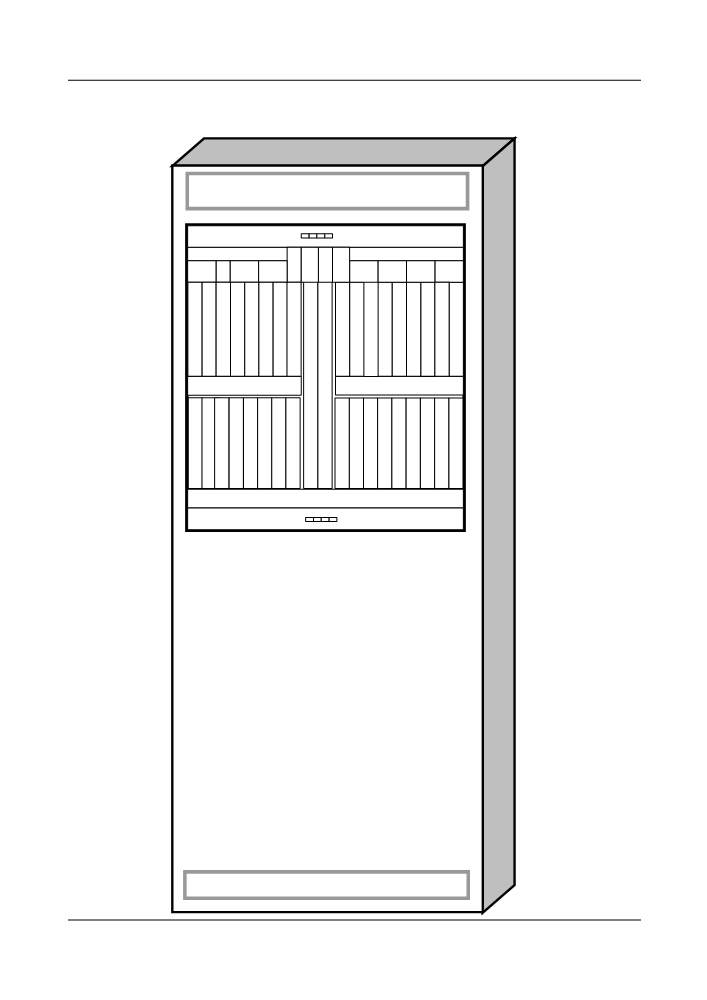
Figure 6-42 Typical configuration when the OptiX OSN 8800 T32 functions as an STM-16
ADM
FAN
A
S
S
EF
U
T
T
EFI2
PIU
PIU
PIU
PIU
STI
ATE
I1
X
G
G
S
C
C
X
X
C
C
H
H
/
/
X
X
C
C
S
M
M
S
L
S
L
O
C
O
1
C
1
6
6
FAN
246
Typical Configuration of the STM-64 ADM
Figure 6-43 shows the typical configuration when the OptiX OSN 8800 T32 functions as an
STM-64 ADM.
l Configure two SLQ64 boards to transmit and receive the STM-64 signals in a bidirectional
manner.
l Insert other boards into other slots on the equipment according to the service requirements.
247
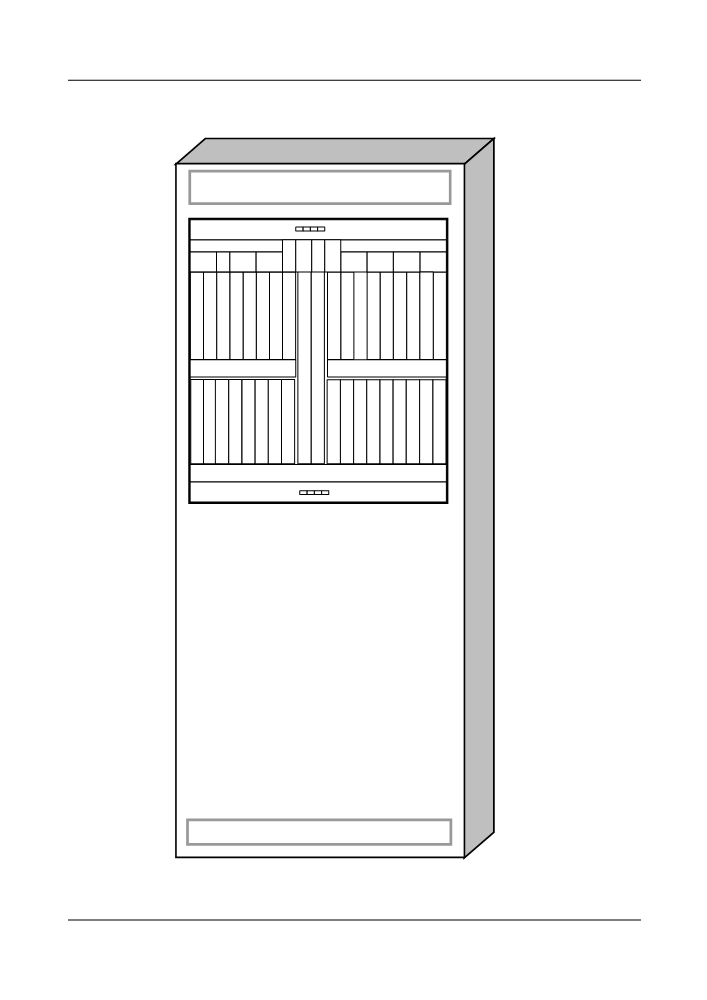
Figure 6-43 Typical configuration when the OptiX OSN 8800 T32 functions as an STM-64
ADM
FAN
A
S
S
EF
U
T
T
EFI2
PIU
PIU
PIU
PIU
STI
ATE
I1
X
G
G
S
C
C
X
X
C
C
H
H
/
/
X
X
C
C
S
M
M
S
L
S
L
Q
C
Q
6
C
6
4
4
FAN
248

6.10 MADM in an SDH System
The MADM can be considered as a combination of multiple ADMs. In addition to the functions
provided by the ADM, the MADM can cross-connect different ADMs. The transmission rate
can be different or the same for different ADMs.
NE Architecture
The MADM is a core unit that is required for building a complex network. Figure 6-44 shows
the functional block diagram of the MADM. The OptiX OSN 8800 can be configured as an
MADM combined by ADMs at any rate ranging from STM-1 to STM-64.
Figure 6-44 Functional block diagram of the OptiX OSN 8800 configured as an MADM
STM-16/64
low-rate SDH
signals
The MADM is used on the central node in the topology such as ring-with-chain, intersecting
rings, tangent rings, and hub.
Typical Configuration of the STM-16 MADM
The OptiX OSN 8800 is available in two types of subracks, that is, the OptiX OSN 8800 T32
subrack and the OptiX OSN 8800 T64 subrack. The OptiX OSN 8800 T32 subrack is considered
as an example to describe the typical configuration. For the differences between the OptiX OSN
8800 T32 subrack and the OptiX OSN 8800 T64 subrack, see the Hardware Description.
Figure 6-45 shows the typical configuration when the OptiX OSN 8800 T32 functions as an
STM-16 MADM.
l Configure four SLO16 boards to perform the functions of the MADM.
l Insert other boards into other slots on the equipment according to the service requirements.
249
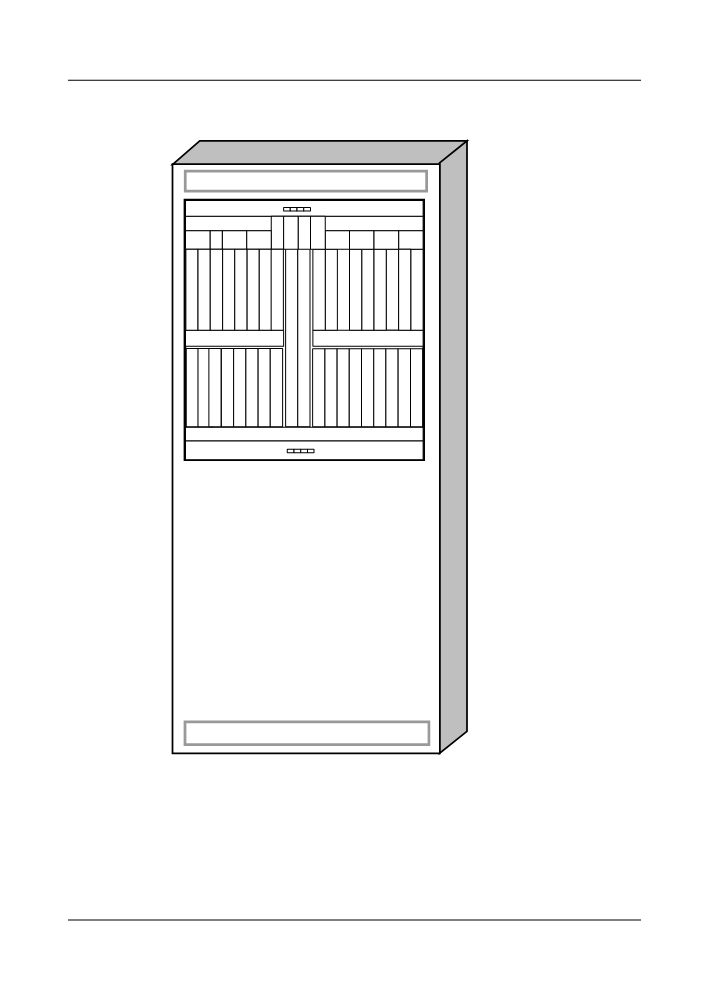
Figure 6-45 Typical configuration when the OptiX OSN 8800 T32 functions as an STM-16
MADM
FAN
A
S
S
EF
U
T
T
EFI2
PIU
PIU
PIU
PIU
STI
ATE
I1
X
G
G
S
C
X
X
C
C
C
H
H
/
/
X
X
C
C
S
S
S
S
M
M
L
L
S
L
L
O
O
C
O
O
1
1
C
1
1
6
6
6
6
FAN
Typical Configuration of the STM-64 MADM
Figure 6-46 shows the typical configuration when the OptiX OSN 8800 T32 functions as an
STM-64 MADM.
l Configure four SLQ64 boards to perform the functions of the MADM.
250
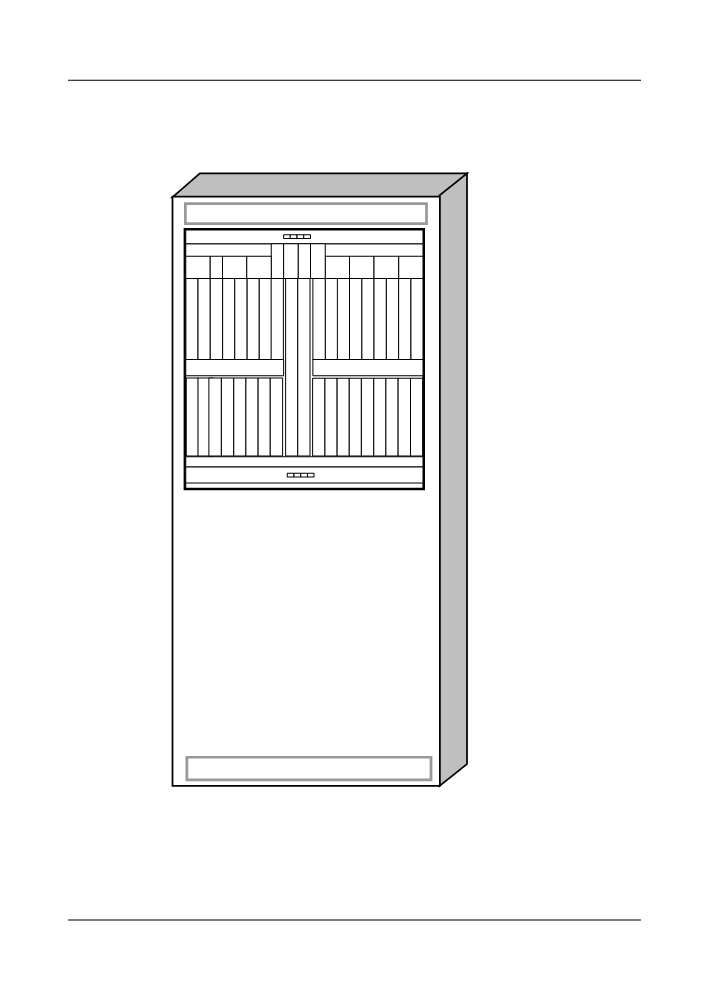
l Insert other boards into other slots on the equipment according to the service requirements.
Figure 6-46 Typical configuration when the OptiX OSN 8800 T32 functions as an STM-64
MADM
FAN
S
S
A
U
T
T
EF
STI
EFI2
PIU
PIU
G
G
PIU
PIU
ATE
I1
X
S
C
X
X
C
C
C
H
H
/
/
X
X
C
C
S
S
S
S
M
M
L
L
S
L
L
Q
Q
C
Q
Q
6
6
C
6
6
4
4
4
4
FAN
Typical Hybrid Configuration of the STM-16/STM-64 MADM
Figure 6-47 shows the typical configuration when the OptiX OSN 8800 T32 functions as a
hybrid STM-16/STM-64 MADM.
251
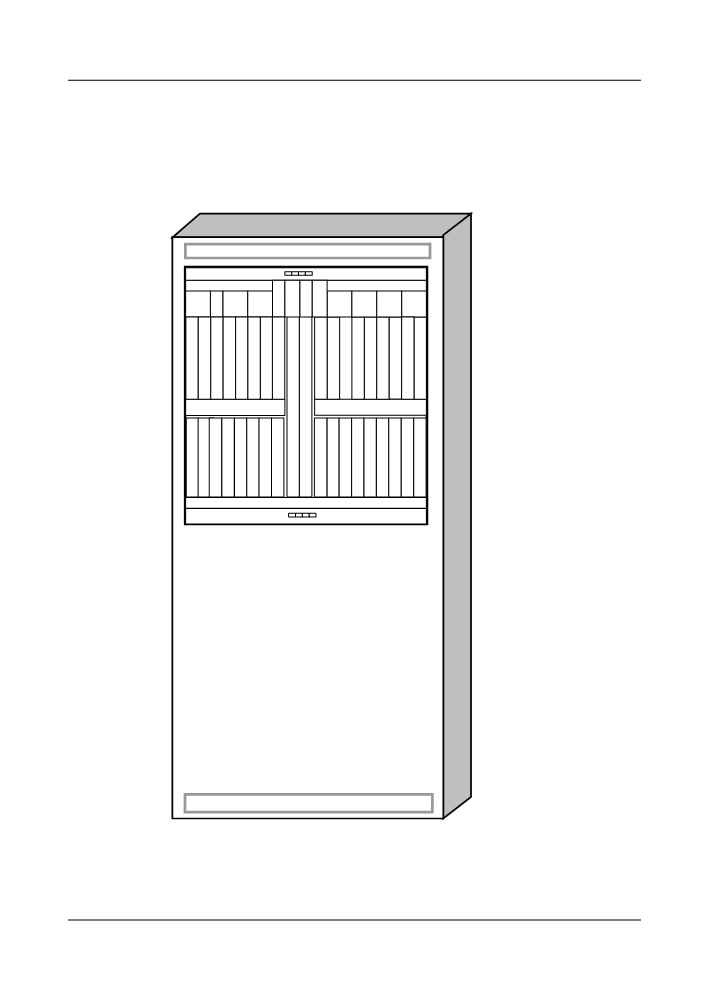
l Configure two SLO16 boards to perform the functions of the STM-16 ADM.
l Configure two SLQ64 boards to perform the functions of the STM-64 ADM.
l Insert other boards into other slots on the equipment according to the service requirements.
Figure 6-47 Typical configuration when the OptiX OSN 8800 T32 functions as a hybrid
STM-16/STM-64 MADM
FAN
S
S
A
T
T
EF
U
STI
EFI2
PIU
PIU
G
G
PIU
PIU
ATE
I1
X
S
C
X
X
C
C
C
H
H
/
/
X
X
C
C
S
S
S
S
M
M
L
L
S
L
L
O
Q
C
Q
O
1
6
C
6
1
6
4
4
6
FAN
252
7
About the ASON
About This Chapter
The ASON, the automatically switched optical network, is a new generation of the optical
transmission network, all called ASON optical network. This section describes some basic
concepts of the ASON and application of the ASON software.
7.1 Overview
The ASON software provided by Huawei can be applied to the OptiX OSN series products to
support the evolution from traditional network to ASON network. It complies with the ITU and
IETF ASON/GMPLS-related standards.
7.2 ASON Software and ASON Functions
Huawei provides the software on the ASON control plane, which implements the functions such
as network callings and connections and dynamic control of the transport plane through signaling
switching.
7.3 Automatic Discovery of Topologies and Resources
On an ASON network, link resources, network topologies, and fibers between sites can be
automatically discovered, and then a network map is automatically generated. The ASON
software dynamically obtains the resource status of the wavelength/sub-wavelength services in
real time, including the occupied and idle resources, providing a quick approach to know the
current network capacity.
7.4 Creation and Deletion of the ASON Trail
The RSVP-TE signaling is needed during the process of creation, deletion, change and rerouting
of the ASON trail.
7.5 OTN ASON Feature
The OptiX OSN WDM series products of Huawei can provide the OTN ASON function after
the ASON software is loaded.
7.6 OCS ASON Feature
The OptiX OSN series products of Huawei can provide the OCS ASON function after the ASON
software is loaded.
7.7 Optical-Layer and Electrical-Layer ASON Services
253
The ASON software provides the wavelength-level ASON services at the optical layer and sub-
wavelength level ASON services at the electrical layer. Hence, customers can implement flexible
service grooming at different layers.
254
7.1 Overview
The ASON software provided by Huawei can be applied to the OptiX OSN series products to
support the evolution from traditional network to ASON network. It complies with the ITU and
IETF ASON/GMPLS-related standards.
7.1.1 Background and Advantages
Compared with the WDM network, the transmission network that applies the new ASON
technology shows advantages in service configuration, bandwidth utilization and protection
schemes.
In the traditional transmission network, the WDM transmission equipment functions as fibers.
Currently, the WDM transmission equipment also carries services. As a result, more
requirements are for the operability of the WDM equipment. The traditional network has the
following problems:
l The service configuration is complex and capacity expansion or service provision takes a
long period.
l The bandwidth utilization is of a low rate and low efficiency. In a ring network, half of the
bandwidth should be reserved.
l Just a few protection schemes are available and the performance of self-healing protection
is poor.
The ASON has been developed to solve these problems. This technology involves signaling
switching and a control plane to enhance its network connection management and recovery
capability. It supports end-to-end service configuration and the service level agreement (SLA).
Service Configuration
Traditional WDM networks are generally chains and rings. The trails and timeslots of their
services are manually configured ring by ring and point by point, which consumes a lot of time
and effort. As networks become increasingly large and complicated, this service configuration
mode cannot meet the rapidly increasing user demands.
The ASON successfully solves this problem by end-to-end service configuration. To configure
a service, you only need to specify its source node, sink node, bandwidth requirement and
protection type; the network automatically performs the required operations.
Bandwidth Utilization
Traditional WDM optical transmission networks have a large amount of resources reserved and
lack advanced service protection, and the restore and routing functions. In contrast, with the
routing function the ASON can provide protection by reserving fewer resources, thus increasing
network resource utilization.
Protection and Restoration
Chain and ring are the main topologies used in a traditional WDM network. Optical line
protection or board-level protection are the main protection schemes for the services. In ASON,
mesh is the main topology. Besides protections, the dynamic restoring function is available to
255
restore the services dynamically. In addition, when there are multiple failures in a network, the
services can be restored as many as possible.
According to the difference in the service restoration time, multiple service types are defined in
ASON networks to meet different customer requirements.
7.1.2 Features of the ASON
As a new technology on the transmission network, the ASON has its own features.
Compared with the traditional network, the ASON has the following features:
l Supports the route calculation strategy that is based on optics parameters and eliminates
the route that does not comply with optics parameters automatically.
l Supports the automatic adjustment of wavelengths during rerouting or optimization, which
solves the wavelength conflict problem. (For OTN network)
l Wavelengths can be automatically allocated for newly created services.
l Configures end-to-end services automatically.
l Discovers the topology automatically.
l Provides mesh networking that enhances the survivability of the network.
l Supports different services which are provided with different levels of protection.
l Provides traffic engineering and dynamically adjusts the network logic topology in real
time to optimize the configuration of network resources.
7.1.3 Huawei OTN ASON Solution
Huawei provides detailed OTN ASON solutions for different layers.
The OTN ASON solution provided by Huawei involves the following products:
l Control plane software: OptiX GSP
l Network management software: iManager U2000
l Equipment on the transport plane: OptiX OSN series equipment
NOTE
The OTN ASON solution provided by Huawei includes optical-layer (OTN_O) and electrical-layer
(OTN_E) ASON services. The optical-layer ASON service achieves OCh-level service grooming and the
electrical-layer ASON service achieves ODUk-level service grooming. Users can determine whether to
choose optical-layer or electrical-layer ASON based on the network situations and service requirements.
Figure 7-1 illustrates the relation among them.
256