Intel 64 and IA-32 Architectures. Software Developer’s Manual (2026) - page 14
Operation
IF (64-Bit Mode and OperandSize = 64)
THEN
TEMP128 := DEST
IF (RDX:RAX = TEMP128)
THEN
ZF := 1;
DEST := RCX:RBX;
ELSE
ZF := 0;
RDX:RAX := TEMP128;
DEST := TEMP128;
FI;
FI
ELSE
TEMP64 := DEST;
IF (EDX:EAX = TEMP64)
THEN
ZF := 1;
DEST := ECX:EBX;
ELSE
ZF := 0;
EDX:EAX := TEMP64;
DEST := TEMP64;
FI;
FI;
FI;
Flags Affected
The ZF flag is set if the destination operand and EDX:EAX are equal; otherwise it is cleared. The CF, PF, AF, SF, and
OF flags are unaffected.
Protected Mode Exceptions
#UD
If the destination is not a memory operand.
#GP(0)
If the destination is located in a non-writable segment.
If a memory operand effective address is outside the CS, DS, ES, FS, or GS segment limit.
If the DS, ES, FS, or GS register contains a NULL segment selector.
#SS(0)
If a memory operand effective address is outside the SS segment limit.
#PF(fault-code)
If a page fault occurs.
#AC(0)
If alignment checking is enabled and an unaligned memory reference is made while the
current privilege level is 3.
Real-Address Mode Exceptions
#UD
If the destination operand is not a memory location.
#GP
If a memory operand effective address is outside the CS, DS, ES, FS, or GS segment limit.
#SS
If a memory operand effective address is outside the SS segment limit.
CMPXCHG8B/CMPXCHG16B-Compare and Exchange Bytes
Vol. 2A
3-197
Virtual-8086 Mode Exceptions
#UD
If the destination operand is not a memory location.
#GP(0)
If a memory operand effective address is outside the CS, DS, ES, FS, or GS segment limit.
#SS(0)
If a memory operand effective address is outside the SS segment limit.
#PF(fault-code)
If a page fault occurs.
#AC(0)
If alignment checking is enabled and an unaligned memory reference is made.
Compatibility Mode Exceptions
Same exceptions as in protected mode.
64-Bit Mode Exceptions
#SS(0)
If a memory address referencing the SS segment is in a non-canonical form.
#GP(0)
If the memory address is in a non-canonical form.
If memory operand for CMPXCHG16B is not aligned on a 16-byte boundary.
If CPUID.01H:ECX.CMPXCHG16B[13] = 0.
#UD
If the destination operand is not a memory location.
#PF(fault-code)
If a page fault occurs.
#AC(0)
If alignment checking is enabled and an unaligned memory reference is made while the
current privilege level is 3.
CMPXCHG8B/CMPXCHG16B-Compare and Exchange Bytes
Vol. 2A
3-198
COMISD-Compare Scalar Ordered Double Precision Floating-Point Values and Set EFLAGS
Opcode/
Op /
64/32 bit
CPUID
Description
Instruction
En
Mode
Feature Flag
Support
66 0F 2F /r
A
V/V
SSE2
Compare low double precision floating-point values in
COMISD xmm1, xmm2/m64
xmm1 and xmm2/mem64 and set the EFLAGS flags
accordingly.
VEX.LIG.66.0F.WIG 2F /r
A
V/V
AVX
Compare low double precision floating-point values in
VCOMISD xmm1, xmm2/m64
xmm1 and xmm2/mem64 and set the EFLAGS flags
accordingly.
EVEX.LLIG.66.0F.W1 2F /r
B
V/V
AVX512F
Compare low double precision floating-point values in
VCOMISD xmm1, xmm2/m64{sae}
OR AVX10.1
xmm1 and xmm2/mem64 and set the EFLAGS flags
accordingly.
Instruction Operand Encoding
Op/En
Tuple Type
Operand 1
Operand 2
Operand 3
Operand 4
A
N/A
ModRM:reg (w)
ModRM:r/m (r)
N/A
N/A
B
Tuple1 Scalar
ModRM:reg (w)
ModRM:r/m (r)
N/A
N/A
Description
Compares the double precision floating-point values in the low quadwords of operand 1 (first operand) and operand
2 (second operand), and sets the ZF, PF, and CF flags in the EFLAGS register according to the result (unordered,
greater than, less than, or equal). The OF, SF, and AF flags in the EFLAGS register are set to 0. The unordered result
is returned if either source operand is a NaN (QNaN or SNaN).
Operand 1 is an XMM register; operand 2 can be an XMM register or a 64 bit memory location. The COMISD instruc-
tion differs from the UCOMISD instruction in that it signals a SIMD floating-point invalid operation exception (#I)
when a source operand is either a QNaN or SNaN. The UCOMISD instruction signals an invalid operation exception
only if a source operand is an SNaN.
The EFLAGS register is not updated if an unmasked SIMD floating-point exception is generated.
VEX.vvvv and EVEX.vvvv are reserved and must be 1111b, otherwise instructions will #UD.
Software should ensure VCOMISD is encoded with VEX.L=0. Encoding VCOMISD with VEX.L=1 may encounter
unpredictable behavior across different processor generations.
Operation
COMISD (All Versions)
RESULT :=OrderedCompare(DEST[63:0] <> SRC[63:0]) {
(* Set EFLAGS *) CASE (RESULT) OF
UNORDERED: ZF,PF,CF := 111;
GREATER_THAN: ZF,PF,CF := 000;
LESS_THAN: ZF,PF,CF := 001;
EQUAL: ZF,PF,CF := 100;
ESAC;
OF, AF, SF := 0; }
COMISD-Compare Scalar Ordered Double Precision Floating-Point Values and Set EFLAGS
Vol. 2A
3-199
Intel C/C++ Compiler Intrinsic Equivalent
VCOMISD int _mm_comi_round_sd(__m128d a, __m128d b, int imm, int sae);
VCOMISD int _mm_comieq_sd (__m128d a, __m128d b)
VCOMISD int _mm_comilt_sd (__m128d a, __m128d b)
VCOMISD int _mm_comile_sd (__m128d a, __m128d b)
VCOMISD int _mm_comigt_sd (__m128d a, __m128d b)
VCOMISD int _mm_comige_sd (__m128d a, __m128d b)
VCOMISD int _mm_comineq_sd (__m128d a, __m128d b)
SIMD Floating-Point Exceptions
Invalid (if SNaN or QNaN operands), Denormal.
Other Exceptions
VEX-encoded instructions, see Table 2-20, “Type 3 Class Exception Conditions.”
EVEX-encoded instructions, see Table 2-50, “Type E3NF Class Exception Conditions.”
Additionally:
#UD
If VEX.vvvv != 1111B or EVEX.vvvv != 1111B.
COMISD-Compare Scalar Ordered Double Precision Floating-Point Values and Set EFLAGS
Vol. 2A
3-200
COMISS-Compare Scalar Ordered Single Precision Floating-Point Values and Set EFLAGS
Opcode/
Op /
64/32 bit
CPUID
Description
Instruction
En
Mode
Feature Flag
Support
NP 0F 2F /r
A
V/V
SSE
Compare low single precision floating-point values in
COMISS xmm1, xmm2/m32
xmm1 and xmm2/mem32 and set the EFLAGS flags
accordingly.
VEX.LIG.0F.WIG 2F /r
A
V/V
AVX
Compare low single precision floating-point values in
VCOMISS xmm1, xmm2/m32
xmm1 and xmm2/mem32 and set the EFLAGS flags
accordingly.
EVEX.LLIG.0F.W0 2F /r
B
V/V
AVX512F
Compare low single precision floating-point values in
VCOMISS xmm1, xmm2/m32{sae}
OR AVX10.1
xmm1 and xmm2/mem32 and set the EFLAGS flags
accordingly.
Instruction Operand Encoding
Op/En
Tuple Type
Operand 1
Operand 2
Operand 3
Operand 4
A
N/A
ModRM:reg (w)
ModRM:r/m (r)
N/A
N/A
B
Tuple1 Scalar
ModRM:reg (w)
ModRM:r/m (r)
N/A
N/A
Description
Compares the single precision floating-point values in the low quadwords of operand 1 (first operand) and operand
2 (second operand), and sets the ZF, PF, and CF flags in the EFLAGS register according to the result (unordered,
greater than, less than, or equal). The OF, SF, and AF flags in the EFLAGS register are set to 0. The unordered result
is returned if either source operand is a NaN (QNaN or SNaN).
Operand 1 is an XMM register; operand 2 can be an XMM register or a 32 bit memory location.
The COMISS instruction differs from the UCOMISS instruction in that it signals a SIMD floating-point invalid opera-
tion exception (#I) when a source operand is either a QNaN or SNaN. The UCOMISS instruction signals an invalid
operation exception only if a source operand is an SNaN.
The EFLAGS register is not updated if an unmasked SIMD floating-point exception is generated.
VEX.vvvv and EVEX.vvvv are reserved and must be 1111b, otherwise instructions will #UD.
Software should ensure VCOMISS is encoded with VEX.L=0. Encoding VCOMISS with VEX.L=1 may encounter
unpredictable behavior across different processor generations.
Operation
COMISS (All Versions)
RESULT :=OrderedCompare(DEST[31:0] <> SRC[31:0]) {
(* Set EFLAGS *) CASE (RESULT) OF
UNORDERED: ZF,PF,CF := 111;
GREATER_THAN: ZF,PF,CF := 000;
LESS_THAN: ZF,PF,CF := 001;
EQUAL: ZF,PF,CF := 100;
ESAC;
OF, AF, SF := 0; }
COMISS-Compare Scalar Ordered Single Precision Floating-Point Values and Set EFLAGS
Vol. 2A
3-201
Intel C/C++ Compiler Intrinsic Equivalent
VCOMISS int _mm_comi_round_ss(__m128 a, __m128 b, int imm, int sae);
VCOMISS int _mm_comieq_ss (__m128 a, __m128 b)
VCOMISS int _mm_comilt_ss (__m128 a, __m128 b)
VCOMISS int _mm_comile_ss (__m128 a, __m128 b)
VCOMISS int _mm_comigt_ss (__m128 a, __m128 b)
VCOMISS int _mm_comige_ss (__m128 a, __m128 b)
VCOMISS int _mm_comineq_ss (__m128 a, __m128 b)
SIMD Floating-Point Exceptions
Invalid (if SNaN or QNaN operands), Denormal.
Other Exceptions
VEX-encoded instructions, see Table 2-20, “Type 3 Class Exception Conditions.”
EVEX-encoded instructions, see Table 2-50, “Type E3NF Class Exception Conditions.”
Additionally:
#UD
If VEX.vvvv != 1111B or EVEX.vvvv != 1111B.
COMISS-Compare Scalar Ordered Single Precision Floating-Point Values and Set EFLAGS
Vol. 2A
3-202

CPUID-CPU Identification
Opcode
Instruction
Op/
64-Bit
Compat/
Description
En
Mode
Leg Mode
0F A2
CPUID
ZO
Valid
Valid
Returns processor identification and feature
information to the EAX, EBX, ECX, and EDX
registers, as determined by input entered in
EAX and, in some cases, ECX.
Instruction Operand Encoding
Op/En
Operand 1
Operand 2
Operand 3
Operand 4
ZO
N/A
N/A
N/A
N/A
Description
The ID flag (bit 21) in the EFLAGS register indicates support for the CPUID instruction. If a software procedure can
set and clear this flag, the processor executing the procedure supports the CPUID instruction. This instruction
operates the same in non-64-bit modes and 64-bit mode.
CPUID returns processor identification and feature information in the EAX, EBX, ECX, and EDX registers.1 The
instruction’s output is dependent on the contents of the EAX register upon execution and, in some cases, ECX.
Chapter 21, “Processor Identification and Feature Determination,” in Volume 1 of the Intel® 64 and IA-32 Architec-
tures Software Developer’s Manual provides CPUID leaf information and shows information returned, depending on
the initial value loaded into the EAX and ECX registers.
CPUID can be executed at any privilege level to serialize instruction execution. Serializing instruction execution
guarantees that any modifications to flags, registers, and memory for previous instructions are completed before
the next instruction is fetched and executed. Although the CPUID instruction provides serialization, it is not the
preferred method on newer processors that support the SERIALIZE instruction. See “Serializing Instructions” in
Chapter 11 of the Intel® 64 and IA-32 Architectures Software Developer’s Manual, Volume 3A for more details.
Execution of CPUID causes a VM exit when executed in VMX non-root operation. See Chapter 27, “Virtual Machine
Control Structures,” of the Intel® 64 and IA-32 Architectures Software Developer’s Manual, Volume 3C for more
details.
IA-32 Architecture Compatibility
CPUID is not supported in early models of the Intel486 processor or in any IA-32 processor earlier than the
Intel486 processor.
Operation
IA32_BIOS_SIGN_ID MSR := Update with installed microcode revision number;
(* Note that for some leaf values in EAX, the subleaf value in ECX is ignored. *)
(* Note that for invalid CPUID leaves and subleaves, the output values returned in EAX, EBX, ECX, and EDX are “Reserved” *)
(* Refer to Volume 1, Chapter 21 for details surrounding CPUID_INFO() *)
(EAX, EBX, ECX, EDX) := CPUID_INFO(EAX, ECX)
Flags Affected
None.
Exceptions (All Operating Modes)
#UD
If the LOCK prefix is used.
1. On Intel 64 processors, CPUID clears the high 32 bits of the RAX/RBX/RCX/RDX registers in all modes.
CPUID-CPU Identification
Vol. 2A
3-203
In earlier IA-32 processors that do not support the CPUID instruction, execution of the instruc-
tion results in an invalid opcode (#UD) exception being generated.
CPUID-CPU Identification
Vol. 2A
3-204

CRC32-Accumulate CRC32 Value
Opcode/
Op/
64-Bit
Compat/
Description
Instruction
En
Mode
Leg Mode
F2 0F 38 F0 /r
CRC32 r32, r/m81
RM
Valid
Valid
Accumulate CRC32 on r/m8.
F2 0F 38 F1 /r
CRC32 r32, r/m16
RM
Valid
Valid
Accumulate CRC32 on r/m16.
F2 0F 38 F1 /r
CRC32 r32, r/m32
RM
Valid
Valid
Accumulate CRC32 on r/m32.
F2 REX.W 0F 38 F0 /r
CRC32 r64, r/m8
RM
Valid
N.E.
Accumulate CRC32 on r/m8.
F2 REX.W 0F 38 F1 /r
CRC32 r64, r/m64
RM
Valid
N.E.
Accumulate CRC32 on r/m64.
NOTES:
1. With a REX prefix in 64-bit mode, attempts to access AH, BH, CH, or DH will instead access SPL, DIL, BPL, or SIL, respectively.
Instruction Operand Encoding
Op/En
Operand 1
Operand 2
Operand 3
Operand 4
RM
ModRM:reg (r, w)
ModRM:r/m (r)
N/A
N/A
Description
Starting with an initial value in the first operand (destination operand), accumulates a CRC32 (polynomial
11EDC6F41H) value for the second operand (source operand) and stores the result in the destination operand. The
source operand can be a register or a memory location. The destination operand must be an r32 or r64 register. If
the destination is an r64 register, then the 32-bit result is stored in the least significant double word and
00000000H is stored in the most significant double word of the r64 register.
The initial value supplied in the destination operand is a double word integer stored in the r32 register or the least
significant double word of the r64 register. To incrementally accumulate a CRC32 value, software retains the result
of the previous CRC32 operation in the destination operand, then executes the CRC32 instruction again with new
input data in the source operand. Data contained in the source operand is processed in reflected bit order. This
means that the most significant bit of the source operand is treated as the least significant bit of the quotient, and
so on, for all the bits of the source operand. Likewise, the result of the CRC operation is stored in the destination
operand in reflected bit order. This means that the most significant bit of the resulting CRC (bit 31) is stored in the
least significant bit of the destination operand (bit 0), and so on, for all the bits of the CRC.
Operation
Notes:
BIT_REFLECT64: DST[63-0] = SRC[0-63]
BIT_REFLECT32: DST[31-0] = SRC[0-31]
BIT_REFLECT16: DST[15-0] = SRC[0-15]
BIT_REFLECT8: DST[7-0] = SRC[0-7]
MOD2: Remainder from Polynomial division modulus 2
CRC32-Accumulate CRC32 Value
Vol. 2A
3-205
CRC32 instruction for 64-bit source operand and 64-bit destination operand:
TEMP1[63-0] := BIT_REFLECT64 (SRC[63-0])
TEMP2[31-0] := BIT_REFLECT32 (DEST[31-0])
TEMP3[95-0] := TEMP1[63-0] « 32
TEMP4[95-0] := TEMP2[31-0] « 64
TEMP5[95-0] := TEMP3[95-0] XOR TEMP4[95-0]
TEMP6[31-0] := TEMP5[95-0] MOD2 11EDC6F41H
DEST[31-0] := BIT_REFLECT (TEMP6[31-0])
DEST[63-32] := 00000000H
CRC32 instruction for 32-bit source operand and 32-bit destination operand:
TEMP1[31-0] := BIT_REFLECT32 (SRC[31-0])
TEMP2[31-0] := BIT_REFLECT32 (DEST[31-0])
TEMP3[63-0] := TEMP1[31-0] « 32
TEMP4[63-0] := TEMP2[31-0] « 32
TEMP5[63-0] := TEMP3[63-0] XOR TEMP4[63-0]
TEMP6[31-0] := TEMP5[63-0] MOD2 11EDC6F41H
DEST[31-0] := BIT_REFLECT (TEMP6[31-0])
CRC32 instruction for 16-bit source operand and 32-bit destination operand:
TEMP1[15-0] := BIT_REFLECT16 (SRC[15-0])
TEMP2[31-0] := BIT_REFLECT32 (DEST[31-0])
TEMP3[47-0] := TEMP1[15-0] « 32
TEMP4[47-0] := TEMP2[31-0] « 16
TEMP5[47-0] := TEMP3[47-0] XOR TEMP4[47-0]
TEMP6[31-0] := TEMP5[47-0] MOD2 11EDC6F41H
DEST[31-0] := BIT_REFLECT (TEMP6[31-0])
CRC32 instruction for 8-bit source operand and 64-bit destination operand:
TEMP1[7-0] := BIT_REFLECT8(SRC[7-0])
TEMP2[31-0] := BIT_REFLECT32 (DEST[31-0])
TEMP3[39-0] := TEMP1[7-0] « 32
TEMP4[39-0] := TEMP2[31-0] « 8
TEMP5[39-0] := TEMP3[39-0] XOR TEMP4[39-0]
TEMP6[31-0] := TEMP5[39-0] MOD2 11EDC6F41H
DEST[31-0] := BIT_REFLECT (TEMP6[31-0])
DEST[63-32] := 00000000H
CRC32 instruction for 8-bit source operand and 32-bit destination operand:
TEMP1[7-0] := BIT_REFLECT8(SRC[7-0])
TEMP2[31-0] := BIT_REFLECT32 (DEST[31-0])
TEMP3[39-0] := TEMP1[7-0] « 32
TEMP4[39-0] := TEMP2[31-0] « 8
TEMP5[39-0] := TEMP3[39-0] XOR TEMP4[39-0]
TEMP6[31-0] := TEMP5[39-0] MOD2 11EDC6F41H
DEST[31-0] := BIT_REFLECT (TEMP6[31-0])
Flags Affected
None.
CRC32-Accumulate CRC32 Value
Vol. 2A
3-206
Intel C/C++ Compiler Intrinsic Equivalent
unsigned int _mm_crc32_u8( unsigned int crc, unsigned char data )
unsigned int _mm_crc32_u16( unsigned int crc, unsigned short data )
unsigned int _mm_crc32_u32( unsigned int crc, unsigned int data )
unsigned __int64 _mm_crc32_u64( unsigned __int64 crc, unsigned __int64 data )
SIMD Floating-Point Exceptions
None.
Protected Mode Exceptions
#GP(0)
If a memory operand effective address is outside the CS, DS, ES, FS or GS segments.
#SS(0)
If a memory operand effective address is outside the SS segment limit.
#PF (fault-code)
For a page fault.
#AC(0)
If alignment checking is enabled and an unaligned memory reference is made while the
current privilege level is 3.
#UD
If CPUID.01H:ECX.SSE4_2[20] = 0.
If LOCK prefix is used.
Real-Address Mode Exceptions
#GP(0)
If any part of the operand lies outside of the effective address space from 0 to 0FFFFH.
#SS(0)
If a memory operand effective address is outside the SS segment limit.
#UD
If CPUID.01H:ECX.SSE4_2[20] = 0.
If LOCK prefix is used.
Virtual 8086 Mode Exceptions
#GP(0)
If any part of the operand lies outside of the effective address space from 0 to 0FFFFH.
#SS(0)
If a memory operand effective address is outside the SS segment limit.
#PF (fault-code)
For a page fault.
#AC(0)
If alignment checking is enabled and an unaligned memory reference is made.
#UD
If CPUID.01H:ECX.SSE4_2[20] = 0.
If LOCK prefix is used.
Compatibility Mode Exceptions
Same exceptions as in Protected Mode.
64-Bit Mode Exceptions
#GP(0)
If the memory address is in a non-canonical form.
#SS(0)
If a memory address referencing the SS segment is in a non-canonical form.
#PF (fault-code)
For a page fault.
#AC(0)
If alignment checking is enabled and an unaligned memory reference is made while the
current privilege level is 3.
#UD
If CPUID.01H:ECX.SSE4_2[20] = 0.
If LOCK prefix is used.
CRC32-Accumulate CRC32 Value
Vol. 2A
3-207

CVTDQ2PD-Convert Packed Doubleword Integers to Packed Double Precision Floating-Point
Values
Opcode/
Op /
64/32 bit
CPUID Feature
Description
Instruction
En
Mode
Flag
Support
F3 0F E6 /r
A
V/V
SSE2
Convert two packed signed doubleword integers
CVTDQ2PD xmm1, xmm2/m64
from xmm2/mem to two packed double precision
floating-point values in xmm1.
VEX.128.F3.0F.WIG E6 /r
A
V/V
AVX
Convert two packed signed doubleword integers
VCVTDQ2PD xmm1, xmm2/m64
from xmm2/mem to two packed double precision
floating-point values in xmm1.
VEX.256.F3.0F.WIG E6 /r
A
V/V
AVX
Convert four packed signed doubleword integers
VCVTDQ2PD ymm1, xmm2/m128
from xmm2/mem to four packed double precision
floating-point values in ymm1.
EVEX.128.F3.0F.W0 E6 /r
B
V/V
(AVX512VL AND
Convert 2 packed signed doubleword integers from
VCVTDQ2PD xmm1 {k1}{z},
AVX512F) OR
xmm2/m64/m32bcst to eight packed double
xmm2/m64/m32bcst
AVX10.1
precision floating-point values in xmm1 with
writemask k1.
EVEX.256.F3.0F.W0 E6 /r
B
V/V
(AVX512VL AND
Convert 4 packed signed doubleword integers from
VCVTDQ2PD ymm1 {k1}{z},
AVX512F) OR
xmm2/m128/m32bcst to 4 packed double precision
xmm2/m128/m32bcst
AVX10.1
floating-point values in ymm1 with writemask k1.
EVEX.512.F3.0F.W0 E6 /r
B
V/V
AVX512F
Convert eight packed signed doubleword integers
VCVTDQ2PD zmm1 {k1}{z},
OR AVX10.1
from ymm2/m256/m32bcst to eight packed double
ymm2/m256/m32bcst
precision floating-point values in zmm1 with
writemask k1.
Instruction Operand Encoding
Op/En
Tuple Type
Operand 1
Operand 2
Operand 3
Operand 4
A
N/A
ModRM:reg (w)
ModRM:r/m (r)
N/A
N/A
B
Half
ModRM:reg (w)
ModRM:r/m (r)
N/A
N/A
Description
Converts two, four or eight packed signed doubleword integers in the source operand (the second operand) to two,
four or eight packed double precision floating-point values in the destination operand (the first operand).
EVEX encoded versions: The source operand can be a YMM/XMM/XMM (low 64 bits) register, a 256/128/64-bit
memory location or a 256/128/64-bit vector broadcasted from a 32-bit memory location. The destination operand
is a ZMM/YMM/XMM register conditionally updated with writemask k1. Attempt to encode this instruction with EVEX
embedded rounding is ignored.
VEX.256 encoded version: The source operand is an XMM register or 128- bit memory location. The destination
operand is a YMM register.
VEX.128 encoded version: The source operand is an XMM register or 64- bit memory location. The destination
operand is a XMM register. The upper Bits (MAXVL-1:128) of the corresponding ZMM register destination are
zeroed.
128-bit Legacy SSE version: The source operand is an XMM register or 64- bit memory location. The destination
operand is an XMM register. The upper Bits (MAXVL-1:128) of the corresponding ZMM register destination are
unmodified.
VEX.vvvv and EVEX.vvvv are reserved and must be 1111b, otherwise instructions will #UD.
CVTDQ2PD-Convert Packed Doubleword Integers to Packed Double Precision Floating-Point Values
Vol. 2A
3-208
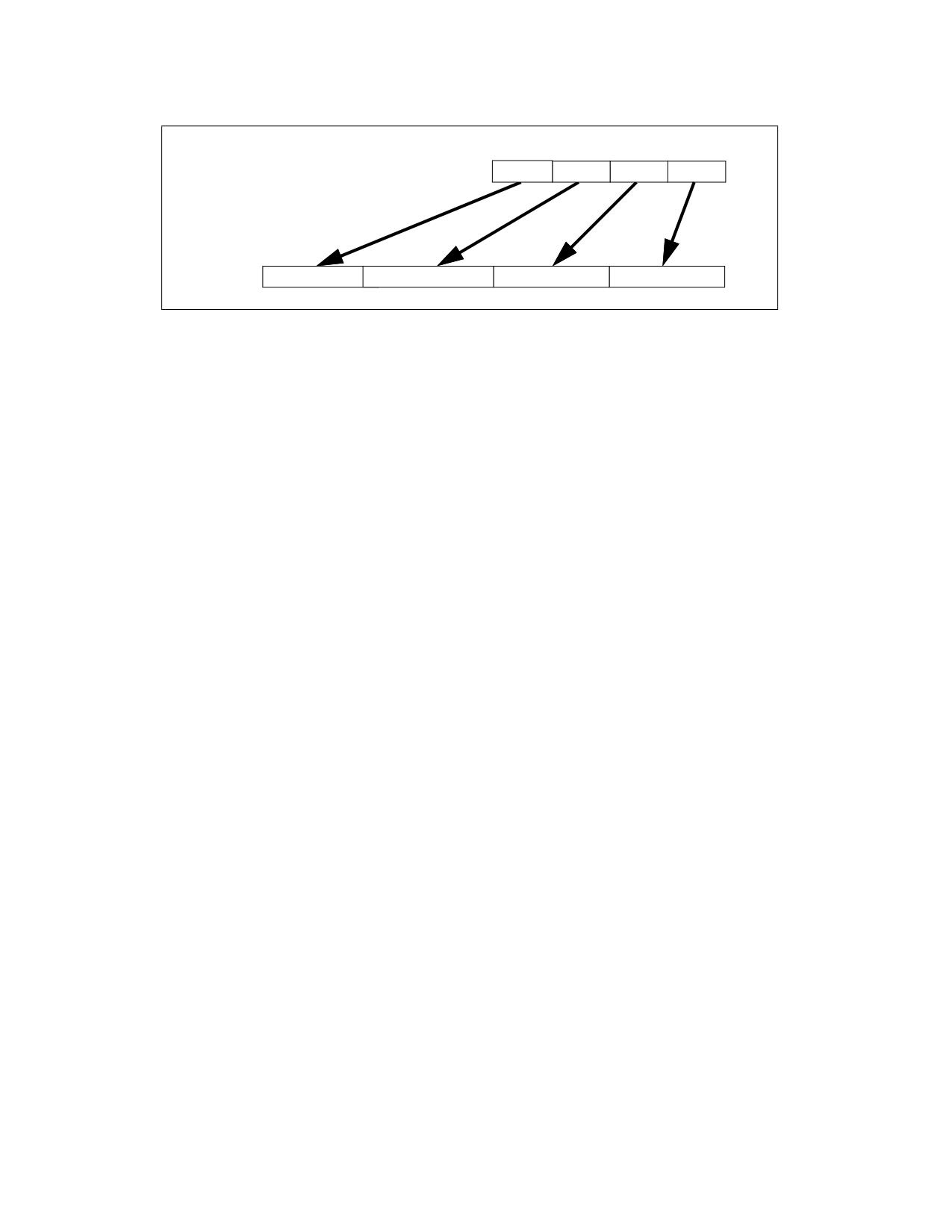
SRC
X3
X2
X1
X0
X3
X2
X1
X0
DEST
Figure 3-6. CVTDQ2PD (VEX.256 encoded version)
Operation
VCVTDQ2PD (EVEX Encoded Versions) When SRC Operand is a Register
(KL, VL) = (2, 128), (4, 256), (8, 512)
FOR j := 0 TO KL-1
i := j * 64
k := j * 32
IF k1[j] OR *no writemask*
THEN DEST[i+63:i] :=
Convert_Integer_To_Double_Precision_Floating_Point(SRC[k+31:k])
ELSE
IF *merging-masking*
; merging-masking
THEN *DEST[i+63:i] remains unchanged*
ELSE
; zeroing-masking
DEST[i+63:i] := 0
FI
FI;
ENDFOR
DEST[MAXVL-1:VL] := 0
VCVTDQ2PD (EVEX Encoded Versions) When SRC Operand is a Memory Source
(KL, VL) = (2, 128), (4, 256), (8, 512)
FOR j := 0 TO KL-1
i := j * 64
k := j * 32
IF k1[j] OR *no writemask*
THEN
IF (EVEX.b = 1)
THEN
DEST[i+63:i] :=
Convert_Integer_To_Double_Precision_Floating_Point(SRC[31:0])
ELSE
DEST[i+63:i] :=
Convert_Integer_To_Double_Precision_Floating_Point(SRC[k+31:k])
FI;
ELSE
IF *merging-masking*
; merging-masking
THEN *DEST[i+63:i] remains unchanged*
ELSE
; zeroing-masking
CVTDQ2PD-Convert Packed Doubleword Integers to Packed Double Precision Floating-Point Values
Vol. 2A
3-209
DEST[i+63:i] := 0
FI
FI;
ENDFOR
DEST[MAXVL-1:VL] := 0
VCVTDQ2PD (VEX.256 Encoded Version)
DEST[63:0] := Convert_Integer_To_Double_Precision_Floating_Point(SRC[31:0])
DEST[127:64] := Convert_Integer_To_Double_Precision_Floating_Point(SRC[63:32])
DEST[191:128] := Convert_Integer_To_Double_Precision_Floating_Point(SRC[95:64])
DEST[255:192] := Convert_Integer_To_Double_Precision_Floating_Point(SRC[127:96)
DEST[MAXVL-1:256] := 0
VCVTDQ2PD (VEX.128 Encoded Version)
DEST[63:0] := Convert_Integer_To_Double_Precision_Floating_Point(SRC[31:0])
DEST[127:64] := Convert_Integer_To_Double_Precision_Floating_Point(SRC[63:32])
DEST[MAXVL-1:128] := 0
CVTDQ2PD (128-bit Legacy SSE Version)
DEST[63:0] := Convert_Integer_To_Double_Precision_Floating_Point(SRC[31:0])
DEST[127:64] := Convert_Integer_To_Double_Precision_Floating_Point(SRC[63:32])
DEST[MAXVL-1:128] (unmodified)
Intel C/C++ Compiler Intrinsic Equivalent
VCVTDQ2PD __m512d _mm512_cvtepi32_pd( __m256i a);
VCVTDQ2PD __m512d _mm512_mask_cvtepi32_pd( __m512d s, __mmask8 k, __m256i a);
VCVTDQ2PD __m512d _mm512_maskz_cvtepi32_pd( __mmask8 k, __m256i a);
VCVTDQ2PD __m256d _mm256_cvtepi32_pd (__m128i src);
VCVTDQ2PD __m256d _mm256_mask_cvtepi32_pd( __m256d s, __mmask8 k, __m256i a);
VCVTDQ2PD __m256d _mm256_maskz_cvtepi32_pd( __mmask8 k, __m256i a);
VCVTDQ2PD __m128d _mm_mask_cvtepi32_pd( __m128d s, __mmask8 k, __m128i a);
VCVTDQ2PD __m128d _mm_maskz_cvtepi32_pd( __mmask8 k, __m128i a);
CVTDQ2PD __m128d _mm_cvtepi32_pd (__m128i src)
Other Exceptions
VEX-encoded instructions, see Table 2-22, “Type 5 Class Exception Conditions.”
EVEX-encoded instructions, see Table 2-53, “Type E5 Class Exception Conditions.”
Additionally:
#UD
If VEX.vvvv != 1111B or EVEX.vvvv != 1111B.
CVTDQ2PD-Convert Packed Doubleword Integers to Packed Double Precision Floating-Point Values
Vol. 2A
3-210

CVTDQ2PS-Convert Packed Doubleword Integers to Packed Single Precision Floating-Point
Values
Opcode
Op /
64/32 bit
CPUID Feature
Description
Instruction
En
Mode
Flag
Support
NP 0F 5B /r
A
V/V
SSE2
Convert four packed signed doubleword integers
CVTDQ2PS xmm1, xmm2/m128
from xmm2/mem to four packed single precision
floating-point values in xmm1.
VEX.128.0F.WIG 5B /r
A
V/V
AVX
Convert four packed signed doubleword integers
VCVTDQ2PS xmm1, xmm2/m128
from xmm2/mem to four packed single precision
floating-point values in xmm1.
VEX.256.0F.WIG 5B /r
A
V/V
AVX
Convert eight packed signed doubleword integers
VCVTDQ2PS ymm1, ymm2/m256
from ymm2/mem to eight packed single precision
floating-point values in ymm1.
EVEX.128.0F.W0 5B /r
B
V/V
(AVX512VL AND
Convert four packed signed doubleword integers
VCVTDQ2PS xmm1 {k1}{z},
AVX512F) OR
from xmm2/m128/m32bcst to four packed single
xmm2/m128/m32bcst
AVX10.1
precision floating-point values in xmm1with
writemask k1.
EVEX.256.0F.W0 5B /r
B
V/V
(AVX512VL AND
Convert eight packed signed doubleword integers
VCVTDQ2PS ymm1 {k1}{z},
AVX512F) OR
from ymm2/m256/m32bcst to eight packed single
ymm2/m256/m32bcst
AVX10.1
precision floating-point values in ymm1with
writemask k1.
EVEX.512.0F.W0 5B /r
B
V/V
AVX512F
Convert sixteen packed signed doubleword integers
VCVTDQ2PS zmm1 {k1}{z},
OR AVX10.1
from zmm2/m512/m32bcst to sixteen packed single
zmm2/m512/m32bcst {er}
precision floating-point values in zmm1with
writemask k1.
Instruction Operand Encoding
Op/En
Tuple Type
Operand 1
Operand 2
Operand 3
Operand 4
A
N/A
ModRM:reg (w)
ModRM:r/m (r)
N/A
N/A
B
Full
ModRM:reg (w)
ModRM:r/m (r)
N/A
N/A
Description
Converts four, eight or sixteen packed signed doubleword integers in the source operand to four, eight or sixteen
packed single precision floating-point values in the destination operand.
EVEX encoded versions: The source operand can be a ZMM/YMM/XMM register, a 512/256/128-bit memory loca-
tion or a 512/256/128-bit vector broadcasted from a 32-bit memory location. The destination operand is a
ZMM/YMM/XMM register conditionally updated with writemask k1.
VEX.256 encoded version: The source operand is a YMM register or 256- bit memory location. The destination
operand is a YMM register. Bits (MAXVL-1:256) of the corresponding register destination are zeroed.
VEX.128 encoded version: The source operand is an XMM register or 128- bit memory location. The destination
operand is a XMM register. The upper bits (MAXVL-1:128) of the corresponding register destination are zeroed.
128-bit Legacy SSE version: The source operand is an XMM register or 128- bit memory location. The destination
operand is an XMM register. The upper Bits (MAXVL-1:128) of the corresponding register destination are unmodi-
fied.
VEX.vvvv and EVEX.vvvv are reserved and must be 1111b, otherwise instructions will #UD.
CVTDQ2PS-Convert Packed Doubleword Integers to Packed Single Precision Floating-Point Values
Vol. 2A
3-211
Operation
VCVTDQ2PS (EVEX Encoded Versions) When SRC Operand is a Register
(KL, VL) = (4, 128), (8, 256), (16, 512)
IF (VL = 512) AND (EVEX.b = 1)
THEN
SET_ROUNDING_MODE_FOR_THIS_INSTRUCTION(EVEX.RC); ; refer to Table 15-4 in the Intel® 64 and IA-32 Architectures
Software Developer’s Manual, Volume 1
ELSE
SET_ROUNDING_MODE_FOR_THIS_INSTRUCTION(MXCSR.RC); ; refer to Table 15-4 in the Intel® 64 and IA-32 Architectures
Software Developer’s Manual, Volume 1
FI;
FOR j := 0 TO KL-1
i := j * 32
IF k1[j] OR *no writemask*
THEN DEST[i+31:i] :=
Convert_Integer_To_Single_Precision_Floating_Point(SRC[i+31:i])
ELSE
IF *merging-masking*
; merging-masking
THEN *DEST[i+31:i] remains unchanged*
ELSE
; zeroing-masking
DEST[i+31:i] := 0
FI
FI;
ENDFOR
DEST[MAXVL-1:VL] := 0
VCVTDQ2PS (EVEX Encoded Versions) When SRC Operand is a Memory Source
(KL, VL) = (4, 128), (8, 256), (16, 512)
FOR j := 0 TO KL-1
i := j * 32
IF k1[j] OR *no writemask*
THEN
IF (EVEX.b = 1)
THEN
DEST[i+31:i] :=
Convert_Integer_To_Single_Precision_Floating_Point(SRC[31:0])
ELSE
DEST[i+31:i] :=
Convert_Integer_To_Single_Precision_Floating_Point(SRC[i+31:i])
FI;
ELSE
IF *merging-masking*
; merging-masking
THEN *DEST[i+31:i] remains unchanged*
ELSE
; zeroing-masking
DEST[i+31:i] := 0
FI
FI;
ENDFOR
DEST[MAXVL-1:VL] := 0
CVTDQ2PS-Convert Packed Doubleword Integers to Packed Single Precision Floating-Point Values
Vol. 2A
3-212
VCVTDQ2PS (VEX.256 Encoded Version)
DEST[31:0] := Convert_Integer_To_Single_Precision_Floating_Point(SRC[31:0])
DEST[63:32] := Convert_Integer_To_Single_Precision_Floating_Point(SRC[63:32])
DEST[95:64] := Convert_Integer_To_Single_Precision_Floating_Point(SRC[95:64])
DEST[127:96] := Convert_Integer_To_Single_Precision_Floating_Point(SRC[127:96)
DEST[159:128] := Convert_Integer_To_Single_Precision_Floating_Point(SRC[159:128])
DEST[191:160] := Convert_Integer_To_Single_Precision_Floating_Point(SRC[191:160])
DEST[223:192] := Convert_Integer_To_Single_Precision_Floating_Point(SRC[223:192])
DEST[255:224] := Convert_Integer_To_Single_Precision_Floating_Point(SRC[255:224)
DEST[MAXVL-1:256] := 0
VCVTDQ2PS (VEX.128 Encoded Version)
DEST[31:0] := Convert_Integer_To_Single_Precision_Floating_Point(SRC[31:0])
DEST[63:32] := Convert_Integer_To_Single_Precision_Floating_Point(SRC[63:32])
DEST[95:64] := Convert_Integer_To_Single_Precision_Floating_Point(SRC[95:64])
DEST[127:96] := Convert_Integer_To_Single_Precision_Floating_Point(SRC[127z:96)
DEST[MAXVL-1:128] := 0
CVTDQ2PS (128-bit Legacy SSE Version)
DEST[31:0] := Convert_Integer_To_Single_Precision_Floating_Point(SRC[31:0])
DEST[63:32] := Convert_Integer_To_Single_Precision_Floating_Point(SRC[63:32])
DEST[95:64] := Convert_Integer_To_Single_Precision_Floating_Point(SRC[95:64])
DEST[127:96] := Convert_Integer_To_Single_Precision_Floating_Point(SRC[127z:96)
DEST[MAXVL-1:128] (unmodified)
Intel C/C++ Compiler Intrinsic Equivalent
VCVTDQ2PS __m512 _mm512_cvtepi32_ps( __m512i a);
VCVTDQ2PS __m512 _mm512_mask_cvtepi32_ps( __m512 s, __mmask16 k, __m512i a);
VCVTDQ2PS __m512 _mm512_maskz_cvtepi32_ps( __mmask16 k, __m512i a);
VCVTDQ2PS __m512 _mm512_cvt_roundepi32_ps( __m512i a, int r);
VCVTDQ2PS __m512 _mm512_mask_cvt_roundepi_ps( __m512 s, __mmask16 k, __m512i a, int r);
VCVTDQ2PS __m512 _mm512_maskz_cvt_roundepi32_ps( __mmask16 k, __m512i a, int r);
VCVTDQ2PS __m256 _mm256_mask_cvtepi32_ps( __m256 s, __mmask8 k, __m256i a);
VCVTDQ2PS __m256 _mm256_maskz_cvtepi32_ps( __mmask8 k, __m256i a);
VCVTDQ2PS __m128 _mm_mask_cvtepi32_ps( __m128 s, __mmask8 k, __m128i a);
VCVTDQ2PS __m128 _mm_maskz_cvtepi32_ps( __mmask8 k, __m128i a);
CVTDQ2PS __m256 _mm256_cvtepi32_ps (__m256i src)
CVTDQ2PS __m128 _mm_cvtepi32_ps (__m128i src)
SIMD Floating-Point Exceptions
Precision.
Other Exceptions
VEX-encoded instructions, see Table 2-19, “Type 2 Class Exception Conditions.”
EVEX-encoded instructions, see Table 2-48, “Type E2 Class Exception Conditions.”
Additionally:
#UD
If VEX.vvvv != 1111B or EVEX.vvvv != 1111B.
CVTDQ2PS-Convert Packed Doubleword Integers to Packed Single Precision Floating-Point Values
Vol. 2A
3-213

CVTPD2DQ-Convert Packed Double Precision Floating-Point Values to Packed Doubleword
Integers
Opcode
Op /
64/32 bit
CPUID Feature
Description
Instruction
En
Mode
Flag
Support
F2 0F E6 /r
A
V/V
SSE2
Convert two packed double precision floating-point
CVTPD2DQ xmm1, xmm2/m128
values in xmm2/mem to two signed doubleword
integers in xmm1.
VEX.128.F2.0F.WIG E6 /r
A
V/V
AVX
Convert two packed double precision floating-point
VCVTPD2DQ xmm1, xmm2/m128
values in xmm2/mem to two signed doubleword
integers in xmm1.
VEX.256.F2.0F.WIG E6 /r
A
V/V
AVX
Convert four packed double precision floating-point
VCVTPD2DQ xmm1, ymm2/m256
values in ymm2/mem to four signed doubleword
integers in xmm1.
EVEX.128.F2.0F.W1 E6 /r
B
V/V
(AVX512VL AND
Convert two packed double precision floating-point
VCVTPD2DQ xmm1 {k1}{z},
AVX512F) OR
values in xmm2/m128/m64bcst to two signed
xmm2/m128/m64bcst
AVX10.1
doubleword integers in xmm1 subject to writemask
k1.
EVEX.256.F2.0F.W1 E6 /r
B
V/V
(AVX512VL AND
Convert four packed double precision floating-point
VCVTPD2DQ xmm1 {k1}{z},
AVX512F) OR
values in ymm2/m256/m64bcst to four signed
ymm2/m256/m64bcst
AVX10.1
doubleword integers in xmm1 subject to writemask
k1.
EVEX.512.F2.0F.W1 E6 /r
B
V/V
AVX512F
Convert eight packed double precision floating-
VCVTPD2DQ ymm1 {k1}{z},
OR AVX10.1
point values in zmm2/m512/m64bcst to eight
zmm2/m512/m64bcst {er}
signed doubleword integers in ymm1 subject to
writemask k1.
Instruction Operand Encoding
Op/En
Tuple Type
Operand 1
Operand 2
Operand 3
Operand 4
A
N/A
ModRM:reg (w)
ModRM:r/m (r)
N/A
N/A
B
Full
ModRM:reg (w)
ModRM:r/m (r)
N/A
N/A
Description
Converts packed double precision floating-point values in the source operand (second operand) to packed signed
doubleword integers in the destination operand (first operand).
When a conversion is inexact, the value returned is rounded according to the rounding control bits in the MXCSR
register or the embedded rounding control bits. If a converted result cannot be represented in the destination
format, the floating-point invalid exception is raised, and if this exception is masked, the indefinite integer value
80000000H is returned.
EVEX encoded versions: The source operand is a ZMM/YMM/XMM register, a 512-bit memory location, or a 512-bit
vector broadcasted from a 64-bit memory location. The destination operand is a ZMM/YMM/XMM register condi-
tionally updated with writemask k1. The upper bits (MAXVL-1:256/128/64) of the corresponding destination are
zeroed.
VEX.256 encoded version: The source operand is a YMM register or 256- bit memory location. The destination
operand is an XMM register. The upper bits (MAXVL-1:128) of the corresponding ZMM register destination are
zeroed.
VEX.128 encoded version: The source operand is an XMM register or 128- bit memory location. The destination
operand is a XMM register. The upper bits (MAXVL-1:64) of the corresponding ZMM register destination are zeroed.
128-bit Legacy SSE version: The source operand is an XMM register or 128- bit memory location. The destination
operand is an XMM register. Bits[127:64] of the destination XMM register are zeroed. However, the upper bits
(MAXVL-1:128) of the corresponding ZMM register destination are unmodified.
CVTPD2DQ-Convert Packed Double Precision Floating-Point Values to Packed Doubleword Integers
Vol. 2A
3-214
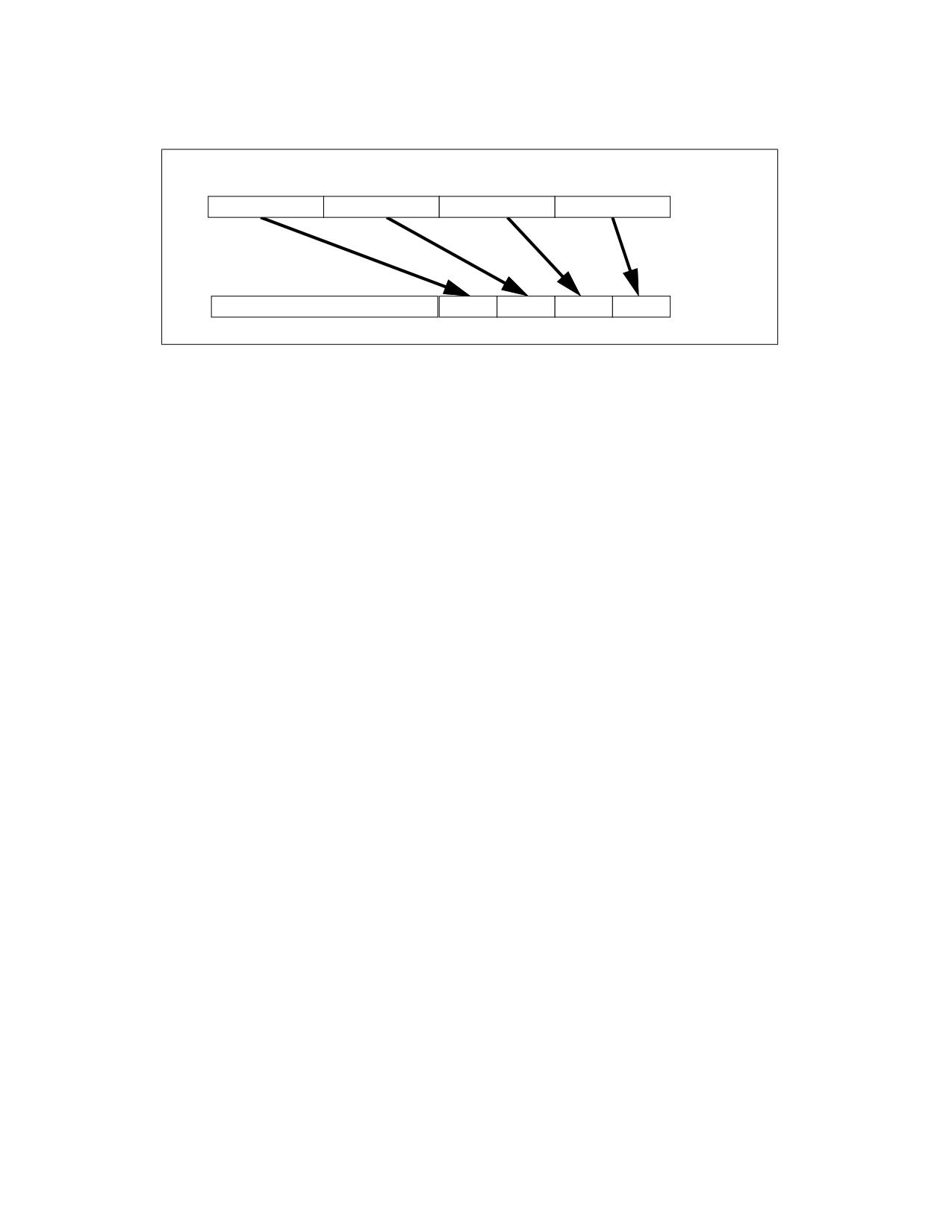
VEX.vvvv and EVEX.vvvv are reserved and must be 1111b, otherwise instructions will #UD.
SRC
X3
X2
X1
X0
DEST
0
X3
X2
X1
X0
Figure 3-7. VCVTPD2DQ (VEX.256 encoded version)
Operation
VCVTPD2DQ (EVEX Encoded Versions) When SRC Operand is a Register
(KL, VL) = (2, 128), (4, 256), (8, 512)
IF (VL = 512) AND (EVEX.b = 1)
THEN
SET_ROUNDING_MODE_FOR_THIS_INSTRUCTION(EVEX.RC);
ELSE
SET_ROUNDING_MODE_FOR_THIS_INSTRUCTION(MXCSR.RC);
FI;
FOR j := 0 TO KL-1
i := j * 32
k := j * 64
IF k1[j] OR *no writemask*
THEN DEST[i+31:i] :=
Convert_Double_Precision_Floating_Point_To_Integer(SRC[k+63:k])
ELSE
IF *merging-masking*
; merging-masking
THEN *DEST[i+31:i] remains unchanged*
ELSE
; zeroing-masking
DEST[i+31:i] := 0
FI
FI;
ENDFOR
DEST[MAXVL-1:VL/2] := 0
CVTPD2DQ-Convert Packed Double Precision Floating-Point Values to Packed Doubleword Integers
Vol. 2A
3-215
VCVTPD2DQ (EVEX Encoded Versions) When SRC Operand is a Memory Source
(KL, VL) = (2, 128), (4, 256), (8, 512)
FOR j := 0 TO KL-1
i := j * 32
k := j * 64
IF k1[j] OR *no writemask*
THEN
IF (EVEX.b = 1)
THEN
DEST[i+31:i] :=
Convert_Double_Precision_Floating_Point_To_Integer(SRC[63:0])
ELSE
DEST[i+31:i] :=
Convert_Double_Precision_Floating_Point_To_Integer(SRC[k+63:k])
FI;
ELSE
IF *merging-masking*
; merging-masking
THEN *DEST[i+31:i] remains unchanged*
ELSE
; zeroing-masking
DEST[i+31:i] := 0
FI
FI;
ENDFOR
DEST[MAXVL-1:VL/2] := 0
VCVTPD2DQ (VEX.256 Encoded Version)
DEST[31:0] := Convert_Double_Precision_Floating_Point_To_Integer(SRC[63:0])
DEST[63:32] := Convert_Double_Precision_Floating_Point_To_Integer(SRC[127:64])
DEST[95:64] := Convert_Double_Precision_Floating_Point_To_Integer(SRC[191:128])
DEST[127:96] := Convert_Double_Precision_Floating_Point_To_Integer(SRC[255:192)
DEST[MAXVL-1:128] := 0
VCVTPD2DQ (VEX.128 Encoded Version)
DEST[31:0] := Convert_Double_Precision_Floating_Point_To_Integer(SRC[63:0])
DEST[63:32] := Convert_Double_Precision_Floating_Point_To_Integer(SRC[127:64])
DEST[MAXVL-1:64] := 0
CVTPD2DQ (128-bit Legacy SSE Version)
DEST[31:0] := Convert_Double_Precision_Floating_Point_To_Integer(SRC[63:0])
DEST[63:32] := Convert_Double_Precision_Floating_Point_To_Integer(SRC[127:64])
DEST[127:64] := 0
DEST[MAXVL-1:128] (unmodified)
CVTPD2DQ-Convert Packed Double Precision Floating-Point Values to Packed Doubleword Integers
Vol. 2A
3-216
Intel C/C++ Compiler Intrinsic Equivalent
VCVTPD2DQ __m256i _mm512_cvtpd_epi32( __m512d a);
VCVTPD2DQ __m256i _mm512_mask_cvtpd_epi32( __m256i s, __mmask8 k, __m512d a);
VCVTPD2DQ __m256i _mm512_maskz_cvtpd_epi32( __mmask8 k, __m512d a);
VCVTPD2DQ __m256i _mm512_cvt_roundpd_epi32( __m512d a, int r);
VCVTPD2DQ __m256i _mm512_mask_cvt_roundpd_epi32( __m256i s, __mmask8 k, __m512d a, int r);
VCVTPD2DQ __m256i _mm512_maskz_cvt_roundpd_epi32( __mmask8 k, __m512d a, int r);
VCVTPD2DQ __m128i _mm256_mask_cvtpd_epi32( __m128i s, __mmask8 k, __m256d a);
VCVTPD2DQ __m128i _mm256_maskz_cvtpd_epi32( __mmask8 k, __m256d a);
VCVTPD2DQ __m128i _mm_mask_cvtpd_epi32( __m128i s, __mmask8 k, __m128d a);
VCVTPD2DQ __m128i _mm_maskz_cvtpd_epi32( __mmask8 k, __m128d a);
VCVTPD2DQ __m128i _mm256_cvtpd_epi32 (__m256d src)
CVTPD2DQ __m128i _mm_cvtpd_epi32 (__m128d src)
SIMD Floating-Point Exceptions
Invalid, Precision.
Other Exceptions
See Table 2-19, “Type 2 Class Exception Conditions.”
EVEX-encoded instructions, see Table 2-48, “Type E2 Class Exception Conditions.”
Additionally:
#UD
If VEX.vvvv != 1111B or EVEX.vvvv != 1111B.
CVTPD2DQ-Convert Packed Double Precision Floating-Point Values to Packed Doubleword Integers
Vol. 2A
3-217

CVTPD2PI-Convert Packed Double Precision Floating-Point Values to Packed Dword Integers
Opcode/
Op/
64/32 bit
CPUID
Description
Instruction
En
Mode
Feature
Support
Flag
66 0F 2D /r
RM
V/V
SSE2
Convert two packed double precision floating-
point values from xmm/m128 to two packed
CVTPD2PI mm, xmm/m128
signed doubleword integers in mm.
Instruction Operand Encoding
Op/En
Operand 1
Operand 2
Operand 3
Operand 4
RM
ModRM:reg (w)
ModRM:r/m (r)
N/A
N/A
Description
Converts two packed double precision floating-point values in the source operand (second operand) to two packed
signed doubleword integers in the destination operand (first operand).
The source operand can be an XMM register or a 128-bit memory location. The destination operand is an MMX tech-
nology register.
When a conversion is inexact, the value returned is rounded according to the rounding control bits in the MXCSR
register. If a converted result is larger than the maximum signed doubleword integer, the floating-point invalid
exception is raised, and if this exception is masked, the indefinite integer value 80000000H is returned.
This instruction causes a transition from x87 FPU to MMX technology operation (that is, the x87 FPU top-of-stack
pointer is set to 0 and the x87 FPU tag word is set to all 0s [valid]). If this instruction is executed while an x87 FPU
floating-point exception is pending, the exception is handled before the CVTPD2PI instruction is executed.
In 64-bit mode, use of the REX.R prefix permits this instruction to access additional registers (XMM8-XMM15).
Operation
DEST[31:0] := Convert_Double_Precision_Floating_Point_To_Integer32(SRC[63:0]);
DEST[63:32] := Convert_Double_Precision_Floating_Point_To_Integer32(SRC[127:64]);
Intel C/C++ Compiler Intrinsic Equivalent
CVTPD1PI __m64 _mm_cvtpd_pi32(__m128d a)
SIMD Floating-Point Exceptions
Invalid, Precision.
Other Exceptions
See Section 25.25.3, “Exception Conditions of Legacy SIMD Instructions Operating on MMX Registers” in the Intel®
64 and IA-32 Architectures Software Developer’s Manual, Volume 3B.
CVTPD2PI-Convert Packed Double Precision Floating-Point Values to Packed Dword Integers
Vol. 2A
3-218

CVTPD2PS-Convert Packed Double Precision Floating-Point Values to Packed Single Precision
Floating-Point Values
Opcode/
Op /
64/32 bit
CPUID Feature
Description
Instruction
En
Mode
Flag
Support
66 0F 5A /r
A
V/V
SSE2
Convert two packed double precision floating-point
CVTPD2PS xmm1, xmm2/m128
values in xmm2/mem to two single precision
floating-point values in xmm1.
VEX.128.66.0F.WIG 5A /r
A
V/V
AVX
Convert two packed double precision floating-point
VCVTPD2PS xmm1, xmm2/m128
values in xmm2/mem to two single precision
floating-point values in xmm1.
VEX.256.66.0F.WIG 5A /r
A
V/V
AVX
Convert four packed double precision floating-
VCVTPD2PS xmm1, ymm2/m256
point values in ymm2/mem to four single precision
floating-point values in xmm1.
EVEX.128.66.0F.W1 5A /r
B
V/V
(AVX512VL AND
Convert two packed double precision floating-point
VCVTPD2PS xmm1 {k1}{z},
AVX512F) OR
values in xmm2/m128/m64bcst to two single
xmm2/m128/m64bcst
AVX10.1
precision floating-point values in xmm1with
writemask k1.
EVEX.256.66.0F.W1 5A /r
B
V/V
(AVX512VL AND
Convert four packed double precision floating-
VCVTPD2PS xmm1 {k1}{z},
AVX512F) OR
point values in ymm2/m256/m64bcst to four
ymm2/m256/m64bcst
AVX10.1
single precision floating-point values in xmm1with
writemask k1.
EVEX.512.66.0F.W1 5A /r
B
V/V
AVX512F
Convert eight packed double precision floating-
VCVTPD2PS ymm1 {k1}{z},
OR AVX10.1
point values in zmm2/m512/m64bcst to eight
zmm2/m512/m64bcst {er}
single precision floating-point values in ymm1with
writemask k1.
Instruction Operand Encoding
Op/En
Tuple Type
Operand 1
Operand 2
Operand 3
Operand 4
A
N/A
ModRM:reg (w)
ModRM:r/m (r)
N/A
N/A
B
Full
ModRM:reg (w)
ModRM:r/m (r)
N/A
N/A
Description
Converts two, four or eight packed double precision floating-point values in the source operand (second operand)
to two, four or eight packed single precision floating-point values in the destination operand (first operand).
When a conversion is inexact, the value returned is rounded according to the rounding control bits in the MXCSR
register or the embedded rounding control bits.
EVEX encoded versions: The source operand is a ZMM/YMM/XMM register, a 512/256/128-bit memory location, or
a 512/256/128-bit vector broadcasted from a 64-bit memory location. The destination operand is a
YMM/XMM/XMM (low 64-bits) register conditionally updated with writemask k1. The upper bits (MAXVL-
1:256/128/64) of the corresponding destination are zeroed.
VEX.256 encoded version: The source operand is a YMM register or 256- bit memory location. The destination
operand is an XMM register. The upper bits (MAXVL-1:128) of the corresponding ZMM register destination are
zeroed.
VEX.128 encoded version: The source operand is an XMM register or 128- bit memory location. The destination
operand is a XMM register. The upper bits (MAXVL-1:64) of the corresponding ZMM register destination are zeroed.
128-bit Legacy SSE version: The source operand is an XMM register or 128- bit memory location. The destination
operand is an XMM register. Bits[127:64] of the destination XMM register are zeroed. However, the upper Bits
(MAXVL-1:128) of the corresponding ZMM register destination are unmodified.
VEX.vvvv and EVEX.vvvv are reserved and must be 1111b otherwise instructions will #UD.
CVTPD2PS-Convert Packed Double Precision Floating-Point Values to Packed Single Precision Floating-Point Values
Vol. 2A
3-219
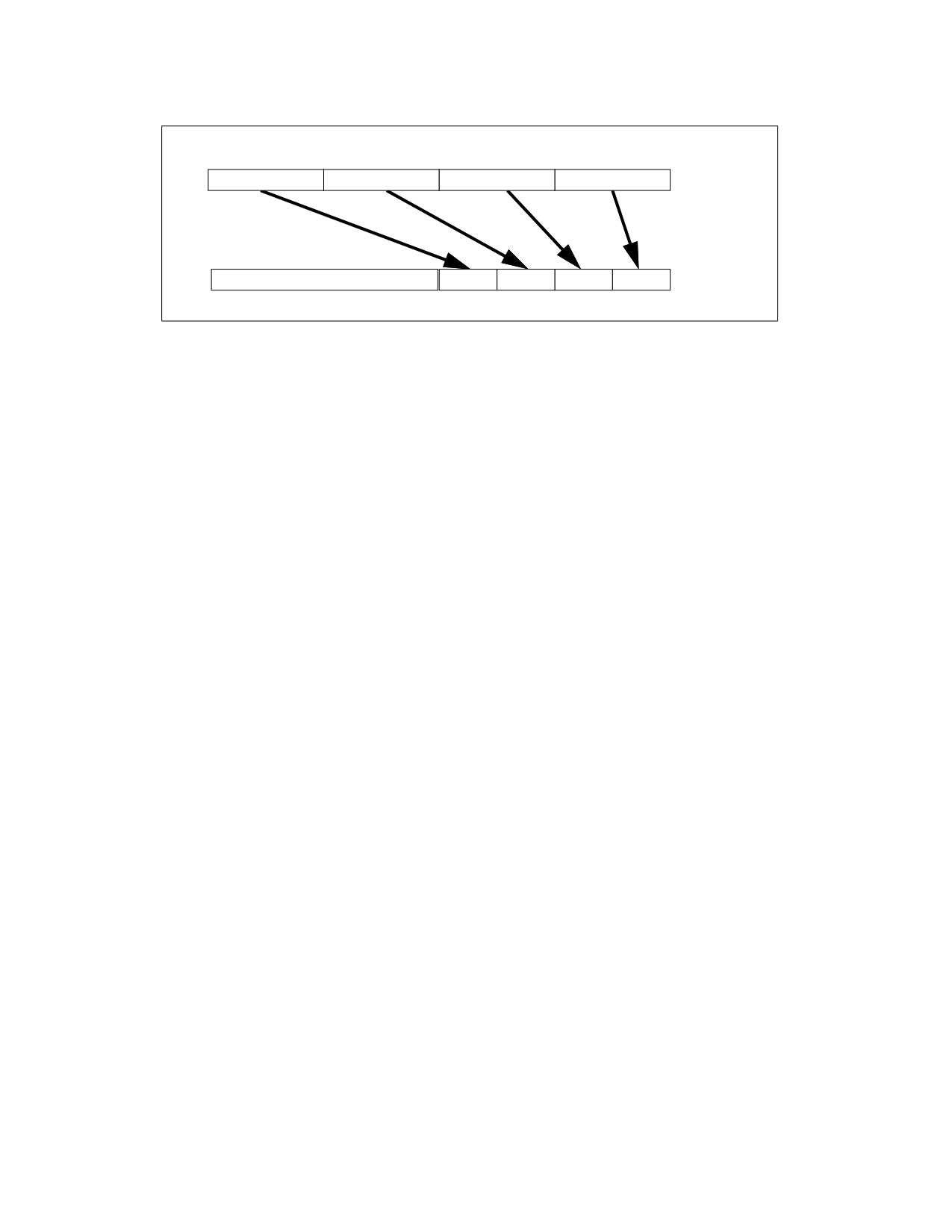
SRC
X3
X2
X1
X0
DEST
0
X3
X2
X1
X0
Figure 3-8. VCVTPD2PS (VEX.256 encoded version)
Operation
VCVTPD2PS (EVEX Encoded Version) When SRC Operand is a Register
(KL, VL) = (2, 128), (4, 256), (8, 512)
IF (VL = 512) AND (EVEX.b = 1)
THEN
SET_ROUNDING_MODE_FOR_THIS_INSTRUCTION(EVEX.RC);
ELSE
SET_ROUNDING_MODE_FOR_THIS_INSTRUCTION(MXCSR.RC);
FI;
FOR j := 0 TO KL-1
i := j * 32
k := j * 64
IF k1[j] OR *no writemask*
THEN
DEST[i+31:i] := Convert_Double_Precision_Floating_Point_To_Single_Precision_Floating_Point(SRC[k+63:k])
ELSE
IF *merging-masking*
; merging-masking
THEN *DEST[i+31:i] remains unchanged*
ELSE
; zeroing-masking
DEST[i+31:i] := 0
FI
FI;
ENDFOR
DEST[MAXVL-1:VL/2] := 0
CVTPD2PS-Convert Packed Double Precision Floating-Point Values to Packed Single Precision Floating-Point Values
Vol. 2A
3-220
VCVTPD2PS (EVEX Encoded Version) When SRC Operand is a Memory Source
(KL, VL) = (2, 128), (4, 256), (8, 512)
FOR j := 0 TO KL-1
i := j * 32
k := j * 64
IF k1[j] OR *no writemask*
THEN
IF (EVEX.b = 1)
THEN
DEST[i+31:i] :=Convert_Double_Precision_Floating_Point_To_Single_Precision_Floating_Point(SRC[63:0])
ELSE
DEST[i+31:i] := Convert_Double_Precision_Floating_Point_To_Single_Precision_Floating_Point(SRC[k+63:k])
FI;
ELSE
IF *merging-masking*
; merging-masking
THEN *DEST[i+31:i] remains unchanged*
ELSE
; zeroing-masking
DEST[i+31:i] := 0
FI
FI;
ENDFOR
DEST[MAXVL-1:VL/2] := 0
VCVTPD2PS (VEX.256 Encoded Version)
DEST[31:0] := Convert_Double_Precision_To_Single_Precision_Floating_Point(SRC[63:0])
DEST[63:32] := Convert_Double_Precision_To_Single_Precision_Floating_Point(SRC[127:64])
DEST[95:64] := Convert_Double_Precision_To_Single_Precision_Floating_Point(SRC[191:128])
DEST[127:96] := Convert_Double_Precision_To_Single_Precision_Floating_Point(SRC[255:192)
DEST[MAXVL-1:128] := 0
VCVTPD2PS (VEX.128 Encoded Version)
DEST[31:0] := Convert_Double_Precision_To_Single_Precision_Floating_Point(SRC[63:0])
DEST[63:32] := Convert_Double_Precision_To_Single_Precision_Floating_Point(SRC[127:64])
DEST[MAXVL-1:64] := 0
CVTPD2PS (128-bit Legacy SSE Version)
DEST[31:0] := Convert_Double_Precision_To_Single_Precision_Floating_Point(SRC[63:0])
DEST[63:32] := Convert_Double_Precision_To_Single_Precision_Floating_Point(SRC[127:64])
DEST[127:64] := 0
DEST[MAXVL-1:128] (unmodified)
CVTPD2PS-Convert Packed Double Precision Floating-Point Values to Packed Single Precision Floating-Point Values
Vol. 2A
3-221
Intel C/C++ Compiler Intrinsic Equivalent
VCVTPD2PS __m256 _mm512_cvtpd_ps( __m512d a);
VCVTPD2PS __m256 _mm512_mask_cvtpd_ps( __m256 s, __mmask8 k, __m512d a);
VCVTPD2PS __m256 _mm512_maskz_cvtpd_ps( __mmask8 k, __m512d a);
VCVTPD2PS __m256 _mm512_cvt_roundpd_ps( __m512d a, int r);
VCVTPD2PS __m256 _mm512_mask_cvt_roundpd_ps( __m256 s, __mmask8 k, __m512d a, int r);
VCVTPD2PS __m256 _mm512_maskz_cvt_roundpd_ps( __mmask8 k, __m512d a, int r);
VCVTPD2PS __m128 _mm256_mask_cvtpd_ps( __m128 s, __mmask8 k, __m256d a);
VCVTPD2PS __m128 _mm256_maskz_cvtpd_ps( __mmask8 k, __m256d a);
VCVTPD2PS __m128 _mm_mask_cvtpd_ps( __m128 s, __mmask8 k, __m128d a);
VCVTPD2PS __m128 _mm_maskz_cvtpd_ps( __mmask8 k, __m128d a);
VCVTPD2PS __m128 _mm256_cvtpd_ps (__m256d a)
CVTPD2PS __m128 _mm_cvtpd_ps (__m128d a)
SIMD Floating-Point Exceptions
Invalid, Precision, Underflow, Overflow, Denormal.
Other Exceptions
VEX-encoded instructions, see Table 2-19, “Type 2 Class Exception Conditions.”
EVEX-encoded instructions, see Table 2-48, “Type E2 Class Exception Conditions.”
Additionally:
#UD
If VEX.vvvv != 1111B or EVEX.vvvv != 1111B.
CVTPD2PS-Convert Packed Double Precision Floating-Point Values to Packed Single Precision Floating-Point Values
Vol. 2A
3-222

CVTPI2PD-Convert Packed Dword Integers to Packed Double Precision Floating-Point Values
Opcode/
Op/
64-Bit
Compat/
Description
Instruction
En
Mode
Leg Mode
66 0F 2A /r
RM
Valid
Valid
Convert two packed signed doubleword
integers from mm/mem64 to two packed
CVTPI2PD xmm, mm/m641
double precision floating-point values in xmm.
NOTES:
1. Operation is different for different operand sets; see the Description section.
Instruction Operand Encoding
Op/En
Operand 1
Operand 2
Operand 3
Operand 4
RM
ModRM:reg (w)
ModRM:r/m (r)
N/A
N/A
Description
Converts two packed signed doubleword integers in the source operand (second operand) to two packed double
precision floating-point values in the destination operand (first operand).
The source operand can be an MMX technology register or a 64-bit memory location. The destination operand is an
XMM register. In addition, depending on the operand configuration:
• For operands xmm, mm: the instruction causes a transition from x87 FPU to MMX technology operation (that
is, the x87 FPU top-of-stack pointer is set to 0 and the x87 FPU tag word is set to all 0s [valid]). If this
instruction is executed while an x87 FPU floating-point exception is pending, the exception is handled before
the CVTPI2PD instruction is executed.
• For operands xmm, m64: the instruction does not cause a transition to MMX technology and does not take
x87 FPU exceptions.
In 64-bit mode, use of the REX.R prefix permits this instruction to access additional registers (XMM8-XMM15).
Operation
DEST[63:0] := Convert_Integer_To_Double_Precision_Floating_Point(SRC[31:0]);
DEST[127:64] := Convert_Integer_To_Double_Precision_Floating_Point(SRC[63:32]);
Intel C/C++ Compiler Intrinsic Equivalent
CVTPI2PD __m128d _mm_cvtpi32_pd(__m64 a)
SIMD Floating-Point Exceptions
None.
Other Exceptions
See Section 25.25.3, “Exception Conditions of Legacy SIMD Instructions Operating on MMX Registers” in the Intel®
64 and IA-32 Architectures Software Developer’s Manual, Volume 3B.
CVTPI2PD-Convert Packed Dword Integers to Packed Double Precision Floating-Point Values
Vol. 2A
3-223

CVTPI2PS-Convert Packed Dword Integers to Packed Single Precision Floating-Point Values
Opcode/
Op/
64-Bit
Compat/
Description
Instruction
En
Mode
Leg Mode
NP 0F 2A /r
RM
Valid
Valid
Convert two signed doubleword integers
from mm/m64 to two single precision
CVTPI2PS xmm, mm/m64
floating-point values in xmm.
Instruction Operand Encoding
Op/En
Operand 1
Operand 2
Operand 3
Operand 4
RM
ModRM:reg (r, w)
ModRM:r/m (r)
N/A
N/A
Description
Converts two packed signed doubleword integers in the source operand (second operand) to two packed single
precision floating-point values in the destination operand (first operand).
The source operand can be an MMX technology register or a 64-bit memory location. The destination operand is an
XMM register. The results are stored in the low quadword of the destination operand, and the high quadword
remains unchanged. When a conversion is inexact, the value returned is rounded according to the rounding control
bits in the MXCSR register.
This instruction causes a transition from x87 FPU to MMX technology operation (that is, the x87 FPU top-of-stack
pointer is set to 0 and the x87 FPU tag word is set to all 0s [valid]). If this instruction is executed while an x87 FPU
floating-point exception is pending, the exception is handled before the CVTPI2PS instruction is executed.
In 64-bit mode, use of the REX.R prefix permits this instruction to access additional registers (XMM8-XMM15).
Operation
DEST[31:0] := Convert_Integer_To_Single_Precision_Floating_Point(SRC[31:0]);
DEST[63:32] := Convert_Integer_To_Single_Precision_Floating_Point(SRC[63:32]);
(* High quadword of destination unchanged *)
Intel C/C++ Compiler Intrinsic Equivalent
CVTPI2PS __m128 _mm_cvtpi32_ps(__m128 a, __m64 b)
SIMD Floating-Point Exceptions
Precision.
Other Exceptions
See Section 25.25.3, “Exception Conditions of Legacy SIMD Instructions Operating on MMX Registers” in the Intel®
64 and IA-32 Architectures Software Developer’s Manual, Volume 3B.
CVTPI2PS-Convert Packed Dword Integers to Packed Single Precision Floating-Point Values
Vol. 2A
3-224

CVTPS2DQ-Convert Packed Single Precision Floating-Point Values to Packed Signed
Doubleword Integer Values
Opcode/
Op /
64/32 bit
CPUID Feature
Description
Instruction
En
Mode
Flag
Support
66 0F 5B /r
A
V/V
SSE2
Convert four packed single precision floating-point
CVTPS2DQ xmm1, xmm2/m128
values from xmm2/mem to four packed signed
doubleword values in xmm1.
VEX.128.66.0F.WIG 5B /r
A
V/V
AVX
Convert four packed single precision floating-point
VCVTPS2DQ xmm1, xmm2/m128
values from xmm2/mem to four packed signed
doubleword values in xmm1.
VEX.256.66.0F.WIG 5B /r
A
V/V
AVX
Convert eight packed single precision floating-point
VCVTPS2DQ ymm1, ymm2/m256
values from ymm2/mem to eight packed signed
doubleword values in ymm1.
EVEX.128.66.0F.W0 5B /r
B
V/V
(AVX512VL AND
Convert four packed single precision floating-point
VCVTPS2DQ xmm1 {k1}{z},
AVX512F) OR
values from xmm2/m128/m32bcst to four packed
xmm2/m128/m32bcst
AVX10.1
signed doubleword values in xmm1 subject to
writemask k1.
EVEX.256.66.0F.W0 5B /r
B
V/V
(AVX512VL AND
Convert eight packed single precision floating-point
VCVTPS2DQ ymm1 {k1}{z},
AVX512F) OR
values from ymm2/m256/m32bcst to eight packed
ymm2/m256/m32bcst
AVX10.1
signed doubleword values in ymm1 subject to
writemask k1.
EVEX.512.66.0F.W0 5B /r
B
V/V
AVX512F
Convert sixteen packed single precision floating-point
VCVTPS2DQ zmm1 {k1}{z},
OR AVX10.1
values from zmm2/m512/m32bcst to sixteen packed
zmm2/m512/m32bcst {er}
signed doubleword values in zmm1 subject to
writemask k1.
Instruction Operand Encoding
Op/En
Tuple Type
Operand 1
Operand 2
Operand 3
Operand 4
A
N/A
ModRM:reg (w)
ModRM:r/m (r)
N/A
N/A
B
Full
ModRM:reg (w)
ModRM:r/m (r)
N/A
N/A
Description
Converts four, eight or sixteen packed single precision floating-point values in the source operand to four, eight or
sixteen signed doubleword integers in the destination operand.
When a conversion is inexact, the value returned is rounded according to the rounding control bits in the MXCSR
register or the embedded rounding control bits. If a converted result cannot be represented in the destination
format, the floating-point invalid exception is raised, and if this exception is masked, the indefinite integer value
80000000H is returned.
EVEX encoded versions: The source operand is a ZMM register, a 512-bit memory location or a 512-bit vector
broadcasted from a 32-bit memory location. The destination operand is a ZMM register conditionally updated with
writemask k1.
VEX.256 encoded version: The source operand is a YMM register or 256- bit memory location. The destination
operand is a YMM register. The upper bits (MAXVL-1:256) of the corresponding ZMM register destination are
zeroed.
VEX.128 encoded version: The source operand is an XMM register or 128- bit memory location. The destination
operand is a XMM register. The upper bits (MAXVL-1:128) of the corresponding ZMM register destination are
zeroed.
128-bit Legacy SSE version: The source operand is an XMM register or 128- bit memory location. The destination
operand is an XMM register. The upper bits (MAXVL-1:128) of the corresponding ZMM register destination are
unmodified.
CVTPS2DQ-Convert Packed Single Precision Floating-Point Values to Packed Signed Doubleword Integer Values
Vol. 2A
3-225
VEX.vvvv and EVEX.vvvv are reserved and must be 1111b otherwise instructions will #UD.
Operation
VCVTPS2DQ (Encoded Versions) When SRC Operand is a Register
(KL, VL) = (4, 128), (8, 256), (16, 512)
IF (VL = 512) AND (EVEX.b = 1)
THEN
SET_ROUNDING_MODE_FOR_THIS_INSTRUCTION(EVEX.RC);
ELSE
SET_ROUNDING_MODE_FOR_THIS_INSTRUCTION(MXCSR.RC);
FI;
FOR j := 0 TO KL-1
i := j * 32
IF k1[j] OR *no writemask*
THEN DEST[i+31:i] :=
Convert_Single_Precision_Floating_Point_To_Integer(SRC[i+31:i])
ELSE
IF *merging-masking*
; merging-masking
THEN *DEST[i+31:i] remains unchanged*
ELSE
; zeroing-masking
DEST[i+31:i] := 0
FI
FI;
ENDFOR
DEST[MAXVL-1:VL] := 0
VCVTPS2DQ (EVEX Encoded Versions) When SRC Operand is a Memory Source
(KL, VL) = (4, 128), (8, 256), (16, 512)
FOR j := 0 TO 15
i := j * 32
IF k1[j] OR *no writemask*
THEN
IF (EVEX.b = 1)
THEN
DEST[i+31:i] :=
Convert_Single_Precision_Floating_Point_To_Integer(SRC[31:0])
ELSE
DEST[i+31:i] :=
Convert_Single_Precision_Floating_Point_To_Integer(SRC[i+31:i])
FI;
ELSE
IF *merging-masking*
; merging-masking
THEN *DEST[i+31:i] remains unchanged*
ELSE
; zeroing-masking
DEST[i+31:i] := 0
FI
FI;
ENDFOR
DEST[MAXVL-1:VL] := 0
VCVTPS2DQ (VEX.256 Encoded Version)
CVTPS2DQ-Convert Packed Single Precision Floating-Point Values to Packed Signed Doubleword Integer Values
Vol. 2A
3-226
DEST[31:0] := Convert_Single_Precision_Floating_Point_To_Integer(SRC[31:0])
DEST[63:32] := Convert_Single_Precision_Floating_Point_To_Integer(SRC[63:32])
DEST[95:64] := Convert_Single_Precision_Floating_Point_To_Integer(SRC[95:64])
DEST[127:96] := Convert_Single_Precision_Floating_Point_To_Integer(SRC[127:96)
DEST[159:128] := Convert_Single_Precision_Floating_Point_To_Integer(SRC[159:128])
DEST[191:160] := Convert_Single_Precision_Floating_Point_To_Integer(SRC[191:160])
DEST[223:192] := Convert_Single_Precision_Floating_Point_To_Integer(SRC[223:192])
DEST[255:224] := Convert_Single_Precision_Floating_Point_To_Integer(SRC[255:224])
VCVTPS2DQ (VEX.128 Encoded Version)
DEST[31:0] := Convert_Single_Precision_Floating_Point_To_Integer(SRC[31:0])
DEST[63:32] := Convert_Single_Precision_Floating_Point_To_Integer(SRC[63:32])
DEST[95:64] := Convert_Single_Precision_Floating_Point_To_Integer(SRC[95:64])
DEST[127:96] := Convert_Single_Precision_Floating_Point_To_Integer(SRC[127:96])
DEST[MAXVL-1:128] := 0
CVTPS2DQ (128-bit Legacy SSE Version)
DEST[31:0] := Convert_Single_Precision_Floating_Point_To_Integer(SRC[31:0])
DEST[63:32] := Convert_Single_Precision_Floating_Point_To_Integer(SRC[63:32])
DEST[95:64] := Convert_Single_Precision_Floating_Point_To_Integer(SRC[95:64])
DEST[127:96] := Convert_Single_Precision_Floating_Point_To_Integer(SRC[127:96])
DEST[MAXVL-1:128] (unmodified)
Intel C/C++ Compiler Intrinsic Equivalent
VCVTPS2DQ __m512i _mm512_cvtps_epi32( __m512 a);
VCVTPS2DQ __m512i _mm512_mask_cvtps_epi32( __m512i s, __mmask16 k, __m512 a);
VCVTPS2DQ __m512i _mm512_maskz_cvtps_epi32( __mmask16 k, __m512 a);
VCVTPS2DQ __m512i _mm512_cvt_roundps_epi32( __m512 a, int r);
VCVTPS2DQ __m512i _mm512_mask_cvt_roundps_epi32( __m512i s, __mmask16 k, __m512 a, int r);
VCVTPS2DQ __m512i _mm512_maskz_cvt_roundps_epi32( __mmask16 k, __m512 a, int r);
VCVTPS2DQ __m256i _mm256_mask_cvtps_epi32( __m256i s, __mmask8 k, __m256 a);
VCVTPS2DQ __m256i _mm256_maskz_cvtps_epi32( __mmask8 k, __m256 a);
VCVTPS2DQ __m128i _mm_mask_cvtps_epi32( __m128i s, __mmask8 k, __m128 a);
VCVTPS2DQ __m128i _mm_maskz_cvtps_epi32( __mmask8 k, __m128 a);
VCVTPS2DQ __ m256i _mm256_cvtps_epi32 (__m256 a)
CVTPS2DQ __m128i _mm_cvtps_epi32 (__m128 a)
SIMD Floating-Point Exceptions
Invalid, Precision.
Other Exceptions
VEX-encoded instructions, see Table 2-19, “Type 2 Class Exception Conditions.”
EVEX-encoded instructions, see Table 2-48, “Type E2 Class Exception Conditions.”
Additionally:
#UD
If VEX.vvvv != 1111B or EVEX.vvvv != 1111B.
CVTPS2DQ-Convert Packed Single Precision Floating-Point Values to Packed Signed Doubleword Integer Values
Vol. 2A
3-227

CVTPS2PD-Convert Packed Single Precision Floating-Point Values to Packed Double Precision
Floating-Point Values
Opcode/
Op /
64/32 bit
CPUID Feature
Description
Instruction
En
Mode
Flag
Support
NP 0F 5A /r
A
V/V
SSE2
Convert two packed single precision floating-point
CVTPS2PD xmm1, xmm2/m64
values in xmm2/m64 to two packed double precision
floating-point values in xmm1.
VEX.128.0F.WIG 5A /r
A
V/V
AVX
Convert two packed single precision floating-point
VCVTPS2PD xmm1, xmm2/m64
values in xmm2/m64 to two packed double precision
floating-point values in xmm1.
VEX.256.0F.WIG 5A /r
A
V/V
AVX
Convert four packed single precision floating-point
VCVTPS2PD ymm1, xmm2/m128
values in xmm2/m128 to four packed double precision
floating-point values in ymm1.
EVEX.128.0F.W0 5A /r
B
V/V
(AVX512VL AND
Convert two packed single precision floating-point
VCVTPS2PD xmm1 {k1}{z},
AVX512F) OR
values in xmm2/m64/m32bcst to packed double
xmm2/m64/m32bcst
AVX10.1
precision floating-point values in xmm1 with writemask
k1.
EVEX.256.0F.W0 5A /r
B
V/V
(AVX512VL AND
Convert four packed single precision floating-point
VCVTPS2PD ymm1 {k1}{z},
AVX512F) OR
values in xmm2/m128/m32bcst to packed double
xmm2/m128/m32bcst
AVX10.1
precision floating-point values in ymm1 with writemask
k1.
EVEX.512.0F.W0 5A /r
B
V/V
AVX512F
Convert eight packed single precision floating-point
VCVTPS2PD zmm1 {k1}{z},
OR AVX10.1
values in ymm2/m256/b32bcst to eight packed double
ymm2/m256/m32bcst {sae}
precision floating-point values in zmm1 with writemask
k1.
Instruction Operand Encoding
Op/En
Tuple Type
Operand 1
Operand 2
Operand 3
Operand 4
A
N/A
ModRM:reg (w)
ModRM:r/m (r)
N/A
N/A
B
Half
ModRM:reg (w)
ModRM:r/m (r)
N/A
N/A
Description
Converts two, four or eight packed single precision floating-point values in the source operand (second operand) to
two, four or eight packed double precision floating-point values in the destination operand (first operand).
EVEX encoded versions: The source operand is a YMM/XMM/XMM (low 64-bits) register, a 256/128/64-bit memory
location or a 256/128/64-bit vector broadcasted from a 32-bit memory location. The destination operand is a
ZMM/YMM/XMM register conditionally updated with writemask k1.
VEX.256 encoded version: The source operand is an XMM register or 128- bit memory location. The destination
operand is a YMM register. Bits (MAXVL-1:256) of the corresponding destination ZMM register are zeroed.
VEX.128 encoded version: The source operand is an XMM register or 64- bit memory location. The destination
operand is a XMM register. The upper Bits (MAXVL-1:128) of the corresponding ZMM register destination are
zeroed.
128-bit Legacy SSE version: The source operand is an XMM register or 64- bit memory location. The destination
operand is an XMM register. The upper Bits (MAXVL-1:128) of the corresponding ZMM register destination are
unmodified.
Note: VEX.vvvv and EVEX.vvvv are reserved and must be 1111b otherwise instructions will #UD.
CVTPS2PD-Convert Packed Single Precision Floating-Point Values to Packed Double Precision Floating-Point Values
Vol. 2A
3-228
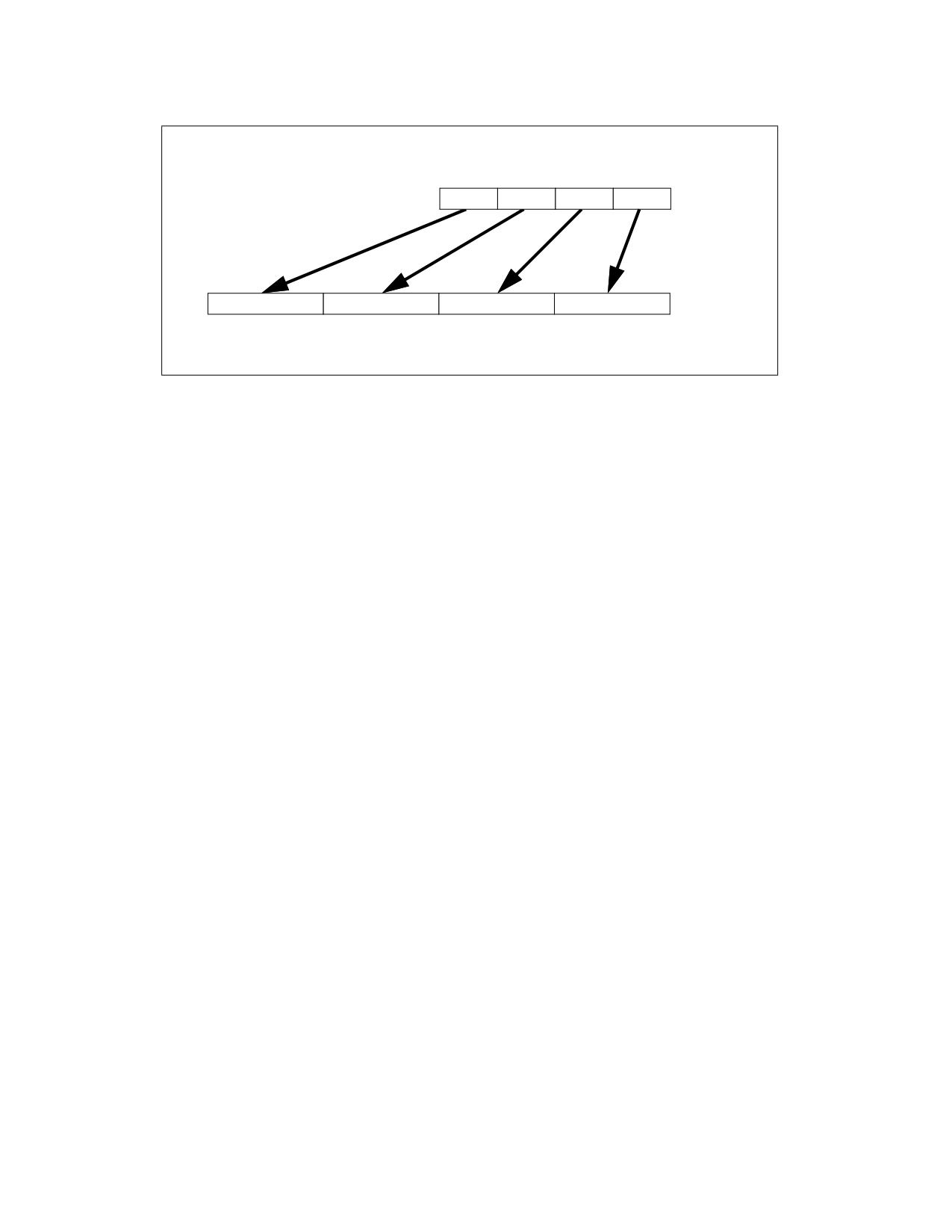
SRC
X3
X2
X1
X0
X3
X2
X1
X0
DEST
Figure 3-9. CVTPS2PD (VEX.256 encoded version)
Operation
VCVTPS2PD (EVEX Encoded Versions) When SRC Operand is a Register
(KL, VL) = (2, 128), (4, 256), (8, 512)
FOR j := 0 TO KL-1
i := j * 64
k := j * 32
IF k1[j] OR *no writemask*
THEN DEST[i+63:i] :=
Convert_Single_Precision_To_Double_Precision_Floating_Point(SRC[k+31:k])
ELSE
IF *merging-masking*
; merging-masking
THEN *DEST[i+63:i] remains unchanged*
ELSE
; zeroing-masking
DEST[i+63:i] := 0
FI
FI;
ENDFOR
DEST[MAXVL-1:VL] := 0
VCVTPS2PD (EVEX Encoded Versions) When SRC Operand is a Memory Source
(KL, VL) = (2, 128), (4, 256), (8, 512)
FOR j := 0 TO KL-1
i := j * 64
k := j * 32
IF k1[j] OR *no writemask*
THEN
IF (EVEX.b = 1)
THEN
DEST[i+63:i] :=
Convert_Single_Precision_To_Double_Precision_Floating_Point(SRC[31:0])
ELSE
DEST[i+63:i] :=
Convert_Single_Precision_To_Double_Precision_Floating_Point(SRC[k+31:k])
FI;
ELSE
CVTPS2PD-Convert Packed Single Precision Floating-Point Values to Packed Double Precision Floating-Point Values
Vol. 2A
3-229
IF *merging-masking*
; merging-masking
THEN *DEST[i+63:i] remains unchanged*
ELSE
; zeroing-masking
DEST[i+63:i] := 0
FI
FI;
ENDFOR
DEST[MAXVL-1:VL] := 0
VCVTPS2PD (VEX.256 Encoded Version)
DEST[63:0] := Convert_Single_Precision_To_Double_Precision_Floating_Point(SRC[31:0])
DEST[127:64] := Convert_Single_Precision_To_Double_Precision_Floating_Point(SRC[63:32])
DEST[191:128] := Convert_Single_Precision_To_Double_Precision_Floating_Point(SRC[95:64])
DEST[255:192] := Convert_Single_Precision_To_Double_Precision_Floating_Point(SRC[127:96)
DEST[MAXVL-1:256] := 0
VCVTPS2PD (VEX.128 Encoded Version)
DEST[63:0] := Convert_Single_Precision_To_Double_Precision_Floating_Point(SRC[31:0])
DEST[127:64] := Convert_Single_Precision_To_Double_Precision_Floating_Point(SRC[63:32])
DEST[MAXVL-1:128] := 0
CVTPS2PD (128-bit Legacy SSE Version)
DEST[63:0] := Convert_Single_Precision_To_Double_Precision_Floating_Point(SRC[31:0])
DEST[127:64] := Convert_Single_Precision_To_Double_Precision_Floating_Point(SRC[63:32])
DEST[MAXVL-1:128] (unmodified)
Intel C/C++ Compiler Intrinsic Equivalent
VCVTPS2PD __m512d _mm512_cvtps_pd( __m256 a);
VCVTPS2PD __m512d _mm512_mask_cvtps_pd( __m512d s, __mmask8 k, __m256 a);
VCVTPS2PD __m512d _mm512_maskz_cvtps_pd( __mmask8 k, __m256 a);
VCVTPS2PD __m512d _mm512_cvt_roundps_pd( __m256 a, int sae);
VCVTPS2PD __m512d _mm512_mask_cvt_roundps_pd( __m512d s, __mmask8 k, __m256 a, int sae);
VCVTPS2PD __m512d _mm512_maskz_cvt_roundps_pd( __mmask8 k, __m256 a, int sae);
VCVTPS2PD __m256d _mm256_mask_cvtps_pd( __m256d s, __mmask8 k, __m128 a);
VCVTPS2PD __m256d _mm256_maskz_cvtps_pd( __mmask8 k, __m128a);
VCVTPS2PD __m128d _mm_mask_cvtps_pd( __m128d s, __mmask8 k, __m128 a);
VCVTPS2PD __m128d _mm_maskz_cvtps_pd( __mmask8 k, __m128 a);
VCVTPS2PD __m256d _mm256_cvtps_pd (__m128 a)
CVTPS2PD __m128d _mm_cvtps_pd (__m128 a)
SIMD Floating-Point Exceptions
Invalid, Denormal.
Other Exceptions
VEX-encoded instructions, see Table 2-20, “Type 3 Class Exception Conditions.”
EVEX-encoded instructions, see Table 2-48, “Type E2 Class Exception Conditions.”
Additionally:
#UD
If VEX.vvvv != 1111B or EVEX.vvvv != 1111B.
CVTPS2PD-Convert Packed Single Precision Floating-Point Values to Packed Double Precision Floating-Point Values
Vol. 2A
3-230

CVTPS2PI-Convert Packed Single Precision Floating-Point Values to Packed Dword Integers
Opcode/
Op/
64-Bit
Compat/
Description
Instruction
En
Mode
Leg Mode
NP 0F 2D /r
RM
Valid
Valid
Convert two packed single precision floating-
point values from xmm/m64 to two packed
CVTPS2PI mm, xmm/m64
signed doubleword integers in mm.
Instruction Operand Encoding
Op/En
Operand 1
Operand 2
Operand 3
Operand 4
RM
ModRM:reg (w)
ModRM:r/m (r)
N/A
N/A
Description
Converts two packed single precision floating-point values in the source operand (second operand) to two packed
signed doubleword integers in the destination operand (first operand).
The source operand can be an XMM register or a 128-bit memory location. The destination operand is an MMX tech-
nology register. When the source operand is an XMM register, the two single precision floating-point values are
contained in the low quadword of the register. When a conversion is inexact, the value returned is rounded
according to the rounding control bits in the MXCSR register. If a converted result is larger than the maximum
signed doubleword integer, the floating-point invalid exception is raised, and if this exception is masked, the indef-
inite integer value 80000000H is returned.
CVTPS2PI causes a transition from x87 FPU to MMX technology operation (that is, the x87 FPU top-of-stack pointer
is set to 0 and the x87 FPU tag word is set to all 0s [valid]). If this instruction is executed while an x87 FPU floating-
point exception is pending, the exception is handled before the CVTPS2PI instruction is executed.
In 64-bit mode, use of the REX.R prefix permits this instruction to access additional registers (XMM8-XMM15).
Operation
DEST[31:0] := Convert_Single_Precision_Floating_Point_To_Integer(SRC[31:0]);
DEST[63:32] := Convert_Single_Precision_Floating_Point_To_Integer(SRC[63:32]);
Intel C/C++ Compiler Intrinsic Equivalent
CVTPS2PI __m64 _mm_cvtps_pi32(__m128 a)
SIMD Floating-Point Exceptions
Invalid, Precision.
Other Exceptions
See Section 25.25.3, “Exception Conditions of Legacy SIMD Instructions Operating on MMX Registers” in the Intel®
64 and IA-32 Architectures Software Developer’s Manual, Volume 3B.
CVTPS2PI-Convert Packed Single Precision Floating-Point Values to Packed Dword Integers
Vol. 2A
3-231

CVTSD2SI-Convert Scalar Double Precision Floating-Point Value to Signed Integer
Opcode/
Op /
64/32 bit
CPUID
Description
Instruction
En
Mode
Feature Flag
Support
F2 0F 2D /r
A
V/V
SSE2
Convert one double precision floating-point value from
CVTSD2SI r32, xmm1/m64
xmm1/m64 to one signed doubleword integer r32.
F2 REX.W 0F 2D /r
A
V/N.E.
SSE2
Convert one double precision floating-point value from
CVTSD2SI r64, xmm1/m64
xmm1/m64 to one signed quadword integer sign-
extended into r64.
VEX.LIG.F2.0F.W0 2D /r 1
A
V/V
AVX
Convert one double precision floating-point value from
VCVTSD2SI r32, xmm1/m64
xmm1/m64 to one signed doubleword integer r32.
VEX.LIG.F2.0F.W1 2D /r 1
A
V/N.E.2
AVX
Convert one double precision floating-point value from
VCVTSD2SI r64, xmm1/m64
xmm1/m64 to one signed quadword integer sign-
extended into r64.
EVEX.LLIG.F2.0F.W0 2D /r
B
V/V
AVX512F
Convert one double precision floating-point value from
VCVTSD2SI r32, xmm1/m64{er}
OR AVX10.1
xmm1/m64 to one signed doubleword integer r32.
EVEX.LLIG.F2.0F.W1 2D /r
B
V/N.E.2
AVX512F
Convert one double precision floating-point value from
VCVTSD2SI r64, xmm1/m64{er}
OR AVX10.1
xmm1/m64 to one signed quadword integer sign-
extended into r64.
NOTES:
1. Software should ensure VCVTSD2SI is encoded with VEX.L=0. Encoding VCVTSD2SI with VEX.L=1 may encounter unpredictable
behavior across different processor generations.
2. VEX.W1/EVEX.W1 in non-64 bit is ignored; the instructions behaves as if the W0 version is used.
Instruction Operand Encoding
Op/En
Tuple Type
Operand 1
Operand 2
Operand 3
Operand 4
A
N/A
ModRM:reg (w)
ModRM:r/m (r)
N/A
N/A
B
Tuple1 Fixed
ModRM:reg (w)
ModRM:r/m (r)
N/A
N/A
Description
Converts a double precision floating-point value in the source operand (the second operand) to a signed integer in
the destination operand (first operand). The source operand can be an XMM register or a 64-bit memory location.
The destination operand is a general-purpose register. When the source operand is an XMM register, the double
precision floating-point value is contained in the low quadword of the register.
When a conversion is inexact, the value returned is rounded according to the rounding control bits in the MXCSR
register.
If a converted result exceeds the range limits of signed doubleword integer (in non-64-bit modes or 64-bit mode
with REX.W/VEX.W/EVEX.W=0), the floating-point invalid exception is raised, and if this exception is masked, the
indefinite integer value 80000000H is returned.
If a converted result exceeds the range limits of signed quadword integer (in 64-bit mode and
REX.W/VEX.W/EVEX.W = 1), the floating-point invalid exception is raised, and if this exception is masked, the
indefinite integer value 80000000_00000000H is returned.
Legacy SSE instruction: Use of the REX.W prefix promotes the instruction to produce 64-bit data in 64-bit mode.
See the summary chart at the beginning of this section for encoding data and limits.
Note: VEX.vvvv and EVEX.vvvv are reserved and must be 1111b, otherwise instructions will #UD.
Software should ensure VCVTSD2SI is encoded with VEX.L=0. Encoding VCVTSD2SI with VEX.L=1 may encounter
unpredictable behavior across different processor generations.
CVTSD2SI-Convert Scalar Double Precision Floating-Point Value to Signed Integer
Vol. 2A
3-232
Operation
VCVTSD2SI (EVEX Encoded Version)
IF SRC *is register* AND (EVEX.b = 1)
THEN
SET_ROUNDING_MODE_FOR_THIS_INSTRUCTION(EVEX.RC);
ELSE
SET_ROUNDING_MODE_FOR_THIS_INSTRUCTION(MXCSR.RC);
FI;
IF 64-Bit Mode and OperandSize = 64
THEN
DEST[63:0] := Convert_Double_Precision_Floating_Point_To_Integer(SRC[63:0]);
ELSE
DEST[31:0] := Convert_Double_Precision_Floating_Point_To_Integer(SRC[63:0]);
FI
(V)CVTSD2SI
IF 64-Bit Mode and OperandSize = 64
THEN
DEST[63:0] := Convert_Double_Precision_Floating_Point_To_Integer(SRC[63:0]);
ELSE
DEST[31:0] := Convert_Double_Precision_Floating_Point_To_Integer(SRC[63:0]);
FI;
Intel C/C++ Compiler Intrinsic Equivalent
VCVTSD2SI int _mm_cvtsd_i32(__m128d);
VCVTSD2SI int _mm_cvt_roundsd_i32(__m128d, int r);
VCVTSD2SI __int64 _mm_cvtsd_i64(__m128d);
VCVTSD2SI __int64 _mm_cvt_roundsd_i64(__m128d, int r);
CVTSD2SI __int64 _mm_cvtsd_si64(__m128d);
CVTSD2SI int _mm_cvtsd_si32(__m128d a)
SIMD Floating-Point Exceptions
Invalid, Precision.
Other Exceptions
VEX-encoded instructions, see Table 2-20, “Type 3 Class Exception Conditions.”
EVEX-encoded instructions, see Table 2-50, “Type E3NF Class Exception Conditions.”
Additionally:
#UD
If VEX.vvvv != 1111B or EVEX.vvvv != 1111B.
CVTSD2SI-Convert Scalar Double Precision Floating-Point Value to Signed Integer
Vol. 2A
3-233

CVTSD2SS-Convert Scalar Double Precision Floating-Point Value to Scalar Single Precision
Floating-Point Value
Opcode/
Op /
64/32 bit
CPUID
Description
Instruction
En
Mode
Feature Flag
Support
F2 0F 5A /r
A
V/V
SSE2
Convert one double precision floating-point value in
CVTSD2SS xmm1, xmm2/m64
xmm2/m64 to one single precision floating-point value
in xmm1.
VEX.LIG.F2.0F.WIG 5A /r
B
V/V
AVX
Convert one double precision floating-point value in
VCVTSD2SS xmm1,xmm2, xmm3/m64
xmm3/m64 to one single precision floating-point value
and merge with high bits in xmm2.
EVEX.LLIG.F2.0F.W1 5A /r
C
V/V
AVX512F
Convert one double precision floating-point value in
VCVTSD2SS xmm1 {k1}{z}, xmm2,
OR AVX10.1
xmm3/m64 to one single precision floating-point value
xmm3/m64{er}
and merge with high bits in xmm2 under writemask k1.
Instruction Operand Encoding
Op/En
Tuple Type
Operand 1
Operand 2
Operand 3
Operand 4
A
N/A
ModRM:reg (r, w)
ModRM:r/m (r)
N/A
N/A
B
N/A
ModRM:reg (w)
VEX.vvvv (r)
ModRM:r/m (r)
N/A
C
Tuple1 Scalar
ModRM:reg (w)
EVEX.vvvv (r)
ModRM:r/m (r)
N/A
Description
Converts a double precision floating-point value in the “convert-from” source operand (the second operand in SSE2
version, otherwise the third operand) to a single precision floating-point value in the destination operand.
When the “convert-from” operand is an XMM register, the double precision floating-point value is contained in the
low quadword of the register. The result is stored in the low doubleword of the destination operand. When the
conversion is inexact, the value returned is rounded according to the rounding control bits in the MXCSR register.
128-bit Legacy SSE version: The “convert-from” source operand (the second operand) is an XMM register or
memory location. Bits (MAXVL-1:32) of the corresponding destination register remain unchanged. The destination
operand is an XMM register.
VEX.128 and EVEX encoded versions: The “convert-from” source operand (the third operand) can be an XMM
register or a 64-bit memory location. The first source and destination operands are XMM registers. Bits (127:32) of
the XMM register destination are copied from the corresponding bits in the first source operand. Bits (MAXVL-
1:128) of the destination register are zeroed.
EVEX encoded version: the converted result in written to the low doubleword element of the destination under the
writemask.
Software should ensure VCVTSD2SS is encoded with VEX.L=0. Encoding VCVTSD2SS with VEX.L=1 may encounter
unpredictable behavior across different processor generations.
CVTSD2SS-Convert Scalar Double Precision Floating-Point Value to Scalar Single Precision Floating-Point Value
Vol. 2A
3-234
Operation
VCVTSD2SS (EVEX Encoded Version)
IF (SRC2 *is register*) AND (EVEX.b = 1)
THEN
SET_ROUNDING_MODE_FOR_THIS_INSTRUCTION(EVEX.RC);
ELSE
SET_ROUNDING_MODE_FOR_THIS_INSTRUCTION(MXCSR.RC);
FI;
IF k1[0] or *no writemask*
THEN
DEST[31:0] := Convert_Double_Precision_To_Single_Precision_Floating_Point(SRC2[63:0]);
ELSE
IF *merging-masking*
; merging-masking
THEN *DEST[31:0] remains unchanged*
ELSE
; zeroing-masking
THEN DEST[31:0] := 0
FI;
FI;
DEST[127:32] := SRC1[127:32]
DEST[MAXVL-1:128] := 0
VCVTSD2SS (VEX.128 Encoded Version)
DEST[31:0] := Convert_Double_Precision_To_Single_Precision_Floating_Point(SRC2[63:0]);
DEST[127:32] := SRC1[127:32]
DEST[MAXVL-1:128] := 0
CVTSD2SS (128-bit Legacy SSE Version)
DEST[31:0] := Convert_Double_Precision_To_Single_Precision_Floating_Point(SRC[63:0]);
(* DEST[MAXVL-1:32] Unmodified *)
Intel C/C++ Compiler Intrinsic Equivalent
VCVTSD2SS __m128 _mm_mask_cvtsd_ss(__m128 s, __mmask8 k, __m128 a, __m128d b);
VCVTSD2SS __m128 _mm_maskz_cvtsd_ss( __mmask8 k, __m128 a,__m128d b);
VCVTSD2SS __m128 _mm_cvt_roundsd_ss(__m128 a, __m128d b, int r);
VCVTSD2SS __m128 _mm_mask_cvt_roundsd_ss(__m128 s, __mmask8 k, __m128 a, __m128d b, int r);
VCVTSD2SS __m128 _mm_maskz_cvt_roundsd_ss( __mmask8 k, __m128 a,__m128d b, int r);
CVTSD2SS __m128_mm_cvtsd_ss(__m128 a, __m128d b)
SIMD Floating-Point Exceptions
Overflow, Underflow, Invalid, Precision, Denormal.
Other Exceptions
VEX-encoded instructions, see Table 2-20, “Type 3 Class Exception Conditions.”
EVEX-encoded instructions, see Table 2-49, “Type E3 Class Exception Conditions.”
CVTSD2SS-Convert Scalar Double Precision Floating-Point Value to Scalar Single Precision Floating-Point Value
Vol. 2A
3-235

CVTSI2SD-Convert Signed Integer to Scalar Double Precision Floating-Point Value
Opcode/
Op /
64/32 bit
CPUID
Description
Instruction
En
Mode
Feature
Support
Flag
F2 0F 2A /r
A
V/V
SSE2
Convert one signed doubleword integer from
CVTSI2SD xmm1, r32/m32
r32/m32 to one double precision floating-point
value in xmm1.
F2 REX.W 0F 2A /r
A
V/N.E.
SSE2
Convert one signed quadword integer from r/m64
CVTSI2SD xmm1, r/m64
to one double precision floating-point value in
xmm1.
VEX.LIG.F2.0F.W0 2A /r
B
V/V
AVX
Convert one signed doubleword integer from
VCVTSI2SD xmm1, xmm2, r/m32
r/m32 to one double precision floating-point value
in xmm1.
VEX.LIG.F2.0F.W1 2A /r
B
V/N.E.1
AVX
Convert one signed quadword integer from r/m64
VCVTSI2SD xmm1, xmm2, r/m64
to one double precision floating-point value in
xmm1.
EVEX.LLIG.F2.0F.W0 2A /r
C
V/V
AVX512F
Convert one signed doubleword integer from
VCVTSI2SD xmm1, xmm2, r/m32
OR AVX10.1
r/m32 to one double precision floating-point value
in xmm1.
EVEX.LLIG.F2.0F.W1 2A /r
C
V/N.E.1
AVX512F
Convert one signed quadword integer from r/m64
VCVTSI2SD xmm1, xmm2, r/m64{er}
OR AVX10.1
to one double precision floating-point value in
xmm1.
NOTES:
1. VEX.W1/EVEX.W1 in non-64 bit is ignored; the instructions behaves as if the W0 version is used.
Instruction Operand Encoding
Op/En
Tuple Type
Operand 1
Operand 2
Operand 3
Operand 4
A
N/A
ModRM:reg (w)
ModRM:r/m (r)
N/A
N/A
B
N/A
ModRM:reg (w)
VEX.vvvv (r)
ModRM:r/m (r)
N/A
C
Tuple1 Scalar
ModRM:reg (w)
EVEX.vvvv (r)
ModRM:r/m (r)
N/A
Description
Converts a signed doubleword or quadword integer in the “convert-from” source operand to a double precision
floating-point value in the destination operand. The result is stored in the low quadword of the destination operand,
and the high quadword left unchanged. When conversion is inexact, the value returned is rounded according to the
rounding control bits in the MXCSR register.
The second source operand can be a general-purpose register or a 32/64-bit memory location. The first source and
destination operands are XMM registers.
128-bit Legacy SSE version: Use of the REX.W prefix promotes the instruction to 64-bit operands. The “convert-
from” source operand (the second operand) is a general-purpose register or memory location. The destination is
an XMM register Bits (MAXVL-1:64) of the corresponding destination register remain unchanged.
VEX.128 and EVEX encoded versions: The “convert-from” source operand (the third operand) can be a general-
purpose register or a memory location. The first source and destination operands are XMM registers. Bits (127:64)
of the XMM register destination are copied from the corresponding bits in the first source operand. Bits (MAXVL-
1:128) of the destination register are zeroed.
EVEX.W0 version: attempt to encode this instruction with EVEX embedded rounding is ignored.
VEX.W1 and EVEX.W1 versions: promotes the instruction to use 64-bit input value in 64-bit mode.
Software should ensure VCVTSI2SD is encoded with VEX.L=0. Encoding VCVTSI2SD with VEX.L=1 may encounter
unpredictable behavior across different processor generations.
CVTSI2SD-Convert Signed Integer to Scalar Double Precision Floating-Point Value
Vol. 2A
3-236
Operation
VCVTSI2SD (EVEX Encoded Version)
IF (SRC2 *is register*) AND (EVEX.b = 1)
THEN
SET_ROUNDING_MODE_FOR_THIS_INSTRUCTION(EVEX.RC);
ELSE
SET_ROUNDING_MODE_FOR_THIS_INSTRUCTION(MXCSR.RC);
FI;
IF 64-Bit Mode And OperandSize = 64
THEN
DEST[63:0] := Convert_Integer_To_Double_Precision_Floating_Point(SRC2[63:0]);
ELSE
DEST[63:0] := Convert_Integer_To_Double_Precision_Floating_Point(SRC2[31:0]);
FI;
DEST[127:64] := SRC1[127:64]
DEST[MAXVL-1:128] := 0
VCVTSI2SD (VEX.128 Encoded Version)
IF 64-Bit Mode And OperandSize = 64
THEN
DEST[63:0] := Convert_Integer_To_Double_Precision_Floating_Point(SRC2[63:0]);
ELSE
DEST[63:0] := Convert_Integer_To_Double_Precision_Floating_Point(SRC2[31:0]);
FI;
DEST[127:64] := SRC1[127:64]
DEST[MAXVL-1:128] := 0
CVTSI2SD
IF 64-Bit Mode And OperandSize = 64
THEN
DEST[63:0] := Convert_Integer_To_Double_Precision_Floating_Point(SRC[63:0]);
ELSE
DEST[63:0] := Convert_Integer_To_Double_Precision_Floating_Point(SRC[31:0]);
FI;
DEST[MAXVL-1:64] (Unmodified)
Intel C/C++ Compiler Intrinsic Equivalent
VCVTSI2SD __m128d _mm_cvti32_sd(__m128d s, int a);
VCVTSI2SD __m128d _mm_cvti64_sd(__m128d s, __int64 a);
VCVTSI2SD __m128d _mm_cvt_roundi64_sd(__m128d s, __int64 a, int r);
CVTSI2SD __m128d _mm_cvtsi64_sd(__m128d s, __int64 a);
CVTSI2SD __m128d_mm_cvtsi32_sd(__m128d a, int b)
SIMD Floating-Point Exceptions
Precision.
Other Exceptions
VEX-encoded instructions, see Table 2-20, “Type 3 Class Exception Conditions,” if W1; else see Table 2-22, “Type
5 Class Exception Conditions.”
EVEX-encoded instructions, see Table 2-50, “Type E3NF Class Exception Conditions,” if W1; else see Table 2-61,
“Type E10NF Class Exception Conditions.”
CVTSI2SD-Convert Signed Integer to Scalar Double Precision Floating-Point Value
Vol. 2A
3-237

CVTSI2SS-Convert Signed Integer to Scalar Single Precision Floating-Point Value
Opcode/
Op /
64/32 bit
CPUID
Description
Instruction
En
Mode
Feature
Support
Flag
F3 0F 2A /r
A
V/V
SSE
Convert one signed doubleword integer from r/m32
CVTSI2SS xmm1, r/m32
to one single precision floating-point value in xmm1.
F3 REX.W 0F 2A /r
A
V/N.E.
SSE
Convert one signed quadword integer from r/m64 to
CVTSI2SS xmm1, r/m64
one single precision floating-point value in xmm1.
VEX.LIG.F3.0F.W0 2A /r
B
V/V
AVX
Convert one signed doubleword integer from r/m32
VCVTSI2SS xmm1, xmm2, r/m32
to one single precision floating-point value in xmm1.
VEX.LIG.F3.0F.W1 2A /r
B
V/N.E.1
AVX
Convert one signed quadword integer from r/m64 to
VCVTSI2SS xmm1, xmm2, r/m64
one single precision floating-point value in xmm1.
EVEX.LLIG.F3.0F.W0 2A /r
C
V/V
AVX512F
Convert one signed doubleword integer from r/m32
VCVTSI2SS xmm1, xmm2, r/m32{er}
OR
to one single precision floating-point value in xmm1.
AVX10.1
EVEX.LLIG.F3.0F.W1 2A /r
C
V/N.E.1
AVX512F
Convert one signed quadword integer from r/m64 to
VCVTSI2SS xmm1, xmm2, r/m64{er}
OR
one single precision floating-point value in xmm1.
AVX10.1
NOTES:
1. VEX.W1/EVEX.W1 in non-64 bit is ignored; the instructions behaves as if the W0 version is used.
Instruction Operand Encoding
Op/En
Tuple Type
Operand 1
Operand 2
Operand 3
Operand 4
A
N/A
ModRM:reg (w)
ModRM:r/m (r)
N/A
N/A
B
N/A
ModRM:reg (w)
VEX.vvvv (r)
ModRM:r/m (r)
N/A
C
Tuple1 Scalar
ModRM:reg (w)
EVEX.vvvv (r)
ModRM:r/m (r)
N/A
Description
Converts a signed doubleword or quadword integer in the “convert-from” source operand to a single precision
floating-point value in the destination operand (first operand). The “convert-from” source operand can be a
general-purpose register or a memory location. The destination operand is an XMM register. The result is stored in
the low doubleword of the destination operand, and the upper three doublewords are left unchanged. When a
conversion is inexact, the value returned is rounded according to the rounding control bits in the MXCSR register or
the embedded rounding control bits.
128-bit Legacy SSE version: In 64-bit mode, Use of the REX.W prefix promotes the instruction to use 64-bit input
value. The “convert-from” source operand (the second operand) is a general-purpose register or memory location.
Bits (MAXVL-1:32) of the corresponding destination register remain unchanged.
VEX.128 and EVEX encoded versions: The “convert-from” source operand (the third operand) can be a general-
purpose register or a memory location. The first source and destination operands are XMM registers. Bits (127:32)
of the XMM register destination are copied from corresponding bits in the first source operand. Bits (MAXVL-1:128)
of the destination register are zeroed.
EVEX encoded version: the converted result in written to the low doubleword element of the destination under the
writemask.
Software should ensure VCVTSI2SS is encoded with VEX.L=0. Encoding VCVTSI2SS with VEX.L=1 may encounter
unpredictable behavior across different processor generations.
CVTSI2SS-Convert Signed Integer to Scalar Single Precision Floating-Point Value
Vol. 2A
3-238
Operation
VCVTSI2SS (EVEX Encoded Version)
IF (SRC2 *is register*) AND (EVEX.b = 1)
THEN
SET_ROUNDING_MODE_FOR_THIS_INSTRUCTION(EVEX.RC);
ELSE
SET_ROUNDING_MODE_FOR_THIS_INSTRUCTION(MXCSR.RC);
FI;
IF 64-Bit Mode And OperandSize = 64
THEN
DEST[31:0] := Convert_Integer_To_Single_Precision_Floating_Point(SRC[63:0]);
ELSE
DEST[31:0] := Convert_Integer_To_Single_Precision_Floating_Point(SRC[31:0]);
FI;
DEST[127:32] := SRC1[127:32]
DEST[MAXVL-1:128] := 0
VCVTSI2SS (VEX.128 Encoded Version)
IF 64-Bit Mode And OperandSize = 64
THEN
DEST[31:0] := Convert_Integer_To_Single_Precision_Floating_Point(SRC[63:0]);
ELSE
DEST[31:0] := Convert_Integer_To_Single_Precision_Floating_Point(SRC[31:0]);
FI;
DEST[127:32] := SRC1[127:32]
DEST[MAXVL-1:128] := 0
CVTSI2SS (128-bit Legacy SSE Version)
IF 64-Bit Mode And OperandSize = 64
THEN
DEST[31:0] := Convert_Integer_To_Single_Precision_Floating_Point(SRC[63:0]);
ELSE
DEST[31:0] :=Convert_Integer_To_Single_Precision_Floating_Point(SRC[31:0]);
FI;
DEST[MAXVL-1:32] (Unmodified)
Intel C/C++ Compiler Intrinsic Equivalent
VCVTSI2SS __m128 _mm_cvti32_ss(__m128 s, int a);
VCVTSI2SS __m128 _mm_cvt_roundi32_ss(__m128 s, int a, int r);
VCVTSI2SS __m128 _mm_cvti64_ss(__m128 s, __int64 a);
VCVTSI2SS __m128 _mm_cvt_roundi64_ss(__m128 s, __int64 a, int r);
CVTSI2SS __m128 _mm_cvtsi64_ss(__m128 s, __int64 a);
CVTSI2SS __m128 _mm_cvtsi32_ss(__m128 a, int b);
SIMD Floating-Point Exceptions
Precision.
Other Exceptions
VEX-encoded instructions, see Table 2-20, “Type 3 Class Exception Conditions.”
EVEX-encoded instructions, see Table 2-50, “Type E3NF Class Exception Conditions.”
CVTSI2SS-Convert Signed Integer to Scalar Single Precision Floating-Point Value
Vol. 2A
3-239

CVTSS2SD-Convert Scalar Single Precision Floating-Point Value to Scalar Double Precision
Floating-Point Value
Opcode/
Op /
64/32 bit
CPUID
Description
Instruction
En
Mode
Feature Flag
Support
F3 0F 5A /r
A
V/V
SSE2
Convert one single precision floating-point value in
CVTSS2SD xmm1, xmm2/m32
xmm2/m32 to one double precision floating-point value
in xmm1.
VEX.LIG.F3.0F.WIG 5A /r
B
V/V
AVX
Convert one single precision floating-point value in
VCVTSS2SD xmm1, xmm2,
xmm3/m32 to one double precision floating-point value
xmm3/m32
and merge with high bits of xmm2.
EVEX.LLIG.F3.0F.W0 5A /r
C
V/V
AVX512F
Convert one single precision floating-point value in
VCVTSS2SD xmm1 {k1}{z}, xmm2,
OR AVX10.1
xmm3/m32 to one double precision floating-point value
xmm3/m32{sae}
and merge with high bits of xmm2 under writemask k1.
Instruction Operand Encoding
Op/En
Tuple Type
Operand 1
Operand 2
Operand 3
Operand 4
A
N/A
ModRM:reg (r, w)
ModRM:r/m (r)
N/A
N/A
B
N/A
ModRM:reg (w)
VEX.vvvv (r)
ModRM:r/m (r)
N/A
C
Tuple1 Scalar
ModRM:reg (w)
EVEX.vvvv (r)
ModRM:r/m (r)
N/A
Description
Converts a single precision floating-point value in the “convert-from” source operand to a double precision floating-
point value in the destination operand. When the “convert-from” source operand is an XMM register, the single
precision floating-point value is contained in the low doubleword of the register. The result is stored in the low
quadword of the destination operand.
128-bit Legacy SSE version: The “convert-from” source operand (the second operand) is an XMM register or
memory location. Bits (MAXVL-1:64) of the corresponding destination register remain unchanged. The destination
operand is an XMM register.
VEX.128 and EVEX encoded versions: The “convert-from” source operand (the third operand) can be an XMM
register or a 32-bit memory location. The first source and destination operands are XMM registers. Bits (127:64) of
the XMM register destination are copied from the corresponding bits in the first source operand. Bits (MAXVL-
1:128) of the destination register are zeroed.
Software should ensure VCVTSS2SD is encoded with VEX.L=0. Encoding VCVTSS2SD with VEX.L=1 may encounter
unpredictable behavior across different processor generations.
CVTSS2SD-Convert Scalar Single Precision Floating-Point Value to Scalar Double Precision Floating-Point Value
Vol. 2A
3-240
Operation
VCVTSS2SD (EVEX Encoded Version)
IF k1[0] or *no writemask*
THEN
DEST[63:0] := Convert_Single_Precision_To_Double_Precision_Floating_Point(SRC2[31:0]);
ELSE
IF *merging-masking*
; merging-masking
THEN *DEST[63:0] remains unchanged*
ELSE
; zeroing-masking
THEN DEST[63:0] = 0
FI;
FI;
DEST[127:64] := SRC1[127:64]
DEST[MAXVL-1:128] := 0
VCVTSS2SD (VEX.128 Encoded Version)
DEST[63:0] := Convert_Single_Precision_To_Double_Precision_Floating_Point(SRC2[31:0])
DEST[127:64] := SRC1[127:64]
DEST[MAXVL-1:128] := 0
CVTSS2SD (128-bit Legacy SSE Version)
DEST[63:0] := Convert_Single_Precision_To_Double_Precision_Floating_Point(SRC[31:0]);
DEST[MAXVL-1:64] (Unmodified)
Intel C/C++ Compiler Intrinsic Equivalent
VCVTSS2SD __m128d _mm_cvt_roundss_sd(__m128d a, __m128 b, int r);
VCVTSS2SD __m128d _mm_mask_cvt_roundss_sd(__m128d s, __mmask8 m, __m128d a,__m128 b, int r);
VCVTSS2SD __m128d _mm_maskz_cvt_roundss_sd(__mmask8 k, __m128d a, __m128 a, int r);
VCVTSS2SD __m128d _mm_mask_cvtss_sd(__m128d s, __mmask8 m, __m128d a,__m128 b);
VCVTSS2SD __m128d _mm_maskz_cvtss_sd(__mmask8 m, __m128d a,__m128 b);
CVTSS2SD __m128d_mm_cvtss_sd(__m128d a, __m128 a);
SIMD Floating-Point Exceptions
Invalid, Denormal.
Other Exceptions
VEX-encoded instructions, see Table 2-20, “Type 3 Class Exception Conditions.”
EVEX-encoded instructions, see Table 2-49, “Type E3 Class Exception Conditions.”
CVTSS2SD-Convert Scalar Single Precision Floating-Point Value to Scalar Double Precision Floating-Point Value
Vol. 2A
3-241

CVTSS2SI-Convert Scalar Single Precision Floating-Point Value to Signed Integer
Opcode/
Op /
64/32 bit
CPUID
Description
Instruction
En
Mode
Feature Flag
Support
F3 0F 2D /r
A
V/V
SSE
Convert one single precision floating-point value from
CVTSS2SI r32, xmm1/m32
xmm1/m32 to one signed doubleword integer in r32.
F3 REX.W 0F 2D /r
A
V/N.E.
SSE
Convert one single precision floating-point value from
CVTSS2SI r64, xmm1/m32
xmm1/m32 to one signed quadword integer in r64.
VEX.LIG.F3.0F.W0 2D /r 1
A
V/V
AVX
Convert one single precision floating-point value from
VCVTSS2SI r32, xmm1/m32
xmm1/m32 to one signed doubleword integer in r32.
VEX.LIG.F3.0F.W1 2D /r 1
A
V/N.E.2
AVX
Convert one single precision floating-point value from
VCVTSS2SI r64, xmm1/m32
xmm1/m32 to one signed quadword integer in r64.
EVEX.LLIG.F3.0F.W0 2D /r
B
V/V
AVX512F
Convert one single precision floating-point value from
VCVTSS2SI r32, xmm1/m32{er}
OR AVX10.1
xmm1/m32 to one signed doubleword integer in r32.
EVEX.LLIG.F3.0F.W1 2D /r
B
V/N.E.2
AVX512F
Convert one single precision floating-point value from
VCVTSS2SI r64, xmm1/m32{er}
OR AVX10.1
xmm1/m32 to one signed quadword integer in r64.
NOTES:
1. Software should ensure VCVTSS2SI is encoded with VEX.L=0. Encoding VCVTSS2SI with VEX.L=1 may
encounter unpredictable behavior across different processor generations.
2. VEX.W1/EVEX.W1 in non-64 bit is ignored; the instructions behaves as if the W0 version is used.
Instruction Operand Encoding
Op/En
Tuple Type
Operand 1
Operand 2
Operand 3
Operand 4
A
N/A
ModRM:reg (w)
ModRM:r/m (r)
N/A
N/A
B
Tuple1 Fixed
ModRM:reg (w)
ModRM:r/m (r)
N/A
N/A
Description
Converts a single precision floating-point value in the source operand (the second operand) to a signed integer in
the destination operand (the first operand). The source operand can be an XMM register or a memory location. The
destination operand is a general-purpose register. When the source operand is an XMM register, the single precision
floating-point value is contained in the low doubleword of the register.
When a conversion is inexact, the value returned is rounded according to the rounding control bits in the MXCSR
register or the embedded rounding control bits.
If a converted result exceeds the range limits of signed doubleword integer (in non-64-bit modes or 64-bit mode
with REX.W/VEX.W/EVEX.W=0), the floating-point invalid exception is raised, and if this exception is masked, the
indefinite integer value 80000000H is returned.
If a converted result exceeds the range limits of signed quadword integer (in 64-bit mode and
REX.W/VEX.W/EVEX.W = 1), the floating-point invalid exception is raised, and if this exception is masked, the
indefinite integer value 80000000_00000000H is returned.
Legacy SSE instructions: In 64-bit mode, Use of the REX.W prefix promotes the instruction to produce 64-bit data.
See the summary chart at the beginning of this section for encoding data and limits.
VEX.W1 and EVEX.W1 versions: promotes the instruction to produce 64-bit data in 64-bit mode.
Note: VEX.vvvv and EVEX.vvvv are reserved and must be 1111b, otherwise instructions will #UD.
Software should ensure VCVTSS2SI is encoded with VEX.L=0. Encoding VCVTSS2SI with VEX.L=1 may encounter
unpredictable behavior across different processor generations.
CVTSS2SI-Convert Scalar Single Precision Floating-Point Value to Signed Integer
Vol. 2A
3-242
Operation
VCVTSS2SI (EVEX Encoded Version)
IF (SRC *is register*) AND (EVEX.b = 1)
THEN
SET_ROUNDING_MODE_FOR_THIS_INSTRUCTION(EVEX.RC);
ELSE
SET_ROUNDING_MODE_FOR_THIS_INSTRUCTION(MXCSR.RC);
FI;
IF 64-bit Mode and OperandSize = 64
THEN
DEST[63:0] := Convert_Single_Precision_Floating_Point_To_Integer(SRC[31:0]);
ELSE
DEST[31:0] := Convert_Single_Precision_Floating_Point_To_Integer(SRC[31:0]);
FI;
(V)CVTSS2SI (Legacy and VEX.128 Encoded Version)
IF 64-bit Mode and OperandSize = 64
THEN
DEST[63:0] := Convert_Single_Precision_Floating_Point_To_Integer(SRC[31:0]);
ELSE
DEST[31:0] := Convert_Single_Precision_Floating_Point_To_Integer(SRC[31:0]);
FI;
Intel C/C++ Compiler Intrinsic Equivalent
VCVTSS2SI int _mm_cvtss_i32( __m128 a);
VCVTSS2SI int _mm_cvt_roundss_i32( __m128 a, int r);
VCVTSS2SI __int64 _mm_cvtss_i64( __m128 a);
VCVTSS2SI __int64 _mm_cvt_roundss_i64( __m128 a, int r);
SIMD Floating-Point Exceptions
Invalid, Precision.
Other Exceptions
VEX-encoded instructions, see Table 2-20, “Type 3 Class Exception Conditions,” additionally:
#UD
If VEX.vvvv != 1111B.
EVEX-encoded instructions, see Table 2-50, “Type E3NF Class Exception Conditions.”
CVTSS2SI-Convert Scalar Single Precision Floating-Point Value to Signed Integer
Vol. 2A
3-243

CVTTPD2DQ-Convert with Truncation Packed Double Precision Floating-Point Values to
Packed Doubleword Integers
Opcode/
Op /
64/32 bit
CPUID Feature
Description
Instruction
En
Mode
Flag
Support
66 0F E6 /r
A
V/V
SSE2
Convert two packed double precision floating-point
CVTTPD2DQ xmm1, xmm2/m128
values in xmm2/mem to two signed doubleword
integers in xmm1 using truncation.
VEX.128.66.0F.WIG E6 /r
A
V/V
AVX
Convert two packed double precision floating-point
VCVTTPD2DQ xmm1, xmm2/m128
values in xmm2/mem to two signed doubleword
integers in xmm1 using truncation.
VEX.256.66.0F.WIG E6 /r
A
V/V
AVX
Convert four packed double precision floating-point
VCVTTPD2DQ xmm1, ymm2/m256
values in ymm2/mem to four signed doubleword
integers in xmm1 using truncation.
EVEX.128.66.0F.W1 E6 /r
B
V/V
(AVX512VL AND
Convert two packed double precision floating-point
VCVTTPD2DQ xmm1 {k1}{z},
AVX512F) OR
values in xmm2/m128/m64bcst to two signed
xmm2/m128/m64bcst
AVX10.1
doubleword integers in xmm1 using truncation
subject to writemask k1.
EVEX.256.66.0F.W1 E6 /r
B
V/V
(AVX512VL AND
Convert four packed double precision floating-point
VCVTTPD2DQ xmm1 {k1}{z},
AVX512F) OR
values in ymm2/m256/m64bcst to four signed
ymm2/m256/m64bcst
AVX10.1
doubleword integers in xmm1 using truncation
subject to writemask k1.
EVEX.512.66.0F.W1 E6 /r
B
V/V
AVX512F
Convert eight packed double precision floating-point
VCVTTPD2DQ ymm1 {k1}{z},
OR AVX10.1
values in zmm2/m512/m64bcst to eight signed
zmm2/m512/m64bcst {sae}
doubleword integers in ymm1 using truncation
subject to writemask k1.
Instruction Operand Encoding
Op/En
Tuple Type
Operand 1
Operand 2
Operand 3
Operand 4
A
N/A
ModRM:reg (w)
ModRM:r/m (r)
N/A
N/A
B
Full
ModRM:reg (w)
ModRM:r/m (r)
N/A
N/A
Description
Converts two, four or eight packed double precision floating-point values in the source operand (second operand)
to two, four or eight packed signed doubleword integers in the destination operand (first operand).
When a conversion is inexact, a truncated (round toward zero) value is returned. If a converted result is larger than
the maximum signed doubleword integer, the floating-point invalid exception is raised, and if this exception is
masked, the indefinite integer value 80000000H is returned.
EVEX encoded versions: The source operand is a ZMM/YMM/XMM register, a 512/256/128-bit memory location, or
a 512/256/128-bit vector broadcasted from a 64-bit memory location. The destination operand is a
YMM/XMM/XMM (low 64 bits) register conditionally updated with writemask k1. The upper bits (MAXVL-1:256) of
the corresponding destination are zeroed.
VEX.256 encoded version: The source operand is a YMM register or 256- bit memory location. The destination
operand is an XMM register. The upper bits (MAXVL-1:128) of the corresponding ZMM register destination are
zeroed.
VEX.128 encoded version: The source operand is an XMM register or 128- bit memory location. The destination
operand is a XMM register. The upper bits (MAXVL-1:64) of the corresponding ZMM register destination are zeroed.
128-bit Legacy SSE version: The source operand is an XMM register or 128- bit memory location. The destination
operand is an XMM register. The upper bits (MAXVL-1:128) of the corresponding ZMM register destination are
unmodified.
Note: VEX.vvvv and EVEX.vvvv are reserved and must be 1111b, otherwise instructions will #UD.
CVTTPD2DQ-Convert with Truncation Packed Double Precision Floating-Point Values to Packed Doubleword Integers
Vol. 2A
3-244
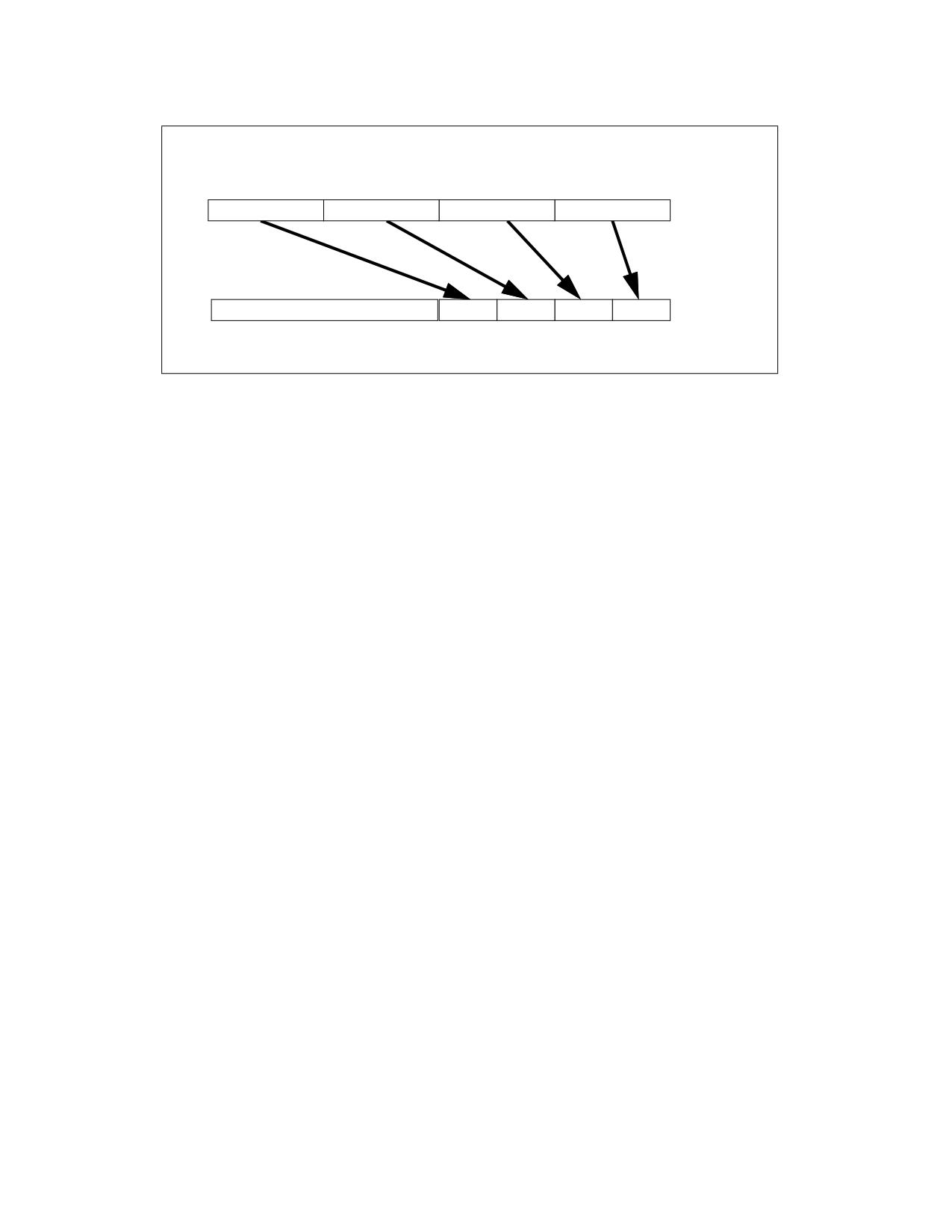
SRC
X3
X2
X1
X0
DEST
0
X3
X2
X1
X0
Figure 3-10. VCVTTPD2DQ (VEX.256 encoded version)
Operation
VCVTTPD2DQ (EVEX Encoded Versions) When SRC Operand is a Register
(KL, VL) = (2, 128), (4, 256), (8, 512)
FOR j := 0 TO KL-1
i := j * 32
k := j * 64
IF k1[j] OR *no writemask*
THEN DEST[i+31:i] :=
Convert_Double_Precision_Floating_Point_To_Integer_Truncate(SRC[k+63:k])
ELSE
IF *merging-masking*
; merging-masking
THEN *DEST[i+31:i] remains unchanged*
ELSE
; zeroing-masking
DEST[i+31:i] := 0
FI
FI;
ENDFOR
DEST[MAXVL-1:VL/2] := 0
CVTTPD2DQ-Convert with Truncation Packed Double Precision Floating-Point Values to Packed Doubleword Integers
Vol. 2A
3-245
VCVTTPD2DQ (EVEX Encoded Versions) When SRC Operand is a Memory Source
(KL, VL) = (2, 128), (4, 256), (8, 512)
FOR j := 0 TO KL-1
i := j * 32
k := j * 64
IF k1[j] OR *no writemask*
THEN
IF (EVEX.b = 1)
THEN
DEST[i+31:i] :=
Convert_Double_Precision_Floating_Point_To_Integer_Truncate(SRC[63:0])
ELSE
DEST[i+31:i] :=
Convert_Double_Precision_Floating_Point_To_Integer_Truncate(SRC[k+63:k])
FI;
ELSE
IF *merging-masking*
; merging-masking
THEN *DEST[i+31:i] remains unchanged*
ELSE
; zeroing-masking
DEST[i+31:i] := 0
FI
FI;
ENDFOR
DEST[MAXVL-1:VL/2] := 0
VCVTTPD2DQ (VEX.256 Encoded Version)
DEST[31:0] := Convert_Double_Precision_Floating_Point_To_Integer_Truncate(SRC[63:0])
DEST[63:32] := Convert_Double_Precision_Floating_Point_To_Integer_Truncate(SRC[127:64])
DEST[95:64] := Convert_Double_Precision_Floating_Point_To_Integer_Truncate(SRC[191:128])
DEST[127:96] := Convert_Double_Precision_Floating_Point_To_Integer_Truncate(SRC[255:192)
DEST[MAXVL-1:128] := 0
VCVTTPD2DQ (VEX.128 Encoded Version)
DEST[31:0] := Convert_Double_Precision_Floating_Point_To_Integer_Truncate(SRC[63:0])
DEST[63:32] := Convert_Double_Precision_Floating_Point_To_Integer_Truncate(SRC[127:64])
DEST[MAXVL-1:64] := 0
CVTTPD2DQ (128-bit Legacy SSE Version)
DEST[31:0] := Convert_Double_Precision_Floating_Point_To_Integer_Truncate(SRC[63:0])
DEST[63:32] := Convert_Double_Precision_Floating_Point_To_Integer_Truncate(SRC[127:64])
DEST[127:64] := 0
DEST[MAXVL-1:128] (unmodified)
CVTTPD2DQ-Convert with Truncation Packed Double Precision Floating-Point Values to Packed Doubleword Integers
Vol. 2A
3-246
Intel C/C++ Compiler Intrinsic Equivalent
VCVTTPD2DQ __m256i _mm512_cvttpd_epi32( __m512d a);
VCVTTPD2DQ __m256i _mm512_mask_cvttpd_epi32( __m256i s, __mmask8 k, __m512d a);
VCVTTPD2DQ __m256i _mm512_maskz_cvttpd_epi32( __mmask8 k, __m512d a);
VCVTTPD2DQ __m256i _mm512_cvtt_roundpd_epi32( __m512d a, int sae);
VCVTTPD2DQ __m256i _mm512_mask_cvtt_roundpd_epi32( __m256i s, __mmask8 k, __m512d a, int sae);
VCVTTPD2DQ __m256i _mm512_maskz_cvtt_roundpd_epi32( __mmask8 k, __m512d a, int sae);
VCVTTPD2DQ __m128i _mm256_mask_cvttpd_epi32( __m128i s, __mmask8 k, __m256d a);
VCVTTPD2DQ __m128i _mm256_maskz_cvttpd_epi32( __mmask8 k, __m256d a);
VCVTTPD2DQ __m128i _mm_mask_cvttpd_epi32( __m128i s, __mmask8 k, __m128d a);
VCVTTPD2DQ __m128i _mm_maskz_cvttpd_epi32( __mmask8 k, __m128d a);
VCVTTPD2DQ __m128i _mm256_cvttpd_epi32 (__m256d src);
CVTTPD2DQ __m128i _mm_cvttpd_epi32 (__m128d src);
SIMD Floating-Point Exceptions
Invalid, Precision.
Other Exceptions
VEX-encoded instructions, see Table 2-19, “Type 2 Class Exception Conditions.”
EVEX-encoded instructions, see Table 2-48, “Type E2 Class Exception Conditions.”
Additionally:
#UD
If VEX.vvvv != 1111B or EVEX.vvvv != 1111B.
CVTTPD2DQ-Convert with Truncation Packed Double Precision Floating-Point Values to Packed Doubleword Integers
Vol. 2A
3-247

CVTTPD2PI-Convert With Truncation Packed Double Precision Floating-Point Values to Packed
Dword Integers
Opcode/
Op/
64-Bit
Compat/
Description
Instruction
En
Mode
Leg Mode
66 0F 2C /r
RM
Valid
Valid
Convert two packer double precision floating-
point values from xmm/m128 to two packed
CVTTPD2PI mm, xmm/m128
signed doubleword integers in mm using
truncation.
Instruction Operand Encoding
Op/En
Operand 1
Operand 2
Operand 3
Operand 4
RM
ModRM:reg (w)
ModRM:r/m (r)
N/A
N/A
Description
Converts two packed double precision floating-point values in the source operand (second operand) to two packed
signed doubleword integers in the destination operand (first operand). The source operand can be an XMM register
or a 128-bit memory location. The destination operand is an MMX technology register.
When a conversion is inexact, a truncated (round toward zero) result is returned. If a converted result is larger
than the maximum signed doubleword integer, the floating-point invalid exception is raised, and if this exception is
masked, the indefinite integer value 80000000H is returned.
This instruction causes a transition from x87 FPU to MMX technology operation (that is, the x87 FPU top-of-stack
pointer is set to 0 and the x87 FPU tag word is set to all 0s [valid]). If this instruction is executed while an x87 FPU
floating-point exception is pending, the exception is handled before the CVTTPD2PI instruction is executed.
In 64-bit mode, use of the REX.R prefix permits this instruction to access additional registers (XMM8-XMM15).
Operation
DEST[31:0] := Convert_Double_Precision_Floating_Point_To_Integer32_Truncate(SRC[63:0]);
DEST[63:32] := Convert_Double_Precision_Floating_Point_To_Integer32_Truncate(SRC[127:64]);
Intel C/C++ Compiler Intrinsic Equivalent
CVTTPD1PI __m64 _mm_cvttpd_pi32(__m128d a)
SIMD Floating-Point Exceptions
Invalid, Precision.
Other Mode Exceptions
See Section 25.25.3, “Exception Conditions of Legacy SIMD Instructions Operating on MMX Registers” in the Intel®
64 and IA-32 Architectures Software Developer’s Manual, Volume 3B.
CVTTPD2PI-Convert With Truncation Packed Double Precision Floating-Point Values to Packed Dword Integers
Vol. 2A
3-248

CVTTPS2DQ-Convert With Truncation Packed Single Precision Floating-Point Values to Packed
Signed Doubleword Integer Values
Opcode/
Op /
64/32 bit
CPUID
Description
Instruction
En
Mode
Feature Flag
Support
F3 0F 5B /r
A
V/V
SSE2
Convert four packed single precision floating-point
CVTTPS2DQ xmm1, xmm2/m128
values from xmm2/mem to four packed signed
doubleword values in xmm1 using truncation.
VEX.128.F3.0F.WIG 5B /r
A
V/V
AVX
Convert four packed single precision floating-point
VCVTTPS2DQ xmm1, xmm2/m128
values from xmm2/mem to four packed signed
doubleword values in xmm1 using truncation.
VEX.256.F3.0F.WIG 5B /r
A
V/V
AVX
Convert eight packed single precision floating-point
VCVTTPS2DQ ymm1, ymm2/m256
values from ymm2/mem to eight packed signed
doubleword values in ymm1 using truncation.
EVEX.128.F3.0F.W0 5B /r
B
V/V
AVX512VL
Convert four packed single precision floating-point
VCVTTPS2DQ xmm1 {k1}{z},
AVX512F
values from xmm2/m128/m32bcst to four packed
xmm2/m128/m32bcst
signed doubleword values in xmm1 using truncation
subject to writemask k1.
EVEX.256.F3.0F.W0 5B /r
B
V/V
AVX512VL
Convert eight packed single precision floating-point
VCVTTPS2DQ ymm1 {k1}{z},
AVX512F
values from ymm2/m256/m32bcst to eight packed
ymm2/m256/m32bcst
signed doubleword values in ymm1 using truncation
subject to writemask k1.
EVEX.512.F3.0F.W0 5B /r
B
V/V
AVX512F
Convert sixteen packed single precision floating-point
VCVTTPS2DQ zmm1 {k1}{z},
values from zmm2/m512/m32bcst to sixteen packed
zmm2/m512/m32bcst {sae}
signed doubleword values in zmm1 using truncation
subject to writemask k1.
Instruction Operand Encoding
Op/En
Tuple Type
Operand 1
Operand 2
Operand 3
Operand 4
A
N/A
ModRM:reg (w)
ModRM:r/m (r)
N/A
N/A
B
Full
ModRM:reg (w)
ModRM:r/m (r)
N/A
N/A
Description
Converts four, eight or sixteen packed single precision floating-point values in the source operand to four, eight or
sixteen signed doubleword integers in the destination operand.
When a conversion is inexact, a truncated (round toward zero) value is returned. If a converted result is larger than
the maximum signed doubleword integer, the floating-point invalid exception is raised, and if this exception is
masked, the indefinite integer value 80000000H is returned.
EVEX encoded versions: The source operand is a ZMM/YMM/XMM register, a 512/256/128-bit memory location or
a 512/256/128-bit vector broadcasted from a 32-bit memory location. The destination operand is a
ZMM/YMM/XMM register conditionally updated with writemask k1.
VEX.256 encoded version: The source operand is a YMM register or 256- bit memory location. The destination
operand is a YMM register. The upper bits (MAXVL-1:256) of the corresponding ZMM register destination are
zeroed.
VEX.128 encoded version: The source operand is an XMM register or 128- bit memory location. The destination
operand is a XMM register. The upper bits (MAXVL-1:128) of the corresponding ZMM register destination are
zeroed.
128-bit Legacy SSE version: The source operand is an XMM register or 128- bit memory location. The destination
operand is an XMM register. The upper bits (MAXVL-1:128) of the corresponding ZMM register destination are
unmodified.
Note: VEX.vvvv and EVEX.vvvv are reserved and must be 1111b otherwise instructions will #UD.
CVTTPS2DQ-Convert With Truncation Packed Single Precision Floating-Point Values to Packed Signed Doubleword Integer Values
Vol. 2A
3-249
Operation
VCVTTPS2DQ (EVEX Encoded Versions) When SRC Operand is a Register
(KL, VL) = (4, 128), (8, 256), (16, 512)
FOR j := 0 TO KL-1
i := j * 32
IF k1[j] OR *no writemask*
THEN DEST[i+31:i] :=
Convert_Single_Precision_Floating_Point_To_Integer_Truncate(SRC[i+31:i])
ELSE
IF *merging-masking*
; merging-masking
THEN *DEST[i+31:i] remains unchanged*
ELSE
; zeroing-masking
DEST[i+31:i] := 0
FI
FI;
ENDFOR
DEST[MAXVL-1:VL] := 0
VCVTTPS2DQ (EVEX Encoded Versions) When SRC Operand is a Memory Source
(KL, VL) = (4, 128), (8, 256), (16, 512)
FOR j := 0 TO 15
i := j * 32
IF k1[j] OR *no writemask*
THEN
IF (EVEX.b = 1)
THEN
DEST[i+31:i] :=
Convert_Single_Precision_Floating_Point_To_Integer_Truncate(SRC[31:0])
ELSE
DEST[i+31:i] :=
Convert_Single_Precision_Floating_Point_To_Integer_Truncate(SRC[i+31:i])
FI;
ELSE
IF *merging-masking*
; merging-masking
THEN *DEST[i+31:i] remains unchanged*
ELSE
; zeroing-masking
DEST[i+31:i] := 0
FI
FI;
ENDFOR
DEST[MAXVL-1:VL] := 0
VCVTTPS2DQ (VEX.256 Encoded Version)
DEST[31:0] := Convert_Single_Precision_Floating_Point_To_Integer_Truncate(SRC[31:0])
DEST[63:32] := Convert_Single_Precision_Floating_Point_To_Integer_Truncate(SRC[63:32])
DEST[95:64] := Convert_Single_Precision_Floating_Point_To_Integer_Truncate(SRC[95:64])
DEST[127:96] := Convert_Single_Precision_Floating_Point_To_Integer_Truncate(SRC[127:96)
DEST[159:128] := Convert_Single_Precision_Floating_Point_To_Integer_Truncate(SRC[159:128])
DEST[191:160] := Convert_Single_Precision_Floating_Point_To_Integer_Truncate(SRC[191:160])
DEST[223:192] := Convert_Single_Precision_Floating_Point_To_Integer_Truncate(SRC[223:192])
DEST[255:224] := Convert_Single_Precision_Floating_Point_To_Integer_Truncate(SRC[255:224])
CVTTPS2DQ-Convert With Truncation Packed Single Precision Floating-Point Values to Packed Signed Doubleword Integer Values
Vol. 2A
3-250
VCVTTPS2DQ (VEX.128 Encoded Version)
DEST[31:0] := Convert_Single_Precision_Floating_Point_To_Integer_Truncate(SRC[31:0])
DEST[63:32] := Convert_Single_Precision_Floating_Point_To_Integer_Truncate(SRC[63:32])
DEST[95:64] := Convert_Single_Precision_Floating_Point_To_Integer_Truncate(SRC[95:64])
DEST[127:96] := Convert_Single_Precision_Floating_Point_To_Integer_Truncate(SRC[127:96])
DEST[MAXVL-1:128] := 0
CVTTPS2DQ (128-bit Legacy SSE Version)
DEST[31:0] := Convert_Single_Precision_Floating_Point_To_Integer_Truncate(SRC[31:0])
DEST[63:32] := Convert_Single_Precision_Floating_Point_To_Integer_Truncate(SRC[63:32])
DEST[95:64] := Convert_Single_Precision_Floating_Point_To_Integer_Truncate(SRC[95:64])
DEST[127:96] := Convert_Single_Precision_Floating_Point_To_Integer_Truncate(SRC[127:96])
DEST[MAXVL-1:128] (unmodified)
Intel C/C++ Compiler Intrinsic Equivalent
VCVTTPS2DQ __m512i _mm512_cvttps_epi32( __m512 a);
VCVTTPS2DQ __m512i _mm512_mask_cvttps_epi32( __m512i s, __mmask16 k, __m512 a);
VCVTTPS2DQ __m512i _mm512_maskz_cvttps_epi32( __mmask16 k, __m512 a);
VCVTTPS2DQ __m512i _mm512_cvtt_roundps_epi32( __m512 a, int sae);
VCVTTPS2DQ __m512i _mm512_mask_cvtt_roundps_epi32( __m512i s, __mmask16 k, __m512 a, int sae);
VCVTTPS2DQ __m512i _mm512_maskz_cvtt_roundps_epi32( __mmask16 k, __m512 a, int sae);
VCVTTPS2DQ __m256i _mm256_mask_cvttps_epi32( __m256i s, __mmask8 k, __m256 a);
VCVTTPS2DQ __m256i _mm256_maskz_cvttps_epi32( __mmask8 k, __m256 a);
VCVTTPS2DQ __m128i _mm_mask_cvttps_epi32( __m128i s, __mmask8 k, __m128 a);
VCVTTPS2DQ __m128i _mm_maskz_cvttps_epi32( __mmask8 k, __m128 a);
VCVTTPS2DQ __m256i _mm256_cvttps_epi32 (__m256 a)
CVTTPS2DQ __m128i _mm_cvttps_epi32 (__m128 a)
SIMD Floating-Point Exceptions
Invalid, Precision.
Other Exceptions
VEX-encoded instructions, see Table 2-19, “Type 2 Class Exception Conditions.”
EVEX-encoded instructions, see Table 2-48, “Type E2 Class Exception Conditions.”
Additionally:
#UD
If VEX.vvvv != 1111B or EVEX.vvvv != 1111B.
CVTTPS2DQ-Convert With Truncation Packed Single Precision Floating-Point Values to Packed Signed Doubleword Integer Values
Vol. 2A
3-251

CVTTPS2PI-Convert With Truncation Packed Single Precision Floating-Point Values to Packed
Dword Integers
Opcode/
Op/
64-Bit
Compat/
Description
Instruction
En
Mode
Leg Mode
NP 0F 2C /r
RM
Valid
Valid
Convert two single precision floating-point
values from xmm/m64 to two signed
CVTTPS2PI mm, xmm/m64
doubleword signed integers in mm using
truncation.
Instruction Operand Encoding
Op/En
Operand 1
Operand 2
Operand 3
Operand 4
RM
ModRM:reg (w)
ModRM:r/m (r)
N/A
N/A
Description
Converts two packed single precision floating-point values in the source operand (second operand) to two packed
signed doubleword integers in the destination operand (first operand). The source operand can be an XMM register
or a 64-bit memory location. The destination operand is an MMX technology register. When the source operand is
an XMM register, the two single precision floating-point values are contained in the low quadword of the register.
When a conversion is inexact, a truncated (round toward zero) result is returned. If a converted result is larger
than the maximum signed doubleword integer, the floating-point invalid exception is raised, and if this exception is
masked, the indefinite integer value 80000000H is returned.
This instruction causes a transition from x87 FPU to MMX technology operation (that is, the x87 FPU top-of-stack
pointer is set to 0 and the x87 FPU tag word is set to all 0s [valid]). If this instruction is executed while an x87 FPU
floating-point exception is pending, the exception is handled before the CVTTPS2PI instruction is executed.
In 64-bit mode, use of the REX.R prefix permits this instruction to access additional registers (XMM8-XMM15).
Operation
DEST[31:0] := Convert_Single_Precision_Floating_Point_To_Integer_Truncate(SRC[31:0]);
DEST[63:32] := Convert_Single_Precision_Floating_Point_To_Integer_Truncate(SRC[63:32]);
Intel C/C++ Compiler Intrinsic Equivalent
CVTTPS2PI __m64 _mm_cvttps_pi32(__m128 a)
SIMD Floating-Point Exceptions
Invalid, Precision.
Other Exceptions
See Section 25.25.3, “Exception Conditions of Legacy SIMD Instructions Operating on MMX Registers” in the Intel®
64 and IA-32 Architectures Software Developer’s Manual, Volume 3B.
CVTTPS2PI-Convert With Truncation Packed Single Precision Floating-Point Values to Packed Dword Integers
Vol. 2A
3-252

CVTTSD2SI-Convert With Truncation Scalar Double Precision Floating-Point Value to Signed
Integer
Opcode/
Op /
64/32 bit
CPUID
Description
Instruction
En
Mode
Feature Flag
Support
F2 0F 2C /r
A
V/V
SSE2
Convert one double precision floating-point value
CVTTSD2SI r32, xmm1/m64
from xmm1/m64 to one signed doubleword integer in
r32 using truncation.
F2 REX.W 0F 2C /r
A
V/N.E.
SSE2
Convert one double precision floating-point value
CVTTSD2SI r64, xmm1/m64
from xmm1/m64 to one signed quadword integer in
r64 using truncation.
VEX.LIG.F2.0F.W0 2C /r 1
A
V/V
AVX
Convert one double precision floating-point value
VCVTTSD2SI r32, xmm1/m64
from xmm1/m64 to one signed doubleword integer in
r32 using truncation.
VEX.LIG.F2.0F.W1 2C /r 1
B
V/N.E.2
AVX
Convert one double precision floating-point value
VCVTTSD2SI r64, xmm1/m64
from xmm1/m64 to one signed quadword integer in
r64 using truncation.
EVEX.LLIG.F2.0F.W0 2C /r
B
V/V
AVX512F
Convert one double precision floating-point value
VCVTTSD2SI r32, xmm1/m64{sae}
OR AVX10.1
from xmm1/m64 to one signed doubleword integer in
r32 using truncation.
EVEX.LLIG.F2.0F.W1 2C /r
B
V/N.E.2
AVX512F
Convert one double precision floating-point value
VCVTTSD2SI r64, xmm1/m64{sae}
OR AVX10.1
from xmm1/m64 to one signed quadword integer in
r64 using truncation.
NOTES:
1. Software should ensure VCVTTSD2SI is encoded with VEX.L=0. Encoding VCVTTSD2SI with VEX.L=1 may encounter unpredictable
behavior across different processor generations.
2. For this specific instruction, VEX.W/EVEX.W in non-64 bit is ignored; the instructions behaves as if the W0 version is used.
Instruction Operand Encoding
Op/En
Tuple Type
Operand 1
Operand 2
Operand 3
Operand 4
A
N/A
ModRM:reg (w)
ModRM:r/m (r)
N/A
N/A
B
Tuple1 Fixed
ModRM:reg (w)
ModRM:r/m (r)
N/A
N/A
Description
Converts a double precision floating-point value in the source operand (the second operand) to a signed double-
word integer (or signed quadword integer if operand size is 64 bits) in the destination operand (the first operand).
The source operand can be an XMM register or a 64-bit memory location. The destination operand is a general
purpose register. When the source operand is an XMM register, the double precision floating-point value is
contained in the low quadword of the register.
When a conversion is inexact, a truncated (round toward zero) result is returned.
If a converted result exceeds the range limits of signed doubleword integer (in non-64-bit modes or 64-bit mode
with REX.W/VEX.W/EVEX.W=0), the floating-point invalid exception is raised, and if this exception is masked, the
indefinite integer value 80000000H is returned.
If a converted result exceeds the range limits of signed quadword integer (in 64-bit mode and
REX.W/VEX.W/EVEX.W = 1), the floating-point invalid exception is raised, and if this exception is masked, the
indefinite integer value 80000000_00000000H is returned.
Legacy SSE instructions: In 64-bit mode, Use of the REX.W prefix promotes the instruction to 64-bit operation. See
the summary chart at the beginning of this section for encoding data and limits.
VEX.W1 and EVEX.W1 versions: promotes the instruction to produce 64-bit data in 64-bit mode.
CVTTSD2SI-Convert With Truncation Scalar Double Precision Floating-Point Value to Signed Integer
Vol. 2A
3-253
Note: VEX.vvvv and EVEX.vvvv are reserved and must be 1111b, otherwise instructions will #UD.
Software should ensure VCVTTSD2SI is encoded with VEX.L=0. Encoding VCVTTSD2SI with VEX.L=1 may
encounter unpredictable behavior across different processor generations.
Operation
(V)CVTTSD2SI (All Versions)
IF 64-Bit Mode and OperandSize = 64
THEN
DEST[63:0] := Convert_Double_Precision_Floating_Point_To_Integer_Truncate(SRC[63:0]);
ELSE
DEST[31:0] := Convert_Double_Precision_Floating_Point_To_Integer_Truncate(SRC[63:0]);
FI;
Intel C/C++ Compiler Intrinsic Equivalent
VCVTTSD2SI int _mm_cvttsd_i32( __m128d a);
VCVTTSD2SI int _mm_cvtt_roundsd_i32( __m128d a, int sae);
VCVTTSD2SI __int64 _mm_cvttsd_i64( __m128d a);
VCVTTSD2SI __int64 _mm_cvtt_roundsd_i64( __m128d a, int sae);
CVTTSD2SI int _mm_cvttsd_si32( __m128d a);
CVTTSD2SI __int64 _mm_cvttsd_si64( __m128d a);
SIMD Floating-Point Exceptions
Invalid, Precision.
Other Exceptions
VEX-encoded instructions, see Table 2-20, “Type 3 Class Exception Conditions,” additionally:
#UD
If VEX.vvvv != 1111B.
EVEX-encoded instructions, see Table 2-50, “Type E3NF Class Exception Conditions.”
CVTTSD2SI-Convert With Truncation Scalar Double Precision Floating-Point Value to Signed Integer
Vol. 2A
3-254

CVTTSS2SI-Convert With Truncation Scalar Single Precision Floating-Point Value to Signed
Integer
Opcode/
Op /
64/32 bit
CPUID
Description
Instruction
En
Mode
Feature Flag
Support
F3 0F 2C /r
A
V/V
SSE
Convert one single precision floating-point value from
CVTTSS2SI r32, xmm1/m32
xmm1/m32 to one signed doubleword integer in r32
using truncation.
F3 REX.W 0F 2C /r
A
V/N.E.
SSE
Convert one single precision floating-point value from
CVTTSS2SI r64, xmm1/m32
xmm1/m32 to one signed quadword integer in r64
using truncation.
VEX.LIG.F3.0F.W0 2C /r 1
A
V/V
AVX
Convert one single precision floating-point value from
VCVTTSS2SI r32, xmm1/m32
xmm1/m32 to one signed doubleword integer in r32
using truncation.
VEX.LIG.F3.0F.W1 2C /r 1
A
V/N.E.2
AVX
Convert one single precision floating-point value from
VCVTTSS2SI r64, xmm1/m32
xmm1/m32 to one signed quadword integer in r64
using truncation.
EVEX.LLIG.F3.0F.W0 2C /r
B
V/V
AVX512F
Convert one single precision floating-point value from
VCVTTSS2SI r32, xmm1/m32{sae}
OR AVX10.1
xmm1/m32 to one signed doubleword integer in r32
using truncation.
EVEX.LLIG.F3.0F.W1 2C /r
B
V/N.E.2
AVX512F
Convert one single precision floating-point value from
VCVTTSS2SI r64, xmm1/m32{sae}
OR AVX10.1
xmm1/m32 to one signed quadword integer in r64
using truncation.
NOTES:
1. Software should ensure VCVTTSS2SI is encoded with VEX.L=0. Encoding VCVTTSS2SI with VEX.L=1 may encounter unpredictable
behavior across different processor generations.
2. For this specific instruction, VEX.W/EVEX.W in non-64 bit is ignored; the instructions behaves as if the W0 version is used.
Instruction Operand Encoding
Op/En
Tuple Type
Operand 1
Operand 2
Operand 3
Operand 4
A
N/A
ModRM:reg (w)
ModRM:r/m (r)
N/A
N/A
B
Tuple1 Fixed
ModRM:reg (w)
ModRM:r/m (r)
N/A
N/A
Description
Converts a single precision floating-point value in the source operand (the second operand) to a signed doubleword
integer (or signed quadword integer if operand size is 64 bits) in the destination operand (the first operand). The
source operand can be an XMM register or a 32-bit memory location. The destination operand is a general purpose
register. When the source operand is an XMM register, the single precision floating-point value is contained in the
low doubleword of the register.
When a conversion is inexact, a truncated (round toward zero) result is returned.
If a converted result exceeds the range limits of signed doubleword integer (in non-64-bit modes or 64-bit mode
with REX.W/VEX.W/EVEX.W=0), the floating-point invalid exception is raised, and if this exception is masked, the
indefinite integer value 80000000H is returned.
If a converted result exceeds the range limits of signed quadword integer (in 64-bit mode and
REX.W/VEX.W/EVEX.W = 1), the floating-point invalid exception is raised, and if this exception is masked, the
indefinite integer value 80000000_00000000H is returned.
Legacy SSE instructions: In 64-bit mode, Use of the REX.W prefix promotes the instruction to 64-bit operation. See
the summary chart at the beginning of this section for encoding data and limits.
VEX.W1 and EVEX.W1 versions: promotes the instruction to produce 64-bit data in 64-bit mode.
CVTTSS2SI-Convert With Truncation Scalar Single Precision Floating-Point Value to Signed Integer
Vol. 2A
3-255
Note: VEX.vvvv and EVEX.vvvv are reserved and must be 1111b, otherwise instructions will #UD.
Software should ensure VCVTTSS2SI is encoded with VEX.L=0. Encoding VCVTTSS2SI with VEX.L=1 may
encounter unpredictable behavior across different processor generations.
Operation
(V)CVTTSS2SI (All Versions)
IF 64-Bit Mode and OperandSize = 64
THEN
DEST[63:0] := Convert_Single_Precision_Floating_Point_To_Integer_Truncate(SRC[31:0]);
ELSE
DEST[31:0] := Convert_Single_Precision_Floating_Point_To_Integer_Truncate(SRC[31:0]);
FI;
Intel C/C++ Compiler Intrinsic Equivalent
VCVTTSS2SI int _mm_cvttss_i32( __m128 a);
VCVTTSS2SI int _mm_cvtt_roundss_i32( __m128 a, int sae);
VCVTTSS2SI __int64 _mm_cvttss_i64( __m128 a);
VCVTTSS2SI __int64 _mm_cvtt_roundss_i64( __m128 a, int sae);
CVTTSS2SI int _mm_cvttss_si32( __m128 a);
CVTTSS2SI __int64 _mm_cvttss_si64( __m128 a);
SIMD Floating-Point Exceptions
Invalid, Precision.
Other Exceptions
See Table 2-20, “Type 3 Class Exception Conditions,” additionally:
#UD
If VEX.vvvv != 1111B.
EVEX-encoded instructions, see Table 2-50, “Type E3NF Class Exception Conditions.”
CVTTSS2SI-Convert With Truncation Scalar Single Precision Floating-Point Value to Signed Integer
Vol. 2A
3-256
CWD/CDQ/CQO-Convert Word to Doubleword/Convert Doubleword to Quadword
Opcode
Instruction
Op/
64-Bit
Compat/
Description
En
Mode
Leg Mode
99
CWD
ZO
Valid
Valid
DX:AX := sign-extend of AX.
99
CDQ
ZO
Valid
Valid
EDX:EAX := sign-extend of EAX.
REX.W + 99
CQO
ZO
Valid
N.E.
RDX:RAX:= sign-extend of RAX.
Instruction Operand Encoding
Op/En
Operand 1
Operand 2
Operand 3
Operand 4
ZO
N/A
N/A
N/A
N/A
Description
Doubles the size of the operand in register AX, EAX, or RAX (depending on the operand size) by means of sign
extension and stores the result in registers DX:AX, EDX:EAX, or RDX:RAX, respectively. The CWD instruction
copies the sign (bit 15) of the value in the AX register into every bit position in the DX register. The CDQ instruction
copies the sign (bit 31) of the value in the EAX register into every bit position in the EDX register. The CQO instruc-
tion (available in 64-bit mode only) copies the sign (bit 63) of the value in the RAX register into every bit position
in the RDX register.
The CWD instruction can be used to produce a doubleword dividend from a word before word division. The CDQ
instruction can be used to produce a quadword dividend from a doubleword before doubleword division. The CQO
instruction can be used to produce a double quadword dividend from a quadword before a quadword division.
The CWD and CDQ mnemonics reference the same opcode. The CWD instruction is intended for use when the
operand-size attribute is 16 and the CDQ instruction for when the operand-size attribute is 32. Some assemblers
may force the operand size to 16 when CWD is used and to 32 when CDQ is used. Others may treat these
mnemonics as synonyms (CWD/CDQ) and use the current setting of the operand-size attribute to determine the
size of values to be converted, regardless of the mnemonic used.
In 64-bit mode, use of the REX.W prefix promotes operation to 64 bits. The CQO mnemonics reference the same
opcode as CWD/CDQ. See the summary chart at the beginning of this section for encoding data and limits.
Operation
IF OperandSize = 16 (* CWD instruction *)
THEN
DX := SignExtend(AX);
ELSE IF OperandSize = 32 (* CDQ instruction *)
EDX := SignExtend(EAX); FI;
ELSE IF 64-Bit Mode and OperandSize = 64 (* CQO instruction*)
RDX := SignExtend(RAX); FI;
FI;
Flags Affected
None.
Exceptions (All Operating Modes)
#UD
If the LOCK prefix is used.
CWD/CDQ/CQO-Convert Word to Doubleword/Convert Doubleword to Quadword
Vol. 2A
3-257

DAA-Decimal Adjust AL After Addition
Opcode
Instruction
Op/
64-Bit
Compat/
Description
En
Mode
Leg Mode
27
DAA
ZO
Invalid
Valid
Decimal adjust AL after addition.
Instruction Operand Encoding
Op/En
Operand 1
Operand 2
Operand 3
Operand 4
ZO
N/A
N/A
N/A
N/A
Description
Adjusts the sum of two packed BCD values to create a packed BCD result. The AL register is the implied source and
destination operand. The DAA instruction is only useful when it follows an ADD instruction that adds (binary addi-
tion) two 2-digit, packed BCD values and stores a byte result in the AL register. The DAA instruction then adjusts
the contents of the AL register to contain the correct 2-digit, packed BCD result. If a decimal carry is detected, the
CF and AF flags are set accordingly.
This instruction executes as described above in compatibility mode and legacy mode. It is not valid in 64-bit mode.
Operation
IF 64-Bit Mode
THEN
#UD;
ELSE
old_AL := AL;
old_CF := CF;
CF := 0;
IF (((AL AND 0FH) > 9) or AF = 1)
THEN
AL := AL + 6;
CF := old_CF or (Carry from AL := AL + 6);
AF := 1;
ELSE
AF := 0;
FI;
IF ((old_AL > 99H) or (old_CF = 1))
THEN
AL := AL + 60H;
CF := 1;
ELSE
CF := 0;
FI;
FI;
Example
ADD AL, BL Before: AL=79H BL=35H EFLAGS(OSZAPC)=XXXXXX
After: AL=AEH BL=35H EFLAGS(0SZAPC)=110000
DAA
Before: AL=AEH BL=35H EFLAGS(OSZAPC)=110000
After: AL=14H BL=35H EFLAGS(0SZAPC)=X00111
DAA
Before: AL=2EH BL=35H EFLAGS(OSZAPC)=110000
After: AL=34H BL=35H EFLAGS(0SZAPC)=X00101
DAA-Decimal Adjust AL After Addition
Vol. 2A
3-258
Flags Affected
The CF and AF flags are set if the adjustment of the value results in a decimal carry in either digit of the result (see
the “Operation” section above). The SF, ZF, and PF flags are set according to the result. The OF flag is undefined.
Protected Mode Exceptions
#UD
If the LOCK prefix is used.
Real-Address Mode Exceptions
#UD
If the LOCK prefix is used.
Virtual-8086 Mode Exceptions
#UD
If the LOCK prefix is used.
Compatibility Mode Exceptions
#UD
If the LOCK prefix is used.
64-Bit Mode Exceptions
#UD
If in 64-bit mode.
DAA-Decimal Adjust AL After Addition
Vol. 2A
3-259

DAS-Decimal Adjust AL After Subtraction
Opcode
Instruction
Op/
64-Bit
Compat/
Description
En
Mode
Leg Mode
2F
DAS
ZO
Invalid
Valid
Decimal adjust AL after subtraction.
Instruction Operand Encoding
Op/En
Operand 1
Operand 2
Operand 3
Operand 4
ZO
N/A
N/A
N/A
N/A
Description
Adjusts the result of the subtraction of two packed BCD values to create a packed BCD result. The AL register is the
implied source and destination operand. The DAS instruction is only useful when it follows a SUB instruction that
subtracts (binary subtraction) one 2-digit, packed BCD value from another and stores a byte result in the AL
register. The DAS instruction then adjusts the contents of the AL register to contain the correct 2-digit, packed BCD
result. If a decimal borrow is detected, the CF and AF flags are set accordingly.
This instruction executes as described above in compatibility mode and legacy mode. It is not valid in 64-bit mode.
Operation
IF 64-Bit Mode
THEN
#UD;
ELSE
old_AL := AL;
old_CF := CF;
CF := 0;
IF (((AL AND 0FH) > 9) or AF = 1)
THEN
AL := AL - 6;
CF := old_CF or (Borrow from AL := AL - 6);
AF := 1;
ELSE
AF := 0;
FI;
IF ((old_AL > 99H) or (old_CF = 1))
THEN
AL := AL - 60H;
CF := 1;
FI;
FI;
Example
SUB
AL, BL Before: AL = 35H, BL = 47H, EFLAGS(OSZAPC) = XXXXXX
After: AL = EEH, BL = 47H, EFLAGS(0SZAPC) = 010111
DAA
Before: AL = EEH, BL = 47H, EFLAGS(OSZAPC) = 010111
After: AL = 88H, BL = 47H, EFLAGS(0SZAPC) = X10111
Flags Affected
The CF and AF flags are set if the adjustment of the value results in a decimal borrow in either digit of the result
(see the “Operation” section above). The SF, ZF, and PF flags are set according to the result. The OF flag is unde-
fined.
DAS-Decimal Adjust AL After Subtraction
Vol. 2A
3-260
Protected Mode Exceptions
#UD
If the LOCK prefix is used.
Real-Address Mode Exceptions
#UD
If the LOCK prefix is used.
Virtual-8086 Mode Exceptions
#UD
If the LOCK prefix is used.
Compatibility Mode Exceptions
#UD
If the LOCK prefix is used.
64-Bit Mode Exceptions
#UD
If in 64-bit mode.
DAS-Decimal Adjust AL After Subtraction
Vol. 2A
3-261
DEC-Decrement by 1
Opcode
Instruction
Op/
64-Bit
Compat/
Description
En
Mode
Leg Mode
FE /1
DEC r/m81
M
Valid
Valid
Decrement r/m8 by 1.
FF /1
DEC r/m16
M
Valid
Valid
Decrement r/m16 by 1.
FF /1
DEC r/m32
M
Valid
Valid
Decrement r/m32 by 1.
REX.W + FF /1
DEC r/m64
M
Valid
N.E.
Decrement r/m64 by 1.
48+rw
DEC r16
O
N.E.
Valid
Decrement r16 by 1.
48+rd
DEC r32
O
N.E.
Valid
Decrement r32 by 1.
NOTES:
1. With a REX prefix in 64-bit mode, attempts to access AH, BH, CH, or DH will instead access SPL, DIL, BPL, or SIL, respectively.
Instruction Operand Encoding
Op/En
Operand 1
Operand 2
Operand 3
Operand 4
M
ModRM:r/m (r, w)
N/A
N/A
N/A
O
opcode + rd (r, w)
N/A
N/A
N/A
Description
Subtracts 1 from the destination operand, while preserving the state of the CF flag. The destination operand can be
a register or a memory location. This instruction allows a loop counter to be updated without disturbing the CF flag.
(To perform a decrement operation that updates the CF flag, use a SUB instruction with an immediate operand of
1.)
This instruction can be used with a LOCK prefix to allow the instruction to be executed atomically.
In 64-bit mode, DEC r16 and DEC r32 are not encodable (because opcodes 48H through 4FH are REX prefixes).
Otherwise, the instruction’s 64-bit mode default operation size is 32 bits. Use of the REX.R prefix permits access to
additional registers (R8-R15). Use of the REX.W prefix promotes operation to 64 bits.
See the summary chart at the beginning of this section for encoding data and limits.
Operation
DEST := DEST - 1;
Flags Affected
The CF flag is not affected. The OF, SF, ZF, AF, and PF flags are set according to the result.
Protected Mode Exceptions
#GP(0)
If the destination operand is located in a non-writable segment.
If a memory operand effective address is outside the CS, DS, ES, FS, or GS segment limit.
If the DS, ES, FS, or GS register contains a NULL segment selector.
#SS(0)
If a memory operand effective address is outside the SS segment limit.
#PF(fault-code)
If a page fault occurs.
#AC(0)
If alignment checking is enabled and an unaligned memory reference is made while the
current privilege level is 3.
#UD
If the LOCK prefix is used but the destination is not a memory operand.
Real-Address Mode Exceptions
#GP
If a memory operand effective address is outside the CS, DS, ES, FS, or GS segment limit.
DEC-Decrement by 1
Vol. 2A
3-262
#SS
If a memory operand effective address is outside the SS segment limit.
#UD
If the LOCK prefix is used but the destination is not a memory operand.
Virtual-8086 Mode Exceptions
#GP(0)
If a memory operand effective address is outside the CS, DS, ES, FS, or GS segment limit.
#SS(0)
If a memory operand effective address is outside the SS segment limit.
#PF(fault-code)
If a page fault occurs.
#AC(0)
If alignment checking is enabled and an unaligned memory reference is made.
#UD
If the LOCK prefix is used but the destination is not a memory operand.
Compatibility Mode Exceptions
Same exceptions as in protected mode.
64-Bit Mode Exceptions
#SS(0)
If a memory address referencing the SS segment is in a non-canonical form.
#GP(0)
If the memory address is in a non-canonical form.
#PF(fault-code)
If a page fault occurs.
#AC(0)
If alignment checking is enabled and an unaligned memory reference is made while the
current privilege level is 3.
#UD
If the LOCK prefix is used but the destination is not a memory operand.
DEC-Decrement by 1
Vol. 2A
3-263
DIV-Unsigned Divide
Opcode
Instruction
Op/
64-Bit
Compat/
Description
En
Mode
Leg Mode
F6 /6
DIV r/m81
M
Valid
Valid
Unsigned divide AX by r/m8, with result
stored in AL := Quotient, AH := Remainder.
F7 /6
DIV r/m16
M
Valid
Valid
Unsigned divide DX:AX by r/m16, with result
stored in AX := Quotient, DX := Remainder.
F7 /6
DIV r/m32
M
Valid
Valid
Unsigned divide EDX:EAX by r/m32, with
result stored in EAX := Quotient, EDX :=
Remainder.
REX.W + F7 /6
DIV r/m64
M
Valid
N.E.
Unsigned divide RDX:RAX by r/m64, with
result stored in RAX := Quotient, RDX :=
Remainder.
NOTES:
1. With a REX prefix in 64-bit mode, attempts to access AH, BH, CH, or DH will instead access SPL, DIL, BPL, or SIL, respectively.
Instruction Operand Encoding
Op/En
Operand 1
Operand 2
Operand 3
Operand 4
M
ModRM:r/m (w)
N/A
N/A
N/A
Description
Divides unsigned the value in the AX, DX:AX, EDX:EAX, or RDX:RAX registers (dividend) by the source operand
(divisor) and stores the result in the AX (AH:AL), DX:AX, EDX:EAX, or RDX:RAX registers. The source operand can
be a general-purpose register or a memory location. The action of this instruction depends on the operand size
(dividend/divisor). Division using 64-bit operand is available only in 64-bit mode.
Non-integral results are truncated (chopped) towards 0. The remainder is always less than the divisor in magni-
tude. Overflow is indicated with the #DE (divide error) exception rather than with the CF flag.
In 64-bit mode, the instruction’s default operation size is 32 bits. Use of the REX.R prefix permits access to addi-
tional registers (R8-R15). Use of the REX.W prefix promotes operation to 64 bits. In 64-bit mode when REX.W is
applied, the instruction divides the unsigned value in RDX:RAX by the source operand and stores the quotient in
RAX, the remainder in RDX.
See the summary chart at the beginning of this section for encoding data and limits. See Table 3-17.
Table 3-17. DIV Action
Maximum
Operand Size
Dividend
Divisor
Quotient
Remainder
Quotient
Word/byte
AX
r/m8
AL
AH
255
Doubleword/word
DX:AX
r/m16
AX
DX
65,535
Quadword/doubleword
EDX:EAX
r/m32
EAX
EDX
232 - 1
Doublequadword/
RDX:RAX
r/m64
RAX
RDX
264 - 1
quadword
DIV-Unsigned Divide
Vol. 2A
3-264