National EMS Scope of Practice Model 2019: Including Change Notices 1.0 and 2.0
DOT HS 813 151
August 2021
National EMS Scope of Practice
Model 2019: Including Change
Notices 1.0 and 2.0
DISCLAIMER
This publication is distributed by the U.S. Department of Transportation, National
Highway Traffic Safety Administration, in the interest of information exchange.
The opinions, findings, and conclusions expressed in this publication are those of
the authors and not necessarily those of the Department of Transportation or the
National Highway Traffic Safety Administration. The United States Government
assumes no liability for its contents or use thereof. If trade or manufacturers’
names or products are mentioned, it is because they are considered essential to the
object of the publications and should not be construed as an endorsement. The
United States Government does not endorse products or manufacturers.
Suggested APA Format Citation:
National Association of State EMS Officials. (2021, August). National EMS scope of practice
model 2019: Including change notices 1.0 and 2.0 (Report No. DOT HS 813 151).
National Highway Traffic Safety Administration.

Technical Report Documentation Page
1. Report No.
2. Government Accession No.
3. Recipient’s Catalog No.
DOT HS 813 151
4. Title and Subtitle
5. Report Date
National EMS Scope of Practice Model 2019: Including Change
August 2021
Notices 1.0 and 2.0
6. Performing Organization Code
7. Author
8. Performing Organization Report No.
National Association of State EMS Officials
9. Performing Organization Name and Address
10. Work Unit No. (TRAIS)
National Association of State EMS Officials
201 Park Washington Court
11. Contract or Grant No.
Falls Church, VA 22046
DTNH2216C00026
12. Sponsoring Agency Name and Address
13. Type of Report and Period Covered
National Highway Traffic Safety Administration
Final Report
Office of Emergency Medical Services
14. Sponsoring Agency Code
1200 New Jersey Avenue SE
Washington, DC 20590
15. Supplementary Notes
16. Abstract
The National EMS Scope of Practice Model supports a system of Emergency Medical Services personnel licensure
—permission granted to a person by the State to perform certain restricted activities—and is a guide for States in
developing their Scope of Practice legislation, rules, and regulations. The Practice Model is a consensus document,
guided by data and expert opinion, that reflects the skills representing the minimum competencies of the levels of
EMS personnel. The Practice Model has been used by States as a means to increase uniformity in EMS for more
than a decade. This version includes updates from Change Notices 1.0 and 2.0 issued on March 29, 2021.
17. Key Words
18. Distribution Statement
EMS, practice model, emergency services, scope of practice
This document is available to the public
from the National Technical Information
Service, www.ntis.gov.
19 Security Classif. (of this report)
20. Security Classif. (of this page)
21 No. of Pages
22. Price
Unclassified
Unclassified
66
Form DOT F 1700.7 (8-72)
Reproduction of completed page authorized
i
1200 New Jersey Avenue SE.
Washington, DC 20590
Date:
March 29, 2021
To:
State EMS Directors
From:
Jon R. Krohmer, M.D., FACEP
Director, Office of Emergency Medical Services
RE:
2019 National EMS Scope of Practice Model, Change Notices
The National EMS Scope of Practice Model (model) was first published in February 2007 by the
National Highway Traffic Safety Administration’s (NHTSA’s) Office of Emergency Medical
Services (EMS). The most recent version of the model was published by NHTSA in February
2019. The model was developed by the National Association of State EMS Officials
(NASEMSO) with funding provided by NHTSA and the Health Resources and Services
Administration (HRSA). Over the past 14 years, the model has provided guidance for States in
developing their EMS Scope of Practice legislation, rules, and regulation. While the model
provides national guidance, each State maintains the authority to regulate EMS within its border,
and determine the scope of practice of State-licensed EMS clinicians.
Recognizing that the model may impact States’ ability to urgently update their Scope of Practice
rules, in 2016 the National EMS Advisory Council (NEMSAC) recommended that NHTSA
develop a standardized urgent update process for the model. The Rapid Process for Emergent
Changes to the National EMS Scope of Practice Model (rapid process) was developed by
NASEMSO and published by NHTSA in September 2018.
Using the rapid process, in March 2021 NHTSA convened a subject matter expert panel (panel)
to respond to the following questions: 1) Should immunizations via the intramuscular (IM) route
be added to the emergency medical responder (EMR) and emergency medical technician (EMT)
scope of practice levels?; 2) Should monoclonal antibody (MCA) infusion be added to the
advanced EMT (AEMT) and paramedic scope of practice levels?; and 3) Should specimen
collection via nasal swabbing be added to the EMR, EMT, AEMT, and paramedic scope of
practice levels?
ii
The panel considered the ability of EMRs and EMTs to perform the psychomotor skill of
medication administration via the IM route and recommended that IM medication administration
be added only to the EMT scope of practice as part of their common daily practice.
The panel considered the ability of EMRs and EMTs to administer medical director approved
immunizations and recommended that immunizations during a public health emergency be added
only to the EMT scope of practice.
The panel considered the ability of EMRs, EMTs, AEMTs, and Paramedics to perform the
psychomotor skill of specimen collection via nasal swab and recommended that specimen
collection via nasal swab be added only to the EMT, AEMT, and Paramedic scopes of practice as
part of their common daily practice.
The panel did not issue a recommendation on MCA infusion.
Based on the panel’s recommendations NHTSA used the rapid process to develop the two
attached change notices on IM medication administration, vaccinations during a public health
emergency, and specimen collection via nasal swab.
It should be noted that, although the recommendations address the psychomotor skills associated
with these specific activities, the assumption of the panel in making the recommendations was
that all associated educational activities, knowledge of indications and potential
contraindications, other potential skills (e.g.: drawing the appropriate dose of medication up from
an ampule or vial [single or multi-dose], supervised assessment of skill competency, and quality
improvement activities) would be components of the entire program.
I hope you find these change notices useful to you in meeting the urgent needs of your patients
and the practitioners you regulate. In the very near future we will publish a revised version of the
model which incorporates these change notices. Please feel free to contact me should you have
any questions.
iii
2019 NATIONAL EMS SCOPE OF PRACTICE MODEL
CHANGE NOTICES
Change Notice 1.0
March 29, 2021
The following changes to the National EMS Scope of Practice Model (February 2019) DOT HS 812 666
are effective immediately:
Page 35. Emergency Medical Technician Skill - Medication Administration - Route. The following has
been added: Intramuscular.
Page 36. Emergency Medical Technician Medical Director Approved Medications. The following has
been added: Immunizations during a public health emergency. *
*Note: the addition of this Medical Director Approved Medication to the Emergency Medical Technician
level scope of practice also applies to the Advanced Emergency Medical Technician and Paramedic level
scopes of practice.
BACKGROUND: At the request of the National Highway Traffic Safety Administration’s (NHTSA’s)
Office of Emergency Medical Services (OEMS) a subject matter expert panel (the panel) considered the
following questions to facilitate urgent changes to the 2019 National EMS Scope of Practice Model
(Model) to add the intramuscular (IM) administration of immunizations to the Emergency Medical
Responder (EMR) and Emergency Medical Technician (EMT) scopes of practice:
1. Is there evidence that the procedure or skill is beneficial to public health?
2. What is the clinical evidence that the new skill or medication as used by EMS clinicians will
promote access to quality healthcare or improve patient outcomes?
3. Should the new skill or administration be specific to a public health emergency versus
common daily practice?
METHODS: NHTSA convened the panel over the course of three meetings to review and discuss the
available evidence.
DISCUSSION: The Food and Drug Administration (FDA) has issued emergency use authorizations
(EUAs) for COVID-19 vaccines. Currently authorized COVID-19 vaccines are administered
intramuscularly (IM). All COVID-19 vaccines currently available in the United States are effective at
preventing severe illness or hospitalization from COVID-19.
iv
The panel considered the ability of EMRs and EMTs to perform the psychomotor skill of medication
administration via the IM route and recommended that IM medication administration be added only to the
EMT scope of practice as part of their common daily practice.
The panel considered the ability of EMRs and EMTs to administer medical director approved
immunizations and recommended that immunizations during a public health emergency be added only to
the EMT scope of practice. EMTs shall only undertake this practice if they possess the necessary
educational preparation, experience and knowledge to properly administer a medical director approved
vaccine during a declared public health emergency. The execution of the procedures shall include the
ability to identify an allergic reaction and the post-treatment management of administering a vaccine.
Information on current state EMS scopes of practice regarding vaccination can be accessed through a
report published by the National Association of State EMS Officials, EMS Personnel as Vaccinators:
Status by State, available at: https://nasemso.org/wp-content/uploads/COVID-Vaccination-Report.pdf.
v
2019 NATIONAL EMS SCOPE OF PRACTICE MODEL
CHANGE NOTICES
Change Notice 2.0
March 29, 2021
The following changes to the National EMS Scope of Practice Model (February 2019) DOT HS 812 666
are effective immediately:
Page 37. Emergency Medical Technician Skill - Miscellaneous. The following has been added: Specimen
Collection via Nasal Swab. *
*Note: the addition of this skill to the Emergency Medical Technician level scope of practice also applies
to the Advanced Emergency Medical Technician and Paramedic level scopes of practice.
BACKGROUND: At the request of the National Highway Traffic Safety Administration’s (NHTSA’s)
Office of Emergency Medical Services (OEMS) a subject matter expert panel (the panel) considered the
following questions to facilitate urgent changes to the 2019 National EMS Scope of Practice Model
(Model) to add specimen collection via nasal swabbing to the Emergency Medical Responder (EMR),
Emergency Medical Technician (EMT), Advanced Emergency Medical Technician (AEMT), and
Paramedic level scopes of practice:
1. Is there evidence that the procedure or skill is beneficial to public health?
2. What is the clinical evidence that the new skill or medication as used by EMS practitioners
will promote access to quality healthcare or improve patient outcomes?
3. Should the new skill or administration be specific to a public health emergency versus
common daily practice?
METHODS: NHTSA convened the panel over the course of three meetings to review and discuss the
available evidence.
DISCUSSION: The panel considered the ability of EMRs, EMTs, AEMTs, and Paramedics to perform
the psychomotor skill of specimen collection via nasal swab and recommended that specimen collection
via nasal swab be added only to the EMT, AEMT, and Paramedic scopes of practice as part of their
common daily practice.
EMTs shall only undertake the practice if they possess the necessary educational preparation, experience
and knowledge to properly conduct specimen collection via nasal swab.
vi
Information on anterior nasal swab specimen collection for COVID-19 testing can be accessed through
the Centers for Disease Control and Prevention (CDC) at: https://www.cdc.gov/coronavirus/2019-
ncov/testing/How-To-Collect-Anterior-Nasal-Specimen-for-COVID-19.pdf.
Information on nasal mid-turbinate specimen collection for COVID-19 testing can be accessed through
COVID-19.pdf.
vii
Table of Contents
Executive Summary
xi
I.
Background
1
Overview of the EMS Profession
1
The Evolution of the EMS Agenda for the Future
2
Implementation of the 2007 National EMS Scope of Practice Model
3
Approach to Revising the National EMS Scope of Practice Model
5
The Role of State Government
6
II.
Understanding Professional Scope of Practice
7
Overview
7
The Interdependent Relationship Between Education, Certification, Licensure, and
Credentialing
7
Scope of Practice Versus Standard of Care
13
A Comprehensive Approach to Safe and Effective Out-of-Hospital Care
13
III.
Special Considerations
14
Liability in EMS Licensing and Oversight
14
Scope of Practice for Special Populations
14
Scope of Practice During Disasters, Public Health Emergencies, and Extraordinary
Circumstances
15
Scope of Practice for EMS Personnel Functioning in Nontraditional Roles
15
Specialty Care Delivered by Licensed EMS Personnel
15
Military to Civilian EMS Transition
16
IV.
Description of Levels
18
Emergency Medical Responder
18
Emergency Medical Technician
19
Advanced Emergency Medical Technician
20
Paramedic
21
V.
Depth and Breadth of Knowledge
24
VI.
Interpretive Guidelines
25
I. Skill - Airway/Ventilation/Oxygenation
25
II. Skill - Cardiovascular/Circulation
26
III. Skill - Splinting, Spinal Motion Restriction, and Patient Restraint
27
IV. Skill - Medication Administration - Routes
28
V. Medical Director Approved Medications
29
VI. Skill - IV Initiation/Maintenance Fluids
30
VII. Skill - Miscellaneous
30
VII. Definitions
32
Appendix A: History of Occupational Regulation in EMS
A-1
Appendix B: Changes and Considerations From the 2007 Practice Model
B-1
Nomenclature
B-2
Academic Degree Requirements for Paramedics
B-2
Attendant Qualifications for Ambulance Transport
B-2
viii
Portable Technologies
B-3
Deletions/Updates
B-3
Additions to the Interpretive Guidelines
B-4
Appendix C: Legal Differences Between Certification and Licensure
C-1
Appendix D: Acknowledgements
D-1
Subject Matter Expert Panel
D-1
Contributors
D-3
Technical Writers
D-3
Project Manager
D-3
Project Coordinator and Graphic Designer
D-3
Executive Staff
D-3
Appendix E: References
E-1
ix
This document was produced by the National Association of State EMS Officials (NASEMSO)
with support from the U.S. Department of Transportation, National Highway Traffic Safety
Administration, Office of Emergency Medical Services (OEMS) through Contract
DTNH2216C00026, with supplemental funding from the Department of Health and Human
Services, Health Resources and Services Administration (HRSA), Maternal and Child Health
Bureau (MCHB), Emergency Medical Services for Children (EMSC) Program. The opinions,
findings, and conclusions expressed in this publication are those of the authors and not
necessarily those of NHTSA or HRSA.
x
Executive Summary
The National EMS Scope of Practice Model (NHTSA, 2007) is a continuation of the
commitment of the National Highway Traffic Safety Administration and the Health Resources
and Services Administration (HRSA) to the implementation of the EMS Agenda for the Future
(“EMS Agenda,” NHTSA, 1996). It is part of an integrated, interdependent system, first
proposed in the EMS Education Agenda for the Future: A Systems Approach (“Education
Agenda,” NHTSA, 2000) that endeavors to maximize efficiency, consistency of instructional
quality, and student competence. It supports a system of EMS personnel licensure that is
common in other allied health professions and is a guide for States in developing their scope of
practice legislation, rules, and regulations.
Scope of practice—Defined parameters of various duties or services that may
be provided by a person with specific credentials. Whether regulated by rule,
statute, or court decision, it represents the limits of services a person may
legally perform.
State policymakers play a critical and longstanding role in occupational licensing policies, dating
back to the late 19th century when the U. S. Supreme Court decision in Dent v. West Virginia
(1889) established States’ rights to regulate certain professions. Shortly after, States began
developing their own systems of occupational regulation and licensing. Most recently (2015), in
North Carolina State Board of Dental Examiners v. Federal Trade Commission, the U.S.
Supreme Court held that when a controlling number of decision makers on an occupational
licensing board are market participants, it has immunity from antitrust law only when it is
actively supervised by the State. Since the legal authority to practice can be obtained only from
the State, the State licensure process provides a means for States to stop unlawful practice by
unlicensed people. This affords title protection to EMS personnel that comply with State
regulations, and protection of the public from people who have not met minimum standards.
The Practice Model has been used as a model by States to increase regulatory uniformity in EMS
for over a decade. Core to this document and the practice of every licensed health professional is
compliance with four domains intended to serve the legal and ethical obligation of States to
ensure the public is protected from unqualified people.
A person may only perform a skill or role for which that person is:
EDUCATED (has been trained to perform the skill or role), AND
CERTIFIED (has demonstrated competence in the skill or role), AND
LICENSED (has legal authority issued by the State to perform the skill or role), AND
CREDENTIALED (has been authorized by medical director to perform the skill or role).
While many users of the 2018 Practice Model may be more interested in the list of psychomotor
skills that appear as interpretive guidelines in Section VI of this report, this list is neither
prescriptive nor finite. What is more important are the fundamental principles that underlie any
professional scope of practice model as explained throughout the document. To be clear:
Licensed practitioners are not permitted to perform any skill if they fail to conform with any of
xi
the four domains related to that particular skill, including the demonstration of ongoing
competency.
A panel of subject matter experts was selected to revise the Practice Model in 2017. Comprised
of representatives from several national EMS organizations and the EMS public including
experienced field personnel, EMS educators, EMS medical directors, EMS agency
administrators, and State EMS regulators, the expert panel used the Grades of Recommendation
Assessment, Development and Evaluation (GRADE) process to consider evidence and establish
consensus on many topics. When the scientific literature was inconclusive, expert opinion was
used to improve descriptions, roles, and attributes of each level that would support changes in
practice by addressing two fundamental questions.
1. Is there evidence that the procedure or skill is beneficial to public health?
2. What is the clinical evidence that the new skill or technique as used by EMS personnel
will promote access to quality health care or improve patient outcomes?
It is important to note that the expert panel was tasked to define recommended entry-level
expectations to ensure a level of national consistency. In other words, the Practice Model
suggests the minimum recommended practice requirements in advance of gaining field
experience prior to supervised or individual work experience at the levels of an emergency
medical responder (EMR), emergency medical technician (EMT), advanced emergency medical
technician (AEMT), or paramedic.
National EMS Program Accreditation was identified in the Education Agenda as the means to
“provide minimum program requirements for sponsorship, resources, students, operational
policies, program evaluation, and curriculum” at all EMS levels. The Commission on
Accreditation of Allied Health Education Programs (CAAHEP), the largest programmatic
accreditor in the health sciences field, currently accredits more than 2,200 education programs
in 30 health sciences fields including 611 at the paramedic level across all 50 States. The expert
panel considered the evidence related to the value of National EMS Program Accreditation
toward student and patient outcomes and encourages collaboration among stakeholder groups for
full implementation of national EMS program accreditation at the AEMT level by 2025.
Finally, the United States is transforming its health care system to provide quality care leading to
improved health outcomes achieved through interdisciplinary collaboration. EMS personnel are
key to this transformation through innovative approaches in a variety of practice settings. The
expert panel strongly supports the national call for the elimination of barriers for all professions
to practice to the full extent of their education, training, and competence with a focus on
collaborative teamwork to maximize and improve care throughout the health care system
(Institute of Medicine of the National Academies, 2010).
xii
I. Background
Overview of the EMS Profession
The Practice Model provides a resource for defining the practice of EMS personnel. EMS
clinicians are atypical health care professionals in that they provide medical care in many
environments, locations, and situations. Much of this care occurs in out-of-hospital settings with
little onsite supervision. Physician medical directors provide medical oversight to ensure and
maintain safe EMS practices. This is occasionally performed in-person by medical directors in
the field or through electronic communications, but more commonly is accomplished through
protocol development and quality improvement based on evidence-based treatment standards and
resources such as this Practice Model. EMS personnel are not independent clinicians, but are
expected to execute many treatment modalities based on their assessments and protocols in
challenging situations. They must be able to exercise considerable judgment, problem-solving,
and decision-making skills.
In the vast majority of communities, residents call for EMS by dialing 9-1-1 when they need
emergency medical care, and the appropriate resources are dispatched. EMS personnel respond
and provide care to the patient in the setting in which the patient became ill or injured, including
the home, field, recreational, work, and industrial settings. Many of these are in high-risk
situations such as on highways and freeways, in violent scenarios, and other unusual or atypical
settings.
Many EMS personnel provide medical transportation services for patients requiring medical care
while enroute to or between medical facilities, in both ground and air ambulance entities. These
transport situations may originate from emergency scenes, or may be scheduled transports
moving patients from one licensed facility to another. The complexity of care delivered by EMS
personnel can range from very basic skills to exceptionally complex monitoring and
interventions for very high-acuity patients.
Medical care at mass gatherings such as concerts or sporting events and high-risk activities like
fireground1operations or law enforcement tactical operations are a growing expectation of EMS
personnel. EMS personnel sometimes serve in emergency response or primary care roles
combined with occupational settings in remote areas (off-shore oil rigs and wildland fires, etc.).
EMS personnel also work in more traditional health care settings in hospitals, urgent care
centers, doctor’s offices, and long-term care facilities. Finally, EMS personnel are involved in
numerous community and public health initiatives, such as working with health care systems to
provide non-emergent care and follow-up to certain patient populations as well as providing
immunizations, illness and injury prevention programs, and other health initiatives.
EMS is a local function and organized several ways. These include agencies that are volunteer,
career, or a combination; agencies that are operated by government, health care system, or
private entities; and agencies that are stand-alone fire-based or law enforcement-based EMS.
Common models are municipal government (fire-based or third-service) or a contracted service
with a private (profit or nonprofit) entity. Levels of licensure exist for EMS personnel, each
offering different scopes of practice. EMS personnel provide medical care to those with
1 Any place fire-fighting operations are being carried out.
1
emergent, urgent, and in some cases chronic medical needs. EMS is a component of the overall
health care system, and delivers care as part of a system intended to reduce the morbidity and
mortality associated with illness and injury. EMS care is enhanced through the linking with other
community health resources and integration within the health care system.
The Evolution of the EMS Agenda for the Future
The original Practice Model was developed in 2007 as one part of the NHTSA and HRSA’s
commitment to the EMS Agenda. Released in 1996, the EMS Agenda established a long-term
vision for the future of EMS in the United States:
“EMS of the future will be community-based health management that is fully
integrated with the overall health care system. It will have the ability to identify
and modify illness and injury risks, provide acute illness and injury care and
follow up, and contribute to treatment of chronic conditions and community
health monitoring. This new entity will be developed from redistribution of
existing health care resources and it will be integrated with other health care
professionals and public health and safety agencies. It will improve community
health and result in a more appropriate use of acute health care resources. EMS
will remain the public’s emergency medical safety net.”
2050.html).
As a follow-up to the EMS Agenda, the 2000 EMS Education Agenda called for the development
of a system to support the education, certification and licensure of entry-level EMS personnel
that facilitates national consistency:
“The Education Agenda established a vision for the future of EMS education, and
called for an improved structured system to educate the next generation of EMS
personnel. The Education Agenda built on broad concepts from the 1996 [EMS]
Agenda to create a vision for an educational system that will result in improved
efficiency for the national EMS education process. This was to enhance
consistency in education quality ultimately leading to greater entry-level graduate
competence.”
The Education Agenda proposed an EMS education system with five integrated components:
National EMS Core Content, National EMS Scope of Practice Model, National EMS Education
Standards, National EMS Certification, and National EMS Education Program Accreditation.
The National EMS Core Content (NHTSA, 2005), released in 2004, defined the domain of out-
of-hospital care. The 2007 Practice Model divided the core content into levels of practice,
defining the minimum corresponding skills and knowledge for each level. Our nation has made
great progress in implementing these documents over the preceding decade.
Several forces have combined to revise the Practice Model:
1. As States have widely implemented the Practice Model, many have chosen to add skills
to their authorized scopes of practice beyond the floor called for in the national model.
2
2. EMS research is providing new evidence about the effectiveness of interventions in the
out-of-hospital setting.
3. Our Nation is facing new health problems including explosive growth in opiate abuse,
threats of violence and terrorism, and new challenges related to a growing population
over age 65.
4. The National EMS Information System (NEMSIS) is maturing to provide information
about what levels of EMS personnel are performing which skills and interventions.
The development and publication of the Practice Model represents a transition from the
historical connection between scope of practice and the EMS National Standard Curricula. The
Practice Model is a consensus document, guided by data and expert opinion, that reflects the
skills representing the minimum competencies of the levels of EMS personnel.
This update of the Practice Model is a natural and expected activity in ensuring that our EMS
personnel are prepared to meet the needs and expectations of the communities they serve.
Implementation of the 2007 National EMS Scope of Practice Model
EMS crews today are better equipped than ever for the worst kinds of emergencies, from cardiac
arrests and gunshot victims to car crashes and other life-threatening emergencies. In its Future of
Emergency Care series, the National Academies of Science, Engineering, and Medicine
(formerly known as the Institute of Medicine) envisioned high integration of the emergency and
trauma care systems to function effectively. “Operationally,” the NASEM reported, “this means
that all of the key players in a given region...must work together to make decisions, deploy
resources, and monitor and adjust system operations based on performance feedback.”
A system that attracted a generation of emergency care personnel depicted in the popular 1970’s
television series, “Emergency,” is now faced with the realities of providing care in a fragmented
health care system with limited resources, overcrowded emergency departments, inadequate
mental health resources, a nationwide opioid epidemic, escalating domestic and street violence,
hazardous material risks and exposures, high consequence infectious disease, and an aging
population with complex needs. Moreover, there are increasing threats from terrorism and other
mass casualty events that require 24/7 operational readiness along with constant non-urgent
social, medical, and transport requests that were not fully contemplated in the 2007 Practice
Model. These competing concerns illustrate a crucial need to find innovative strategies to
improve EMS care delivery inside and outside the boundaries of an ambulance. The licensure of
EMS personnel, like that of other health care licensure systems, is part of an integrated and
comprehensive system to improve patient care and safety and to protect the public. The
challenge facing the EMS community including regulators is to develop a system that establishes
national standards for personnel licensure and their minimum competencies while remaining
flexible enough to meet the unique needs of State and local jurisdictions.
According to the 2011 National EMS Assessment (Mears et al., 2012), 826,111 licensed EMS
personnel encounter nearly 37 million patients a year in the United States and reflect a multi-
billion-dollar enterprise. Implementing the 2007 Practice Model required consideration of
funding, reimbursement, transition courses, grandfathering of current personnel, development of
educational and instructional support material, workforce issues, labor negotiations, impact on
volunteerism, and other important issues. Most States required legislative and rulemaking
3
changes but the effort resulted in four nationally recognized levels of EMS clinicians as
described by the 2007 Practice Model, compared to at least 44 different levels of EMS personnel
certification reported in the United States in 1996.
According to data collected by the National Association of State EMS Officials (NASEMSO) in
2013 and published in 2014, 100 percent of States use the Practice Model as the minimum
allowable psychomotor skill set at the EMT and paramedic levels. Thirty-eight States are using
the Practice Model as the minimum allowable psychomotor skill set at the EMR level and 44
States are using the Practice Model as the minimum allowable psychomotor skill set at the
AEMT level. Several States have completed the transition of the Intermediate-85 level to AEMT.
In December 2017, the National Registry of Emergency Medical Technicians (NREMT)
announced plans to permanently retire the Intermediate-99 exam used by a handful of States as a
State assessment exam. The effective date for this transition to be complete is December 31,
2019.
According to data collected by NASEMSO in 2014, 90 percent of States effectively require
National EMS Program Accreditation at the Paramedic level.
As of March 31, 2018, CAAHEP lists accredited EMS programs at the paramedic level in all 50
States. There are 611 paramedic programs that have successfully completed the accreditation
process and are fully accredited, a 92 percent increase in the number of nationally accredited
paramedic programs from 2007. Another 78 paramedic programs each hold a Letter of Review
from the Committee on Accreditation of Educational Programs for the Emergency Medical
Services Professions, meaning that they are actively engaged in the accreditation process.
According to real-time data (National Registry of Emergency Medical Technicians, 2017)
available from the NREMT:
•
23 States and the District of Columbia require National EMS Certification as a basis for
initial State licensure at the EMR level. An additional 4 States use National EMS
Certification as an optional or alternate entry process at the EMR level. There are 22
States that do not license EMRs.
•
42 States and the District of Columbia require National EMS Certification as a basis for
initial State licensure at the EMT level. An additional 4 States use National EMS
Certification as an optional or alternate entry process at the EMT level. Four States
maintain a State-based or combination process for certification and licensure at this level.
•
36 States and the District of Columbia require National EMS Certification as a basis for
initial State licensure at the AEMT level. An additional 4 States use National EMS
Certification as an optional or alternate entry process at the AEMT level. Ten States do
not license AEMT’s.
•
45 States and the District of Columbia require National EMS Certification as a basis for
initial State licensure at the paramedic level. An additional 3 States use National EMS
Certification as an optional or alternate entry process at the paramedic level. Two States
maintain State-based processes for certification and licensure at this level.
4
Approach to Revising the National EMS Scope of Practice Model
Since the original 2007 Practice Model document, the evidence for which interventions and
treatments are useful and effective in EMS settings has expanded significantly. Similarly,
growing interest in EMS research is putting a sharper focus on how specific interventions are
affecting the care and outcomes of patients in out-of-hospital settings.
This 2018 document makes use of a “Patient, Population, or Problem, Intervention, Comparison,
and Outcome” (PICO) model to examine five clinical topics relevant to EMS treatment. The
topics were selected for a systematic review of literature for consideration as high-priority issues
requiring analysis due to the frequency or need of the interventions being provided at different
levels from the 2007 Practice Model in some States. These are:
1. Use of opioid antagonists by all levels of EMS personnel;
2. Therapeutic hypothermia in cardiac arrest (i.e., targeted temperature management);
3. Pharmacological pain management following an acute traumatic event;
4. Hemorrhage control (i.e., tourniquets and hemostatic dressings); and
5. CPAP/BiPAP at the EMT level.
Two constraints on using evidence to establish an EMS scope of practice are the following.
1. While evidence may tell us what is or is not effective, it generally does not suggest what
levels of EMS personnel are appropriate to perform specific interventions.
2. There are still limitations on the evidence available for much of what is included in an
EMS scope of practice.
Several suggestions were received during the national revision process to increase the EMS
scope of practice at all levels. To address each of these suggestions, therapeutic benefits to the
overall patient care and expected clinical outcomes were considered with the level of risk to
patients, the economic burdens of additional hours of education, requirements to maintain
competency, and level of supervision needed to complete the task/skill. Clinical acts that were
viewed by the expert panel to require experience and additional training beyond the basic
education program required for licensure while not providing significant measurable benefit
were not adopted as a national model.
In 2017, NHTSA considered the administration of an opioid antagonist and hemorrhage control
including tourniquets and wound packing to be urgent and published a change notice to add these
skills at all levels. This information has been added to the Practice Model.
As the 2018 National EMS Scope of Practice Model has been developed it has relied upon
extensive literature review, systematic analysis of policy documents regarding health care
licensing and patient safety, the input of an expert panel, and extensive public input.
Analysis and research on patient safety, scope of practice, and EMS personnel competency must
remain a priority among the leadership of national associations, Federal agencies, and research
institutions. When EMS data collection, subsequent analysis, and scientific conclusions are
published and replicated, later versions of the Practice Model should be driven by those findings.
5
The Role of State Government
Each State has the authority and responsibility to regulate EMS within its borders and to
determine the scope of practice of State-licensed EMS personnel. The Practice Model is a
consensus-based document that was developed to improve the consistency of EMS personnel
licensure levels and nomenclature among States; it does not have regulatory influence unless
adopted by a State. However, the widespread use and adoption of the Practice Model suggests
that it represents an accepted national standard. Any State that adopts a scope of practice that
significantly deviates below or above this national model should be guided by a collaborative
process that analyzes the potential benefit, safety risks, costs, and required training specific to the
structure of the EMS system within that State.
The Practice Model identifies the psychomotor skills and knowledge necessary for the minimum
competence of each nationally identified level of EMS personnel. This competence is assured by
completion of a nationally accredited educational program and national certification. This model
will be used to revise the National EMS Education Standards (NHTSA, 2009), national EMS
certification exams, and national EMS educational program accreditation. Under this model, to
be eligible for State licensure EMS personnel must be educated and verifiably competent in the
minimum cognitive, affective, and psychomotor skills needed to ensure safe and effective
practice at that level. Eligibility to practice is dependent on education, certification, State
licensure, and credentialing by the physician medical director.
While each State has the right to establish its own levels of EMS personnel and their scopes of
practice, staying as close to this model as possible, and especially not going below it for any
level, will increase the consistency of the nomenclature and competencies of EMS personnel,
facilitate reciprocity, improve professional mobility, standardize professional recognition, and
decrease the necessity of each State developing its own education and certification materials. The
Education Standards, national certification, national educational program accreditation, and
publisher-developed instructional support material provide States with essential infrastructure
support for each nationally defined EMS licensure level.
Some States permit licensed EMS personnel to perform skills and roles beyond the minimum
skill set as they gain knowledge, additional education, experience, and (possibly) additional
certification (See also Section III Specialty Care Delivered by Licensed EMS Personnel). Care
must be taken to consider the level of cognition and critical thinking necessary to perform a skill
safely. For instance, some skills may be simple to perform, but require considerable clinical
judgment to know when they should or should not be performed.
The Practice Model will continue to serve EMS in the future as it is revised and updated to
include changes in medical science, new technology, and research findings.
6
II. Understanding Professional Scope of Practice
Overview
“Scope of practice” is a legal description of the distinction between licensed health care
personnel and the lay public as well as among the different levels of licensed health care
professionals. It describes the authority vested by a State in people who are licensed in that State.
In general, scopes of practice focus on activities regulated by law (for example, starting an
intravenous line, administering a medication, etc.). This includes technical skills that if done
improperly represent a significant hazard to the patient and therefore must be regulated for public
protection. Scope of practice establishes which activities and procedures that would represent
illegal activity if performed without a license and restricts the use of professional titles to people
who are authorized by the State. In addition to drawing the boundaries between professionals and
laypeople, scope of practice also defines the boundaries among professionals, creating either
exclusive or overlapping domains of practice.
Scope of practice is a description of what a licensed person legally can and
cannot do.
This Practice Model should be used by the States to develop scope of practice legislation, rules,
and regulations. The specific mechanism that each State uses to define the State’s scope of
practice for EMS personnel varies. State scopes of practice may be more specific than those
included in this model and may specifically identify both the minimum and maximum skills and
roles of each level of EMS licensure.
Generally, changing a law is more difficult than changing a regulation;
changing a regulation is more difficult than changing a policy.
Scopes of practice are typically defined in law, regulations, and/or policy documents. Some
States include specific language within the law, regulation, or policy, while others refer to
separate documents using a technique known as “incorporation by reference.” The Practice
Model provides a mechanism to implement comparable EMS scopes of practice between States.
Scopes of practice need not define every activity of a licensed person (for example, lifting and
moving patients, taking a blood pressure, direct pressure for bleeding control, etc.). The Practice
Model includes suggested verbiage for the State scopes of practice in the section titled “EMS
Personnel Scopes of Practice.” The interpretive guidelines include a more detailed list of skills
discussed by the expert panel. These skills, which generally should not appear in scope of
practice regulatory documents, are included to provide the user with greater insight as to the
deliberations and discussion of the group and are not intended to serve as a comprehensive list of
permitted skills.
The Interdependent Relationship Between Education, Certification, Licensure,
and Credentialing
The Practice Model establishes a framework that ultimately determines the range of skills and
roles that a person possessing a State EMS license is authorized to do on a given day in a given
7

EMS system. It is based on the notion that education, certification, licensure, and credentialing
represent four separate but related activities.
Education includes all the cognitive, psychomotor, and affective learning that people have
undergone throughout their lives. This includes entry-level education, continuing professional
education, and both formal and informal learning. Clearly, many people have extensive
education that in some cases exceeds their EMS skills or roles.
Educated to
Perform
Certification is an external verification of the competencies that a person has achieved and
typically involves an examination process. While certification exams can be set to any level of
proficiency, in health care they are typically designed to verify that a person has achieved
minimum competency to assure safe and effective patient care.
Educated to
Perform
Certified as
Competent
Licensure represents legal authority granted to a person by the State to perform certain restricted
activities. Scope of practice represents the legal limits of the licensed person’s performance.
States have mechanisms to define the margins of what a person is legally permitted to perform.
This authority granted by the State is defined as licensure in this document, but some States still
use “certification” to describe the same granting of authority to practice for EMS personnel. In
these cases, this State authority should not be confused with certification to verify competency as
described in the preceding paragraph. Throughout this document, licensure will refer to the
authority of the State to grant a person the ability to practice at a certain level of EMS
practitioner, whether or not a State refers to this process as certification.
8

Educated to
Perform
Certified as
Competent
State Licensed to
Practice
Credentialing is a clinical determination that is the responsibility of a physician medical director.
It is the employer or affiliating organization’s responsibility to act on the clinical credentialing
status of EMS personnel in making employment and deployment decisions.
Educated to
Perform
Credentialed
Certified as
by Medical
Competent
Director
State Licensed to
Practice
For every person, these four domains are of slightly different relative sizes. However, one
concept remains constant: a person may only perform a skill or role for which that person is:
• educated (has been trained to perform the skill or role), AND
• certified (has demonstrated competence in the skill or role), AND
• licensed (has legal authority issued by the State to perform the skill or role), AND
• credentialed (has been authorized by medical director to perform the skill or role).
This relationship is represented graphically in Figure 1.
9

Educated to
Perform
An ind ivid ual
may p erform o nly
Credentialed
tho se p ro ced ures fo r
Certified as
by Medical
which they are
ed ucated , certified ,
Competent
Director
licensed , and
cred entialed .
State Licensed to
Practice
Figure 1. The relationship among education, certification, licensure, and credentialing
The center of Figure 1, where all the four elements overlap, represents skills and roles for which
a person has been educated, certified, licensed by a State, and credentialed. This is the only
acceptable region of performance, as it entails four overlapping and mutually dependent levels of
public protection: education, certification, licensure, and credentialing. People may perform
those roles and skills for which they are educated, certified, licensed, AND credentialed.
A significant risk to patient safety occurs when EMS personnel are placed into situations and
roles for which they are not experientially or educationally prepared. It is the shared
responsibility of medical oversight by a physician, clinical and administrative supervision,
regulation, and quality assurance to ensure that EMS personnel are not placed in situations where
they exceed the State’s scope of practice. For the protection of the public, regulation must assure
that EMS personnel are functioning within their scope of practice, level of education,
certification, and credentialing process. Figure 2 illustrates the interconnections among
education, certification of baseline competency, licensing by a regulating body, and credentialing
by the medical director.
10
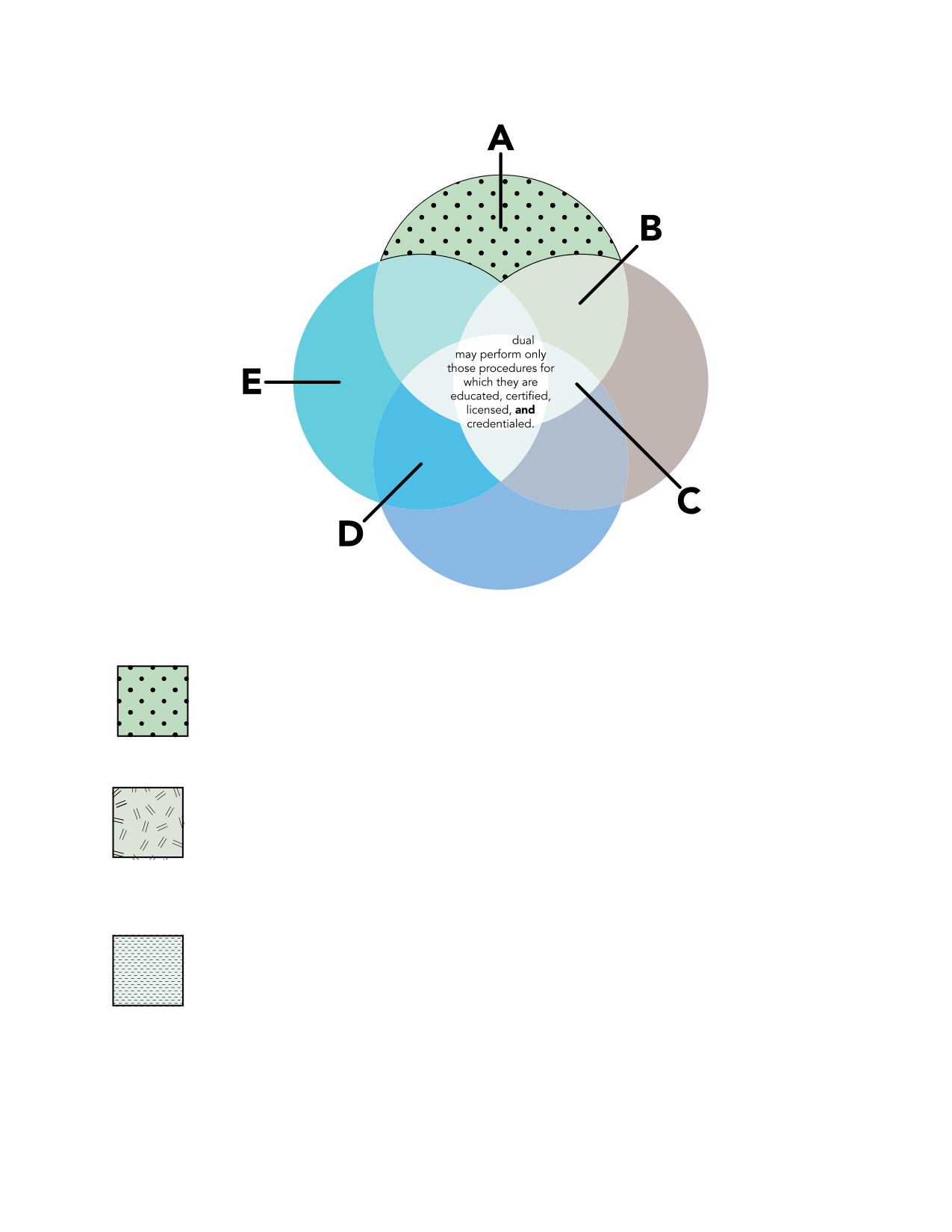
Figure 2. Skill and role situations not covered by all four elements for protection of the public
Region A: represents skills and roles for which a person has received education, but
is neither certified, licensed, nor credentialed. For example, an EMT in a paramedic
class is taught paramedic level skills; despite being trained, the EMT cannot
perform those skills until such time that the person is certified, licensed, and
credentialed by the local EMS medical director.
Region B: represents skills and roles in which a person has been educated and
certified, but are not part of the State license and credentialing. For example, a
paramedic who trained as a corpsman is educated and certified in basic suturing;
however, the skill is not considered “core” in the civilian sector. It would now be
out of that person’s scope of practice, and cannot be performed without special
review and authorization by the State and medical director.
Region C: represents skills and roles for which a person is educated, certified, and
licensed, but has no local/jurisdictional credentialing. For example, an off-duty
paramedic arriving at the scene of an incident outside of his jurisdiction usually is
not credentialed to perform advanced skills. In this case, performing an advanced
skill would represent a violation of his scope of practice.
11
Region D: represents skills or roles the State has authorized (licensed) but are not
addressed by initial education programs or certification processes. These skills
require local entities to assure the education and competency verification in addition
to local credentialing. For example, rapid sequence induction for intubation (RSI) in
some States is legally permitted, but usually not taught as part of the initial
education, nor is it part of the certification process. Some people (for example,
flight paramedics) may be authorized to perform RSI; however, this is only
permissible if the local entity assumes the responsibility for satisfying the
requirements of education and certification of competency. Credentialing remains
mandatory, and additional processes may be needed to satisfy local physician
medical direction that skills in this region are safe and appropriate. Nonetheless, all
four domains must be accomplished before any skill or role can be authorized.
Region E: represents skills or roles that a medical director wants people to perform
but for which they have not yet been educated, certified, or licensed to perform.
Typically, skills and roles in this region are new or emerging interventions that have
the potential to drive the future of EMS practice based on evolving evidence.
Innovations such as waveform capnography, CPAP, and the use of naloxone by
EMRs have all originated in this region. There is considerable State-to-State
variability in dealing with this situation. Some States have regulations that restrict
licensed people from functioning beyond their scope of practice. In others,
regulatory mechanisms exist that enable local physicians to assume responsibility
for the performance of new skills and roles performed by EMS providers. Most
States fall somewhere between these extremes and have mechanisms by which local
medical directors can obtain expansion/variance of a scope of practice if they can
demonstrate the need and appropriate mechanism to reasonably assure patient
safety. In these circumstances, if no process exists to obtain State level
authorization for additional skills or roles, then items that fall in Region E cannot be
practiced. Therefore, it is important that States recognize the need for innovation
and progression within the field, and establish processes for Region E interventions
to be performed; appropriate education, evaluation and certification under the
medical director’s oversight must occur prior to implementation. Only then can
these new interventions work their way into the standardized education,
certification, and licensing domains to become part of the ever-evolving standard of
care.
In many States, day-to-day clarification of scopes of practice, management of an appeal process,
or otherwise assuring the adequacy of medical direction is the role of the State EMS medical
director. Some States have licensure boards, often consisting of medical directors,
administrators, peers, and public representatives who help adjudicate and clarify scope of
practice issues.
12
Scope of Practice Versus Standard of Care
Scope of practice does not define a standard of care, nor does it define what should be done in a
given situation (i.e., it is not a practice guideline or protocol). It defines what is legally permitted
to be done by some or all the licensed people at that level, not what must be done. Table 1
describes some of the differences between scope of practice and standard of care.
Table 1. Relationship between scope of practice and standard of care
Scope of Practice
Standard of Care
Deals with the question, “Did
Deals with the question, “Are
Purpose
you do the right thing and did
you/were you allowed to do it?”
you do it properly?”
Act of commission or omission
Act of commission is a criminal
not in conformance with the
Legal implications
offense.
standard of care may lead to civil
liability.
May vary from person to person.
Situational, depends on many
Variability
Does not vary based on
variables.
circumstances.
Established by statute, rules,
Determined by scope of practice,
Defined by
regulations, precedent, and/or
literature, expert witnesses, and
licensure board interpretations.
juries.
Used to evaluate the totality of
It is difficult to regulate
circumstances. What would a
Miscellaneous
knowledge through scope of
reasonable EMS person do in the
practice.
same or similar circumstances?
A Comprehensive Approach to Safe and Effective Out-of-Hospital Care
Scope of practice is only one part of health care regulation and regulation is only one component
of a comprehensive approach to improved patient care and safety. The primary goal of State
regulation of EMS personnel is to protect the public from harm by ensuring EMS personnel
possess a minimum level of competency and professional behaviors. Safe and effective EMS
care is the cumulative effect of a cascade of many individual decisions involving every level of
EMS leadership, medical direction, supervision, management, and regulation. Safe and effective
patient care is the first priority and shared responsibility of everyone in an EMS agency and the
EMS system. Safe and effective care cannot be accomplished through any single activity, but is
best accomplished with an integrated system of checks and balances. All components of this
comprehensive approach to safe and effective patient care are mutually supportive of and
dependent upon each other.
13
III. Special Considerations
Liability in EMS Licensing and Oversight
A license is the official or legal permission to engage in or perform a regulated activity. In the
United States, State governments generally hold the authority to issue licenses including EMS
licenses. This is important because States ultimately need to be able to halt EMS personnel from
performing in ways that are dangerous or harmful to the public.
Licensing differs from certification in that certification is an affirmation of competence while
licensing is the authorization to perform the regulated health care activity. EMS personnel most
commonly function on behalf of some volunteer or career organization that acts in a supervisory
relationship as their employer.
EMS personnel have functioned under the supervision of physician medical directors since the
1960s. This physician oversight has been invaluable in assuring and improving the quality of
care provided by EMS personnel. The close relationship of EMS personnel and physicians in this
evolving health care discipline and descriptions of medical direction in early EMS curricula has
led to the impression and belief by some that medical direction physicians are extending their
licenses to authorize EMS practice. The logic of that belief would be that if an EMS person acted
incompetently or dangerously, the State would take an action on the physician medical director’s
license. Not only would that be ineffective in halting the EMS practitioner’s practice, it would
put at risk the physician who might be able to help correct whatever problem exists with the
EMS practitioner’s practice.
The concept that EMS personnel are somehow practicing “under the physician’s license” is
simply not accurate. The umbrella of physician supervision and collaboration can never be used
to replace the certification, scope of practice and individual responsibility of licensed EMS
personnel. EMS personnel hold their own licenses and the relevant State authority can restrict or
remove those licenses to stop incompetent or dangerous practice.
EMS personnel do, however, practice under the oversight of physician medical directors, who
are expected to provide appropriate supervision in the interest of public safety and are obligated
to revoke or restrict local credentialing as appropriate. Failure to provide appropriate oversight
can be determined to be inadequate supervision and expose the physician to professional
liability. In this respect, physician medical directors can be accountable, not for individual acts of
EMS personnel, but for their larger oversight role.
Scope of Practice for Special Populations
EMS personnel are expected to meet the urgent health care needs of all patients with
consideration to age, race, gender, cultural, religious, and ethnic considerations consistent with
their defined scope of practice. Recognized special populations include, but may not be limited
to, children; older patients; lesbian, gay, bisexual, transgender, and questioning (LGBTQ)
patients; bariatric patients; patients with disabilities; and patients with limited access to health
care due to geographic, demographic, socioeconomic, or other reasons.
14
Scope of Practice During Disasters, Public Health Emergencies, and
Extraordinary Circumstances
The Practice Model is intended to cover a range of situations and circumstances where EMS
personnel may provide emergency care. It is virtually impossible to create a scope of practice
that considers every unique situation, extraordinary circumstance, and possible practice situation.
In some cases, EMS personnel may be the only medically trained people at the scene of a
disaster when other health care resources are overwhelmed. This document cannot account for
every situation, but rather is designed to establish a system that works for entry-level personnel
under normal circumstances. States may wish to modify or expand the scope of practice of EMS
personnel in times of disaster or crisis with proper education, medical oversight, and quality
assurance to reasonably protect patient safety.
Scope of Practice for EMS Personnel Functioning in Nontraditional Roles
The delivery of health care has been transformed over the last half-century by exponential and
significant advances in medicine, research, and technology. The increasing portability and
affordability of diagnostic and treatment equipment and the demand to increase care quality
while reducing the cost of providing it has changed the demand for health care services in ways
that were not envisioned with the passage of the National Traffic and Motor Vehicle and Safety
Act of 1966 (Pub. L. No. 89-563, 80 Stat. 718). EMS personnel are identifying volunteer and
career opportunities in a range of nontraditional settings that fulfill an important public health,
public safety, and patient care need, such as large-scale concerts, sporting events and festivals,
industrial, frontier and wilderness environments, wildland fire settings, community health, and
more. Enabled by progressive rulemaking, occupational partners and innovative health care
systems have been successfully using educated, experienced, and licensed EMS personnel in
patient care settings, such as health clinics and hospitals for the past several years and they have
become recognized as an invaluable member of the health care team. States with practice
restrictions based on location, vehicle use, agency type, or transport provisions are encouraged to
review existing laws, regulations, and policies to identify barriers that prevent EMS personnel
from functioning in any setting at a level to the full extent of their education, certification,
licensure, and credentialing.
Specialty Care Delivered by Licensed EMS Personnel
Specialization of EMS personnel continues to be an evolving area of interest to the national EMS
community. This reflects a broader specialization trend that has occurred in medicine for over a
century as well ongoing specialization in nursing and other allied health fields. In general,
specialization occurs in response to an identified need for an expanded body of knowledge and
skills that are best served by a formal supplemental educational and credentialing process. In
many instances throughout health care the development and oversight of a specialty recognition
process is led by health professionals through specialty boards and implemented in conjunction
with State regulators. This approach effectively combines national consistency achieved through
the specialty certification process with the legal authority to practice.
Specialty recognition, credentialing, or endorsement is the outcome of a formally defined process
and mechanism for actively assessing that a person possesses and has mastered a unique body of
knowledge over and above entry-level cognitive, affective, and psychomotor domains of learning
and that the person can apply this knowledge and related skill set to improve care provided for
15
patients. Numerous health care and non-health care professions regulated by States have one or
more specialty certification areas that have been defined, in part, by members of the profession
itself. Several EMS specialties have emerged since the 2000 release of the Education Agenda.
Integration of specialty care requires appropriate educational preparation, a rigorous certification
process, integration with State scope of practice and licensure regulations, and local credentialing
by the medical director and EMS agency.
The legal authority for personnel to practice is established by State legislative action. Licensure
authority prohibits anyone from practicing a profession unless they are licensed and authorized
by the State, regardless of whether or not the person has been certified by a nongovernmental or
private organization.
States often approach specialization policy though two mechanisms. The first is development of
an additional licensure level beyond those described in this model. The second is to enact scope
of practice regulations at the State level that allow for additional practice, often called an
endorsement, in addition to an existing license level. This second approach is used extensively in
the medical and nursing professions. Both approaches benefit from ongoing cooperation and
coordination with nongovernmental specialty boards.
Military to Civilian EMS Transition
Military medics and corpsmen treat combat wounds in some of the harshest conditions that most
civilian EMS personnel will likely never see and they are undoubtedly well qualified to serve
domestic missions to achieve zero preventable deaths in the “war on trauma.” While support for
military-to-civilian EMS transition is broad, the cognitive, affective, and psychomotor
coursework for military medical trainees is variable depending on the individual service
member’s military assignment, which makes determining related equivalency and awarding
experiential credit for military service across five military branches somewhat complex. Much
work has been done to identify pathways for military corpsmen to transition to civilian EMS
positions.
• The U.S. Department of Defense has consolidated nearly all health care specialist training
across the armed services branches to the operational center at the Medical Education and
Training Campus (METC) at Fort Sam Houston, Texas.2 METC is working to ensure that
more service-required education and training programs satisfy the ever-increasing course
completion requirements of the civilian sector.
• EMS programs are increasingly providing “advanced placement” evaluation and
assistance to separating service members, particularly at the AEMT and paramedic levels.
• Over the next several years, health science training programs at METC will transition to
the METC Branch Campus of the College of Allied Health Sciences at the Uniformed
Services University (Bethesda, Maryland) so all military students will receive consistent
and recognizable transcripts from a regionally accredited, degree-granting institution of
higher education.
2 Fort Sam Houston is one of four elements, along with Randolph Air Force Base, Lackland Air Force Base, and
Martindale Army Airfield, that were merged in 2010 to create Joint Base San Antonio.
16
• States have developed updated models for conducting EMS personnel licensure
evaluations including the integration of EMS licensees from other States and from the
military setting.
Course completion of a program that meets or exceeds the Education Standards signifies that a
person has fulfilled entry-level education requirements that lead to National EMS Certification
provided by the National Registry of Emergency Medical Technicians. Active NREMT
certification has been demonstrated to be the most expeditious path for military personnel to seek
EMS licensure with the States.
17
IV. Description of Levels
Emergency Medical Responder
Description
The EMR is an out-of-hospital practitioner whose primary focus is to initiate immediate
lifesaving care to patients while ensuring patient access to the emergency medical services
system. EMRs possess the basic knowledge and skills necessary to provide lifesaving
interventions while awaiting additional EMS response and rely on an EMS or public safety
agency or larger scene response that includes other higher-level medical personnel. When
practicing in less populated areas, EMRs may have a low call volume coupled with being the
only care personnel for prolonged periods awaiting arrival of higher levels of care. An EMR may
assist, but should not be the highest-level person caring for a patient during ambulance transport.
EMRs are often the first to arrive on scene. They must quickly assess patient needs, initiate
treatment, and request additional resources.
Emergency medical responders:
• Function as part of a comprehensive EMS response, community, health, or public
safety system with clinical protocols and medical oversight.
• Perform basic interventions with minimal equipment to manage life threats, medical,
and psychological needs with minimal resources until other personnel can arrive.
• Are an important link in the 9-1-1 and emergency medical services systems.
Other Attributes
The focused and limited scope of this level makes it suitable for employee cross-training in
settings where emergency medical care is not the EMR’s primary job function. Examples include
firefighters, law enforcement, lifeguards, backcountry guides, community responders, industrial
workers, and similar jobs. EMRs advocate health and safety practices that may help reduce harm
to the public.
Education Requirements
Successful completion of an EMR training program that is:
• Compliant with a uniform national standard for quality, and
• Approved by the State or U.S. Territory.
Primary Role
Initiate patient care within the emergency medical services system.
Type of Education
Vocational/technical setting:
• Certificate awarded for successful completion.
18
Critical Thinking
Within a limited set of protocol-driven, clearly defined principles.
Level of Supervision
General medical oversight required. Assist higher-level personnel at the scene and during
transport.
Emergency Medical Technician
Description
An EMT is a health professional whose primary focus is to respond to, assess, and triage
emergent, urgent, and non-urgent requests for medical care, apply basic knowledge and skills
necessary to provide patient care and medical transportation to/from an emergency or health care
facility. Depending on patient’s needs and/or system resources, EMTs are sometimes the highest
level of care patients will receive during ambulance transport. An EMT is often paired with
higher levels of personnel as part of an ambulance crew or other responding group. With proper
supervision, an EMT may serve as a patient care team member in a hospital or health care setting
to the full extent of the EMT’s education, certification, licensure, and credentialing. In a
community setting, an EMT might visit patients at home and make observations reported to a
higher-level authority to help manage a patient’s care. When practicing in less populated areas,
EMTs may have low call volume coupled with being the only care personnel during prolonged
transports. EMTs may provide minimal supervision of lower level personnel. EMTs can be the
first to arrive on scene; they are expected to quickly assess patient conditions, provide stabilizing
measures, and request additional resources, as needed.
Emergency medical technicians:
• Function as part of a comprehensive EMS response, community, health, or public
safety system with defined clinical protocols and medical oversight.
• Perform interventions with the basic equipment typically found on an ambulance
(Recommended Essential Equipment for Basic Life Support and Advanced Life
Support Ground Ambulances 2020: A Joint Statement Position Statement, 2021) to
manage life threats, medical, and psychological needs.
• Are an important link within the continuum of the emergency care system from an out-
of-hospital response through the delivery of patients to definitive care.
Other Attributes
The majority of personnel in the EMS system are licensed at the EMT level. EMTs play many
important roles and possess the knowledge and skill set to initially manage any emergency until
a higher level of care can be accessed. In areas where AEMT or paramedic response is not
available, the EMT may be the highest level of EMS personnel a patient encounters before
reaching a hospital. EMTs advocate health and safety practices that may help reduce harm to the
public.
19
Education Requirements
Successful completion of an EMT training program that is:
• Compliant with a uniform national standard for quality, and
• Approved by the State or U.S. Territory.
Primary Role
Provide basic patient care and medical transportation within the emergency care system.
Type of Education
Vocational/Technical setting:
• Diploma or certificate awarded for successful completion.
Critical Thinking
Within a limited set of protocol-driven, clearly defined principles that:
o Engages in basic risk versus benefit analysis.
o Participates in making decisions about patient care, transport destinations, the need
for additional patient care resources, and similar judgments.
Level of Supervision
General medical oversight required. Some autonomy at basic life support level, assist higher-
level personnel at the scene and during patient transport.
Advanced Emergency Medical Technician
Description
The AEMT is a health professional whose primary focus is to respond to, assess, and triage non-
urgent, urgent, and emergent requests for medical care, apply basic and focused advanced
knowledge and skills necessary to provide patient care and/or medical transportation, and
facilitate access to a higher level of care when the needs of the patient exceed the capability level
of the AEMT. The additional preparation beyond EMT prepares an AEMT to improve patient
care in common emergency conditions for which reasonably safe, targeted, and evidence-based
interventions exist. Interventions within the AEMT scope of practice may carry more risk if not
performed properly than interventions authorized for the EMR/EMT levels. With proper
supervision, an AEMT may serve as a patient care team member in a hospital or health care
setting to the full extent of their education, certification, licensure, and credentialing. In a
community setting an AEMT might visit patients at home and make observations that are
reported to a higher-level authority to help manage a patient’s care.
Advanced emergency medical technicians:
• Function as part of a comprehensive EMS response, community, health, or public
safety system with medical oversight.
20
• Perform interventions with the basic and advanced equipment typically found on an
ambulance.
• Perform focused advanced skills and pharmacological interventions that are engineered
to mitigate specific life-threatening conditions, medical, and psychological conditions
with a targeted set of skills beyond the level of an EMT.
• Function as an important link from the scene into the health care system.
Other Attributes
The learning objectives and additional clinical preparation for AEMTs exceed the level of EMTs.
In areas where paramedic response is not available, the AEMT may be the highest level of EMS
personnel a patient encounters before reaching a hospital. AEMTs advocate health and safety
practices that may help reduce harm to the public.
Education Requirements
Successful completion of a nationally accredited or CAAHEP-accredited AEMT program that
meets all other State/Territorial requirements. (The target for full implementation of AEMT
program accreditation is January 1, 2025.)
Primary Role
Provide basic and focused advanced patient care; determine transportation needs in the health
care system.
Type of Education
Vocational/technical or academic setting:
• Diploma, certificate, or associates degree awarded for successful completion.
Critical Thinking
Within a limited set of protocol-driven, clearly defined principles that:
o Engages in basic risk versus benefit analysis.
o Participates in making decisions about patient care, transport destinations, the need
for additional patient care resources, and similar judgments.
Level of Supervision
Medical oversight required. Minimal autonomy for limited advanced skills. Provides some
supervision of lower level personnel. Assist higher-level personnel at the scene and during
transport.
Paramedic
Description
The paramedic is a health professional whose primary focus is to respond to, assess, and triage
emergent, urgent, and non-urgent requests for medical care, apply basic and advanced
knowledge and skills necessary to determine patient physiologic, psychological, and
21
psychosocial needs, administer medications, interpret and use diagnostic findings to implement
treatment, provide complex patient care, and facilitate referrals and/or access to a higher level of
care when the needs of the patient exceed the capability level of the paramedic. A paramedic
often serves as a patient care team member in a hospital or other health care setting to the full
extent of the paramedic’s education, certification, licensure, and credentialing. Paramedics may
work in community settings where they take on additional responsibilities monitoring and
evaluating the needs of at-risk patients, as well as intervening to mitigate conditions that could
lead to poor outcomes. Paramedics help educate patients and the public in the prevention and/or
management of medical, health, psychological, and safety issues.
Paramedics:
• Function as part of a comprehensive EMS response, community, health, or public
safety system with advanced clinical protocols and medical oversight.
• Perform interventions with the basic and advanced equipment typically found on an
ambulance, including diagnostic equipment approved by an agency medical director.
• May provide specialized interfacility care during transport.
• Are an important link in the continuum of health care.
Other Attributes
Paramedics commonly facilitate medical decisions at emergency scenes and during transport.
Paramedics work in a variety of specialty care settings including ground and air ambulances, and
in occupational, hospital, and community settings. Academic preparation enables paramedics to
use a wide range of pharmacology, airway, and monitoring devices as well as use critical
thinking skills to make complex judgments such as the need for transport from a field site,
alternate destination decisions, the level of personnel appropriate for transporting a patient, and
similar judgments. Due to the complexity of the paramedic scope of practice and the required
integration of knowledge and skills, many training programs are moving towards advanced
training at the Associate degree or higher level.
Education Requirements
Successful completion of a nationally accredited paramedic program that meets all other State
requirements.
Primary Role
Provide advanced care in a variety of settings; interpretive and diagnostic capabilities; determine
destination needs within the health care system; specialty transport.
Type of Education
Academic setting:
• Diploma, certificate, associate or bachelors/baccalaureate degree awarded for successful
completion.
22
Critical Thinking
Within a set of protocol-driven, clearly defined principles that:
o Engages in complex risk versus benefit analysis
o Participates in making decisions about patient care, transport destinations, the need
for additional patient care resources, and similar judgments
Level of Supervision
Paramedics operate with collaborative and accessible medical oversight, recognizing the need for
autonomous decision-making. Frequently provides supervision and coordination of lower level
personnel.
23
V. Depth and Breadth of Knowledge
“Breadth of learning refers to the full span of knowledge of a
subject. Depth of learning refers to the extent to which specific topics are
focused upon, amplified, and explored. Within any area of study, there will be
both breadth and depth of learning, which increase as students advance
their knowledge” (SUNY Empire State College, 2018).
It is important to note that the Practice Model and Education Standards assume a progression of
the three domains of learning (cognitive, affective, and psychomotor) that affect EMS practice
from the EMR level through the paramedic level. That is, licensed personnel at each level are
responsible for all knowledge, judgments, and skills at their level and all levels preceding their
level. The Practice Model also assumes that EMS personnel not only receive requisite
knowledge, but they can comprehend data, apply knowledge, analyze and synthesize
information, and evaluate the outcomes of their actions.
Typically, scope of practice refers to the tasks and roles that licensed personnel are legally
authorized to perform. In general, it does not describe the requisite knowledge necessary to
perform those tasks and roles competently. As outlined in the Education Agenda, the
responsibility for determining the knowledge necessary to safely perform skills, tasks, and roles
falls to the EMS educators.
The increasing depth and breadth of cognitive, affective, and psychomotor material envisioned
across each level of EMS licensure is graphically represented in Figure 3.
Figure 3. Increasing depth and breadth of knowledge from EMR through paramedic
24
VI. Interpretive Guidelines
The interpretive guidelines are used to help guide the users of this document by providing
additional insight into the discussions and deliberations that revolved around the decisions of the
expert panel. These interpretive guidelines represent the collective opinions of the expert panel in
June 2018 prior to incorporation of Change Notices 1.0 and 2.0 from March 29, 2021.
The interpretive guidelines are included to allow future users to apply similar methodology in
deciding appropriateness of new interventions at each personnel level. They are illustrative and
NOT all-inclusive.
I. Skill - Airway/Ventilation/Oxygenation
I. Skill - Airway/Ventilation/
EMR
EMT
AEMT
Paramedic
Oxygenation
Airway - nasal
X
X
X
Airway - oral
X
X
X
X
Airway - supraglottic
X
X
Bag-valve-mask (BVM)
X
X
X
X
CPAP
X
X
X
Chest decompression - needle
X
Chest tube placement - assist only
X
Chest tube - monitoring and management
X
Cricothyrotomy
X
End tidal CO2 monitoring and
X
X
interpretation of waveform capnography
Gastric decompression - NG Tube
X
Gastric decompression - OG Tube
X
Head tilt - chin lift
X
X
X
X
Endotracheal intubation
X
Jaw-thrust
X
X
X
X
25
I. Skill - Airway/Ventilation/
EMR
EMT
AEMT
Paramedic
Oxygenation
Mouth-to-barrier
X
X
X
X
Mouth-to-mask
X
X
X
X
Mouth-to-mouth
X
X
X
X
Mouth-to-nose
X
X
X
X
Mouth-to-stoma
X
X
X
X
Airway obstruction - dislodgement by
X
direct laryngoscopy
Airway obstruction - manual
X
X
X
X
dislodgement techniques
Oxygen therapy - High flow nasal
X
cannula
Oxygen therapy - Humidifiers
X
X
X
Oxygen therapy - Nasal cannula
X
X
X
X
Oxygen therapy - Non-rebreather mask
X
X
X
X
Oxygen therapy - partial rebreather mask
X
X
X
Oxygen therapy - simple face mask
X
X
X
Oxygen therapy - Venturi mask
X
X
X
Pulse oximetry
X
X
X
Suctioning - Upper airway
X
X
X
X
Suctioning - tracheobronchial of an
X
X
intubated patient
II. Skill - Cardiovascular/Circulation
II. Skill - Cardiovascular/ Circulation
EMR
EMT
AEMT
Paramedic
Cardiopulmonary resuscitation (CPR)
X
X
X
X
26
II. Skill - Cardiovascular/ Circulation
EMR
EMT
AEMT
Paramedic
Cardiac monitoring - 12-lead ECG
X
X
X
acquisition and transmission
Cardiac monitoring - 12-lead
X
electrocardiogram (interpretive)
Cardioversion - electrical
X
Defibrillation - automated / semi-
X
X
X
X
automated
Defibrillation - manual
X
Hemorrhage control - direct pressure
X
X
X
X
Hemorrhage control - tourniquet
X
X
X
X
Hemorrhage control - wound packing
X
X
X
X
Transvenous cardiac pacing - monitoring
X
and maintenance
Mechanical CPR device
X
X
X
Telemetric monitoring devices and
transmission of clinical data, including
X
X
X
video data
Transcutaneous pacing
X
III. Skill - Splinting, Spinal Motion Restriction, and Patient Restraint
III. Skill - Splinting, Spinal Motion
Restriction (SMR), and Patient
EMR
EMT
AEMT
Paramedic
Restraint
Cervical collar
X
X
X
X
Long spine board
X
X
X
Manual cervical stabilization
X
X
X
X
Seated SMR (KED, etc.)
X
X
X
Extremity stabilization - manual
X
X
X
X
Extremity splinting
X
X
X
X
27
III. Skill - Splinting, Spinal Motion
Restriction (SMR), and Patient
EMR
EMT
AEMT
Paramedic
Restraint
Splint - traction
X
X
X
Mechanical patient restraint
X
X
X
Emergency moves for endangered
X
X
X
X
patients
IV. Skill - Medication Administration - Routes
IV. Skill - Medication Administration
EMR
EMT
AEMT
Paramedic
- Routes3
Aerosolized/nebulized
X
X
X
Endotracheal tube
X
Inhaled
X
X
X
Intradermal
X
Intramuscular
X4
X
X
Intramuscular - auto-injector
X
X
X
X
Intranasal
X
X
Intranasal - unit-dosed, premeasured
X
X
X
X
Intraosseous - initiation, peds or adult
X
X
Intravenous
X
X
Mucosal/sublingual
X
X
X
Nasogastric
X
Oral
X
X
X
3 Limited to Medical Director Approved Medications.
4 Medical direction should ensure appropriate clinical experience and education, including the separate skills of
medication preparation, medication dilution, filling a syringe from a multi-dose vial, and changing the needle on a
syringe.
28
IV. Skill - Medication Administration
EMR
EMT
AEMT
Paramedic
- Routes3
Rectal
X
Subcutaneous
X
X
Topical
X
Transdermal
X
V. Medical Director Approved Medications
V. Medical Director Approved
EMR
EMT
AEMT
Paramedic
Medications
Use of epinephrine (auto-injector) for
anaphylaxis (supplied and carried by the
X
X
X
EMS agency)
Use of auto-injector antidotes for
X
X
X
X
chemical/hazardous material exposures
Use of opioid antagonist auto-injector for
X
X
X
X
suspected opioid overdose
Immunizations
X
X
Immunizations during a public health
X
X
X
emergency
Inhaled - beta agonist/bronchodilator and
X
X
X
anticholinergic for dyspnea and wheezing
Inhaled - monitor patient administered
X
X
(i.e., nitrous oxide)
Intranasal - opioid antagonist for
X
X
X
X
suspected opioid overdose
Intravenous
X5
X
Maintain infusion of blood or blood
X
products
Oral aspirin for chest pain of suspected
X
X
X
ischemic origin
Oral glucose for suspected hypoglycemia
X
X
X
5 Limited to analgesia, antinausea/antiemetic, dextrose, epinephrine, glucagon, naloxone, and others defined by
State/local protocol.
29
V. Medical Director Approved
EMR
EMT
AEMT
Paramedic
Medications
Oral over-the-counter (OTC) analgesics
X
X
X
for pain or fever
OTC medications, oral and topical
X
Parenteral analgesia for pain
X
X
Sublingual nitroglycerin for chest pain of
suspected ischemic origin - limited to
X
patient’s own prescribed medication
Sublingual nitroglycerin for chest pain of
X
X
suspected ischemic origin
Thrombolytics
X
VI. Skill - IV Initiation/Maintenance Fluids
VI. Skill - IV Initiation/Maintenance
EMR
EMT
AEMT
Paramedic
Fluids
Access indwelling catheters and
X
implanted central IV ports
Central line - monitoring
X
Intraosseous - initiation, peds or adult
X
X
Intravenous access
X
X
Intravenous initiation - peripheral
X
X
Intravenous - maintenance of non-
X
X
medicated IV fluids
Intravenous - maintenance of medicated
X
IV fluids
VII. Skill - Miscellaneous
VII. Skill - Miscellaneous
EMR
EMT
AEMT
Paramedic
Assisted delivery (childbirth)
X
X
X
X
Assisted complicated delivery
X
X
X
(childbirth)
30
VII. Skill - Miscellaneous
EMR
EMT
AEMT
Paramedic
Blood chemistry analysis
X
Blood pressure automated
X
X
X
Blood pressure - manual
X
X
X
X
Blood glucose monitoring
X
X
X
Eye irrigation
X
X
X
X
Eye irrigation -hands free irrigation using
X
sterile eye irrigation device
Patient transport
X
X
X
Specimen collection via nasal swab6
X
X
X
Venous blood sampling
X
X
6 Medical direction should ensure appropriate clinical experience to obtain an acceptable specimen in order to
minimize inaccurate results.
31
VII. Definitions
academic—Based on formal education; scholarly; conventional.
academic institution—A body or establishment instituted for an educational purpose and
providing college credits or awarding degrees.
accreditation—The granting of approval by an official review board after specific requirements
have been met. The review board is non-governmental and the review is collegial and based on
self-assessment, peer assessment, and judgment. The purpose of accreditation is student
protection and public accountability.
advanced level care—Care that has greater potential benefit to the patient, but also greater
potential risk to the patient if improperly or inappropriately performed, is more difficult to attain
and maintain competency in, and requires significant background knowledge in basic and
applied sciences. These include invasive and pharmacological interventions.
administered medication—The act of giving a medication to a patient that has been stocked and
carried by EMS personnel. The patient may not have previously been determined by a physician
to be an appropriate recipient of the medication.
certification—An external verification of the competencies that a person has achieved that
typically involves an examination process.
continuing education—The continual process of life-long learning.
competence—The application of knowledge and the interpersonal, decision-making and
psychomotor skills expected for the practice role, within the context of public health, safety and
welfare.
core content—The central elements of a professional field of study. The core content does not
specify the course of study.
credentialing—A clinical determination that is the responsibility of a physician medical director
that authorizes a practitioner to perform a skill or role.
curriculum—A particular course of study, often in a special field. For EMS education, it has
traditionally included detailed lesson plans. (The responsibility for EMS curriculum has shifted
to EMS educators and EMS programs based on the Education Standards.)
educational affiliation—An association with a learning institution (academic), the extent to
which can vary greatly from recognition to integration.
entry-level competence—The level of competence expected of a person who is about to begin a
career. Entry-level competence is sometimes defined as the minimum competence necessary to
practice safely and effectively.
EMS system—Any specific arrangement of emergency medical personnel, equipment, and
supplies designed to function in a coordinated fashion. May be local, regional, State, or national.
32
licensure—The legal authority granted to a person by the State to perform certain restricted
activities. A license is generally considered a privilege and not a right.
National EMS Core Content—The document that defines the domain of out-of-hospital care.
National EMS Education Program Accreditation—The national accreditation process for
institutions that sponsor EMS educational programs identified by the Education Agenda.
nationally recognized accrediting agency—An accrediting agency that the U.S. Secretary of
Education recognizes under Title 34 CFR Part 602—The Secretary’s Recognition of Accrediting
Agencies.
National EMS Education Standards—The document that defines the terminal learning
objectives for each Nationally defined EMS licensure level.
National EMS Scope of Practice Model—The document that defines scope of practice for each
Nationally defined EMS licensure level.
outcome—The short-, intermediate-, or long-term consequence or visible result of treatment,
particularly as it pertains to a patient's return to societal function.
practice analysis—A study conducted to determine the frequency and criticality of the tasks
performed in practice.
registration—A listing of people who have met the requirements of the registration service.
registration agency—Agency traditionally responsible for the delivery of a product used to
evaluate a chosen area. States may voluntarily adopt this product as part of their licensing
process. The registration agency is also responsible for gathering and housing data to support the
validity and reliability of their product.
regulation—Either a rule or a statute that prescribes the management, governance, or operating
parameters for a given group; tends to be a function of administrative agencies to which a
legislative body has delegated authority to promulgate rules/regulations to "regulate a given
industry or profession." Most regulations are intended to protect the public health, safety, and
welfare.
scope of practice—Defined parameters of various duties or services that may be provided by a
person with specific credentials. Whether regulated by rule, statute, or court decision, it
represents the limits of services a person may legally perform.
testing agency—Agency traditionally responsible for delivering a contracted examination. The
responsibility of interpreting the results and defending the validity of those judgments is placed
on the contractor.
vocational/technical—Refers to schools or programs specializing in the skilled trades, applied
sciences, technology, and career preparation.
33
Appendix A: History of Occupational Regulation in EMS
The development of modern civilian EMS stems largely from lessons learned in providing
medical care to soldiers injured in military conflict.
Building on these lessons, many rescue squads and ambulance services emerged in the civilian
sector, often community-based in nature. Hospitals and funeral homes were also common
sources of nascent response and transportation systems. While well-intentioned, most of these
personnel were untrained, poorly equipped, unorganized, and unsophisticated. The systems were
unregulated, and no State or national standards existed. By the 1960s, prehospital care in the
United States had evolved into a patchwork of well-intentioned but uncoordinated efforts. This
all changed in the mid-1960s.
In 1960, the President’s Committee for Traffic Safety recognized the need to address “Health,
Medical Care and Transportation of the Injured” to reduce the nation’s highway fatalities and
injuries.
In 1966, the National Academy of Sciences published a “white paper” report titled Accidental
Death and Disability: The Neglected Disease of Modern Society (Committee on Trauma &
Committee on Shock, 1966) that called for improved training of ambulance personnel. This
report quantified the magnitude of traffic-related death and disability while vividly describing the
deficiencies in prehospital care in the United States. The white paper made many
recommendations regarding ambulance systems, including a call for ambulance standards, State-
level policies and regulations, and adopting methodology for providing consistent ambulance
services at the local level.
The Highway Safety Act of 1966 ((P.L. 89-564, 80 Stat. 731) required each State to have a
highway safety program that complied with uniform Federal standards, including “emergency
services.” This provided the impetus for NHTSA’s early leadership role in EMS system
improvements. Initial NHTSA EMS efforts were focused on improving the education of
prehospital personnel such as the writing of the National Standard Curricula (NSC). Funding was
also provided to assist States with the development of State EMS offices. Subsequent NHTSA
efforts were oriented toward comprehensive EMS system development and included, for
instance, model State EMS legislation (Weingroff & Seabron, 2003).
The genesis of State EMS systems can also be traced to the early 1970s, when an unprecedented
level of funding from the Federal Government and the Robert Wood Johnson Foundation
prompted the establishment of regional EMS systems and demonstration projects throughout the
country. The Emergency Medical Services Systems Act of 1973 (enacted by Congress as Title
XII of the Public Health Service Act), yielded 8 years and over $300 million of investment in
EMS systems planning and implementation. The availability of EMS personnel and their training
were two components that eligible entities were required to focus on, resulting in the first
generation of legislation and regulation of EMS personnel levels (NHTSA, 1996).
Beginning in 1971, NHTSA published the first 81-hour curriculum for training EMT-Ambulance
personnel. Other NSC initiatives followed for EMT-paramedics and EMT-intermediates. These
propelled EMS systems forward in terms of standardizing the preparation of people filling roles
A-1
in providing prehospital emergency care. The NSC gave detailed “how to teach this course”
guidance down to the minute in how much time to spend on specific learning objectives. It was
initially helpful to instructors who had never taught anyone to care for patients in the prehospital
environment. The NSC became functionally synonymous with the scope of practice that EMS
personnel could perform. EMS textbooks were published to align with the NSC. Many States
referenced the NSC in their statutes and rules.
The practical effect of the NSC for EMS personnel was that an EMS person could generally do
what they were taught to do. The practice and educational preparation of most other allied health
professions begins with agreement on what a person in the job can do (i.e., a scope of practice)
and then developing the education resources to prepare a qualified person to do that role. For
EMS, education was driving practice and for all other professions, practice drives education.
As EMS systems began to mature, limitations of the NSC became increasingly evident. A few
examples of these limitations included:
• Integration of new technologies and evidence. When automated external defibrillators
(AEDs) became available and proved to be both reliable and effective for cardiac arrest
resuscitation, there had to be an update to the NSC before use of AEDs could be widely
taught to EMS personnel. The opposite was also true as EMS devices or practices began
to be shown as harmful. The only way to remove content from teaching and practice was
to revise the NSC.
• The professionalism of EMS educators. EMS courses began to be taught in many areas
by experienced adult educators. These educators questioned the constraints of the NSC
when they found they needed more or less time than what was called for. The NSC
provided no flexibility for how to deliver EMS courses.
• State EMS Office role conflict. States have the responsibility of setting scopes of
practice for all levels of health care personnel and those who adopted the NSC
functionally handed off this responsibility to a national document. There was no effective
way structurally for States to reference the NSC and make local adaptations to both
teaching and practice.
As a practical matter, the NSC also proved difficult and expensive to update. Controversy on
periodic revisions stemmed from debate about EMS practice rather than updates to the education
program.
The development of the EMS Agenda for the Future and the follow-on EMS Education Agenda
for the Future: A Systems Approach called for a new model of EMS education. Central to the
new model was a National EMS Scope of Practice Model (SoPM) setting a floor on expectations
for what people would be prepared to do in their roles. Once the SoPM was established, National
EMS Education Standards were developed to guide instructors in the depth and breadth of
content to be taught. The development of curricula on how best to teach the courses at each level
is now left to individual instructors. EMS publishers provide an array of texts and other
educational support material.
One function of State EMS offices was to ensure the competence of the State’s EMS personnel.
States employed many strategies to help assure safe and effective EMS practice, including
A-2
licensure and certification. Unfortunately, these terms developed multiple connotations in EMS.
In some cases, the meanings differed from other disciplines, causing confusion and inconsistency
at the national level.
In 1981, the Omnibus Budget Reconciliation Act (OBRA) eliminated the categorical Federal
funding to States established by the 1973 EMS Systems Act in favor of block grants to States for
preventive health and health services. This change shifted responsibility for EMS from the
Federal to the State level (Committee on the Future of Emergency Care in the United States
Health System, Board on Health Care Services, 2007). By 1990 EMS in the United States had
enjoyed many successes. Not only did EMS systems grow, but EMS became a career and
volunteer activity for hundreds of thousands of talented, committed, and dedicated people.
Emergency medical care was available to virtually every person in the country by simply dialing
9-1-1 from any telephone. Despite this progress, EMS was affected by many factors in the
broader health care system.
In 1992, the National Association of EMS Physicians and the National Association of State EMS
Directors saw a need for a long-term strategic direction for EMS, and the EMS Agenda for the
Future was initiated with support from NHTSA and the Maternal and Child Health Bureau of the
Health Resources and Services Administration. Published in 1996, the EMS Agenda for the
Future proposed a bold vision for greater integration of EMS into the U.S. health care system.
In 1993, the National Registry of EMTs released the National Emergency Medical Services
Education and Practice Blueprint (Brown et al., 1993) The Blueprint defined an EMS
educational and training system that would provide both the flexibility and structure needed to
guide the development of national standard training curricula and guide the issuance of licensure
and certification by the individual States.
In 1998, the Pew Health Professions Commission Taskforce on Health Care Workforce
Regulation published Strengthening Consumer Protection: Priorities for Health Care Workforce
Regulation (Finocchio et al., 1998). The report recommended that a national policy advisory
board develop standards, including model legislative language, for uniform scopes of practice
authority for the health professions. The report emphasized the need for States to enact and
implement scopes of practice that are nationally uniform and based on the standards and models
developed by the national policy advisory body.
Also in 1998, demonstrating their commitment to the EMS Agenda, NHTSA and HRSA jointly
supported a two-year project to develop an integrated system of EMS regulation, education,
certification, licensure, and educational program accreditation. The result was the EMS
Education Agenda for the Future: A Systems Approach (NHTSA, 2000), which recognized the
need for a systematic approach to meet the needs of the current EMS system while moving
toward the vision proposed in the 1996 EMS Agenda for the Future. The EMS Education Agenda
called for a more traditional approach to licensing EMS personnel.
A coordinated national EMS system continues to be in the best interest of States, EMS
personnel, and the public. State EMS offices, while working in cooperation with their
stakeholders, should implement scope of practice regulations that are as close as possible to
those described in the National EMS Scope of Practice Model. This will help with professional
A-3
recognition of EMS personnel, facilitate reciprocity, decrease confusion, and enable the
development of high quality support systems to benefit the entire system.
A-4
Appendix B: Changes and Considerations From the 2007 Practice
Model
The 2018 version of the Practice Model represents one frame of a motion picture of evolving
EMS practice. Research and technology are constantly evolving and will continue to drive
changes to EMS education and practice. Having the context for what did or did not change from
the 2007 Practice Model may be useful in understanding some of the content in this document.
The entire revision team deeply appreciates the thoughtful input received from the EMS
community during multiple public reviews. While not every comment or suggestion was
ultimately incorporated in the revision, all of them were considered and collectively played an
important role in shaping the 2018 National EMS Scope of Practice Model.
Much of the effort in updating the 2018 Practice Model was focused on describing the
interdependence between education, certification, licensure and credentialing, and the narrative
descriptions of each level, while attempting to more clearly document expectations in a way to
minimize scope “creep” between the levels. While it is tempting to look at the specific list of
skills included in the Interpretive Guidelines section, that list cannot be used to provide a
complete understanding of the 2018 Practice Model for any level. The Interpretive Guidelines
included in this document are intended to illustrate the kinds of skills and interventions personnel
at various levels are educated, certified, licensed, and otherwise qualified to do. This does not
mean that every person at a particular level will routinely do every skill on the Interpretive
Guideline list. One example of this is the obtaining and transmitting 12-lead electrocardiograms
(ECG) at the EMT level. The expert panel recognized the strong research evidence to support the
value of this skill for improving patient outcomes, especially in rural settings; however, some
systems have readily available paramedics and EMTs might not be used to provide this
technology in such systems. The expert panel also recognized that the cost of technology might
be prohibitive for some EMT level agencies. Accordingly, this is one example of a skill EMTs
(and other levels of EMS personnel) will routinely be educated and tested about, but that
preparation does not imply that the technology must or even should be available in every practice
setting where EMTs function. In other words, such a task should be valued and permitted but not
required if the necessary equipment and resources to complete the task are not available to
personnel.
Scope of practice is not a clinical description of what should be done or how it should be done.
These elements are a combination of education and medical direction. Each state has the
authority and responsibility to establish the scopes of practice for their state. The increasing
depth and breadth of cognitive, affective, and psychomotor material envisioned across each level
of EMS licensure are used to help states define acceptable practice parameters.
The COVID-19 national public health emergency led to a reevaluation of the ability of EMTs to
participate in the administration of disease countermeasures, such as the IM administration of
vaccines. Educational programs should communicate and coordinate with their state EMS office
prior to using the National EMS Education Standards to ensure that:
• the state has adopted the scope of practice levels consistent with the revised Scope of
Practice Model.
• a transition process for existing EMS clinicians has been identified.
B-1
• adequate instruction, procedural, written, and/or digital support materials are in place for
educational content delivery.
• certification is based on the National EMS Education Standards.
• a process has been identified for credentialing by an EMS medical director.
• supervisory capabilities are available to support the activity, intervention, and role.
As community needs evolve, states maintain the regulatory flexibility to permit licensees to
exceed the Practice Model but they do so along with the need to develop learning objectives,
educational content, competency measures, and a credentialing process to ensure safe practice.
Nomenclature
The expert panel considered a recommendation (Innovative Practices of the EMS Workforce,
2017) from the National EMS Advisory Council (NEMSAC) to recognize and use the term
“paramedicine” to describe the professional discipline that is currently recognized as EMS.
Because the national discussion on this important topic has just begun, the group ultimately did
not support a change to nomenclature for the 2018 Practice Model revision. When greater
consensus among national EMS organizations and other EMS stakeholders is achieved, the
recommendation could be considered during the next revision cycle.
Academic Degree Requirements for Paramedics
Consideration was given by the expert panel to calling for an associate degree as an entry-level
education requirement for paramedics. Arguments in favor of this change include recognition of
the complexity and sometimes ambiguity inherent to paramedic practice, increasing the
professional recognition of paramedics, a logical pathway towards better compensation, and
comparability with other health care professions. Arguments against this change include the
challenges of integrating associate degree academic preparation into fire, hospital or other non-
academic institution based programs. Concerns were voiced that increasing academic preparation
requirements could increase the cost of education, shrink the hiring pool of paramedics for
employers and threaten existing paramedic level service delivery programs. The expert panel
considers this topic as a subject worthy of further national debate and exploration. While the
group clearly recognizes education as the foundation of any profession’s scope of practice, the
difficulty of considering transitional variables, such as grandfathering existing personnel and
programs, workforce recruitment, and retention, was beyond the scope of this project.
Attendant Qualifications for Ambulance Transport
The expert panel was asked to evaluate the practice of EMRs serving as part of an ambulance
crew, and more specifically as the primary care giver during ambulance transport; meaning an
EMR attending to the patient in the back of an ambulance en route to a medical facility without a
higher level of licensed EMS practitioner physically present in the same compartment as the
patient.
While defining ambulance crew composition is outside the scope of this document, the expert
panel did consider the lack of scientific evidence to support the use of EMRs to fulfill clinical
staffing requirements during the transport phase of EMS care when it developed the description
for an EMR in Section IV of this document. Considering the education, certification, licensing,
B-2
and credentialing processes pertaining to EMS practice, the expert panel reaffirms that while an
EMR may be used to assist patient care in an ambulance, an EMT or higher level personnel must
be physically present in the patient compartment and assume responsibility for the delivery of
care during transport.
Patients transported by ambulance require ongoing assessment and treatment that is intended to
ensure their continued safety and positive clinical outcomes. Patient condition during transport
can decompensate quickly, requiring a greater depth and breadth of knowledge that enables EMS
personnel to anticipate and interpret subtle physiologic changes and provide interventions that
are not taught at the EMR level.
States are encouraged to help communities identify resources to ensure licensed practitioners at
the EMT or higher levels are available to care for patients that require transport by an
ambulance.
Portable Technologies
Exponential improvements and availability of portable technologies, such as left ventricular
assist devices (LVAD), patient-controlled analgesia pumps, transport ventilators, etc., creates
complex challenges for education and credentialing that did not exist a decade ago. Such patient
care needs may be encountered by all levels of personnel in community and 9-1-1 settings and
with patients originating in health care facilities during transfers. Even when the patient’s
condition would not require EMS interaction with a device or intervention during transport, the
variability of circumstances under which EMS delivery systems will likely encounter these
patients steered the expert panel away from a call for specific levels of EMS personnel to be
qualified in managing complex technologies, including non-invasive diagnostic equipment (e.g.,
ultrasound.) The actions of EMS personnel regarding portable equipment and technologies have
intentionally been left to local medical director credentialing.
Deletions/Updates
Evolution and fine-tuning of the Interpretive Guidelines to eliminate redundancy resulted in
changes that may be perceived as certain skills being eliminated from the Practice Model. The
only “true” deletions include military anti-shock trousers (MAST)/pneumatic anti-shock garment
(PASG), spinal “immobilization” (this terminology has been revised), demand valves, carotid
massage, automated transport ventilators at the EMT level (deferred to a decision by the medical
director), and modified jaw thrust for trauma. Newer evidence suggests that these references are
antiquated and/or no longer recommended. Spinal immobilization was amended to reflect current
thinking on spinal motion restriction and additional skills were incorporated at all levels. The
topic of “assisting” patients with their own prescribed medications was also revisited. The
mechanical task of opening bottles or providing a drink of water aside, aid associated with
placing a tablet in the patient’s mouth, activating an inhaler, or delivering a dose of medication
via autoinjector is clearly an act of medication administration. Administration of medication
requires a thorough understanding of the drug, including how it moves through the body, when it
needs to be administered, possible side effects and dangerous reactions, proper storage, handling,
and disposal, and an entire process for confirming patient identification (for the prescription),
route, dose, timing, expiration dates, and that the container contains the medication the label says
is intended. Medication errors happen all too often in the United States, even when drugs are
B-3
given by professionals. In fact, medication errors are the cause of 1.3 million injuries each year.
These errors are due to the wrong drug, dose, timing, or route of administration. Preparing,
giving, and evaluating the effectiveness of prescription and non-prescription medication is not in
the scope of practice for EMS personnel, with the exceptions described in the Interpretive
Guidelines and those authorized by the State and physician medical director. References to
“assist patients in taking their own prescribed medications” have been identified as confusing by
educators and practitioners and the expert panel has advised they be removed from the Practice
Model.
Other elements that were removed from the 2007 Interpretive Guidelines were intended to
minimize redundancy and not intended to reflect removal from the Practice Model. Examples
include cricoid pressure (considered to be a component of airway management) and therapeutic
PEEP (considered to be a component of ventilator management at the paramedic level).
Additions to the Interpretive Guidelines
The expert panel considered several proposed additions to the Interpretive Guidelines and an
NREMT Practice Analysis was used to evaluate the frequency and level of skills. Sensitive to the
impact of increased didactic and psychomotor instruction that effectively translates to added
course time and potential monetary expense to programs and student candidates, the expert panel
considered changes in practice by addressing the following questions:
1. Is there evidence that the procedure or skill is beneficial to public health?
2. What is the clinical evidence that the new skill or technique as used by EMS personnel
will promote access to quality health care or improve patient outcomes?
3. What is the appropriate level of education, certification, licensure, and credentialing
needed to safely perform the task/skill?
Several suggestions received by the expert panel were felt to be above the level of entry-level
personnel and were not included. In particular, interventions that are regularly performed by the
lay public, such as self-administered medications, blood glucose monitoring, and pulse oximetry
were considered at length. It is noted that patients receive health education and training from
their primary care providers to perform activities that are tailored to their personal medical
histories and response to prescribed interventions over time. The expert panel maintains that
licensed people at all levels are highly accountable for the medical care they provide as well as
the maintenance and calibration of medical equipment used during patient encounters. Health
professionals are not only educated to provide interventions, they receive education in the
associated risks and potential complications, related pharmacology (when medications are
involved), and they are able to analyze the effectiveness of treatment. Perhaps the most critical
difference between the lay public and EMS personnel assuming responsibility for a particular
task/skill is that licensed people are taught to assimilate information and apply critical thinking
skills to know when and when not to apply an intervention in particular scenarios. In the example
of blood glucose monitoring, it is also important to note that the use of such devices by EMS
personnel invokes the Federal-level Clinical Laboratory Improvement Amendments (42 CFR
493, Laboratory Requirements, 2011)) to the Public Health Services Act. In regard to pulse
oximeters (that can be purchased inexpensively at discount stores), there is no evidence to
support an assertion that a pulse oximeter in the hands of an EMR (or other level of EMS
practitioner) is more effective than hands-on patient assessment in determining the need for
B-4
supplemental oxygen, although false readings from a variety of causes have resulted in
undetected patient compromise and a false sense of security by users. Such equipment are
adjuncts that should be used judiciously in conjunction with sound clinical judgment. Of the
remaining tasks and skills, the expert panel deliberated which level was most appropriate to
implement the task or skill.
The expert panel concluded that spinal motion restriction using cervical collars and basic
splinting for suspected extremity fractures were appropriate additions to the Practice Model at
the EMR level.
At the EMT level, the expert panel agreed on the administration of beta agonists and
anticholinergics, oral over-the-counter (OTC) analgesics for pain or fever, blood glucose
monitoring, continuous positive airway pressure (CPAP) devices, and pulse oximetry. The expert
panel also agrees that there will be instances of lower-level personnel aiding higher levels,
assisting with skills of the high-level personnel when the higher-level personnel does the key
portion of the procedure, the assistance is authorized by the medical director, the assistance is in
the direct presence and supervision of the higher-level personnel, and the assistance is permitted
by the State.
The use of supraglottic airways (SGA) and waveform capnography at the EMT level was
extensively debated. Several public commenters expressed lack of support on draft language that
proposed to add them to the interpretive guidelines for EMTs during the national engagement
period. The expert panel was evenly divided on the topic. Several “pros” and “cons” for adding
SGA and waveform capnography for EMTs at the national level were considered. It was noted
that several jurisdictions are already using SGA as a more definitive airway than the BVM
although some panelists added that the BVM is not taught well or used effectively in many cases.
Major “cons” point to a critical patient safety concern if an SGA is not placed properly or is not
verified using waveform capnography. Many felt the education for SGA and waveform
capnography would add significant time and increase expense to the EMT program, a
consideration that was worrisome and expressed by the public and members of the expert panel.
Others suggested that BVM ventilation may not be done well, but a misplaced advanced airway
could lead to no ventilation and patient detriment or demise. Finally, a limited review of the
literature highlights the fact there is a general lack of evidence that SGA improves outcomes in
cardiac arrest or other etiologies over BVM ventilation. The expert panel concluded that while
SGA and waveform capnography could successfully be taught and measured at the EMT level, it
is an intervention that should be reserved for an experienced practitioner and therefore, is not a
prudent addition as an entry-level skill to the Practice Model for an EMT now. Some States
currently allow licensed EMTs to use SGA and/or waveform capnography although this activity
is dependent on strict oversight by a physician medical director and is not permitted in all
jurisdictions.
Additions to the AEMT level include monitoring and interpretation of waveform capnography,
additional intravenous medications (such as epinephrine during cardiac arrest and ondansetron),
and parenteral analgesia for pain.
B-5
The paramedic scope of practice was considered most in alignment with current practice,
however, the expert panel recommended the addition of high-flow nasal cannula, and expanded
use of OTC medications.
None of these changes should be considered “in effect” until officially adopted by the State
licensing authority and medical director.
B-6
Appendix C: Legal Differences Between Certification and Licensure
Used with permission from the National Registry of Emergency Medical Technicians:
Although the general public continues to use the terms interchangeably, there are important
functional distinctions between certification and licensure.
Certification
The federal government has defined “certification” as the process by which a non-governmental
organization grants recognition to an individual who has met predetermined qualifications
specified by that organization.7 Similarly, the National Commission for Certifying Agencies
defines certification as “a process, often voluntary, by which individuals who have demonstrated
the level of knowledge and skill required in the profession, occupation, role, or skill are
identified to the public and other stakeholders.”
Accordingly, there are three hallmarks of certification (as functionally defined). Certification is:
1. a voluntary process;
2. done by a private organization; and
3. a way to provide the public information on those individuals who have successfully
completed the certification process (usually entailing successful completion of
educational and testing requirements) and demonstrated their ability to perform their
profession competently.
Nearly every profession certifies its members in some way, but a prime example is medicine.
Private certifying boards certify physician specialists. Although certification may assist a
physician in obtaining hospital privileges, or participating as a preferred provider within a health
insurer’s network, it does not affect his legal authority to practice medicine. For instance, a
surgeon can practice medicine in any state in which he is licensed regardless of whether or not he
is certified by the American Board of Surgery.
Licensure
Licensure, on the other hand, is the state’s grant of legal authority, pursuant to the state’s police
powers, to practice a profession within a designated scope of practice. Under the licensure
system, states define, by statute, the tasks and function or scope of practice of a profession and
provide that these tasks may be legally performed only by those who are licensed. As such,
licensure prohibits anyone from practicing the profession who is not licensed, regardless of
whether or not the individual has been certified by a private organization.
What if My State Certifies, Not Licenses, EMS Professionals?
Confusion between the terms “certification” and “licensure” arises because many states call their
licensure processes “certification,” particularly when they incorporate the standards and
requirements of private certifying bodies in their licensing statutes and require that an individual
7 34 U.S.C. § 602. The Secretary’s Recognition of Accrediting Agencies (2014). Available at
C-1
be certified in order to have state authorization to practice. The use of certification by the
NREMT by some states as a basis for granting individuals the right to practice as EMTs and
calling the authorization granted “certification” is an example of this practice. Nevertheless,
certification by the National Registry, by itself, does not give an individual the right to practice.
Regardless of what descriptive title is used by a state agency, if an occupation has a
statutorily or regulatorily defined scope of practice and only individuals authorized by the
state can perform those functions and activities, the authorized individuals are licensed. It
does not matter if the authorization is called something other than a license; the
authorization has the legal effect of a license.
In summay, the NREMT is a private certifying organization. The various State EMS Offices or
like agencies serve as the state licensing agencies. Certification by the NREMT is a distinct
process from licensure; and it serves the important independent purpose of identifying for the
public, state licensure agencies and employers, those individuals who have successfully
completed the Registry’s educational requirements and demonstrated their skills and abilities in
the mandated examinations. Furthermore, the NREMT’s tracking of adverse licensure actions
and criminal convictions provides an important source of information, which protects the public
and aids in the mobility of EMS providers.
C-2
Appendix D: Acknowledgements
Subject Matter Expert Panel
Co-Chairmen
Scott Bourn, PhD, RN, FACHE
Securisyn Medical & ESO Solutions
Parker, CO
Peter P. Taillac, MD, FACEP, FAEMS
University of Utah School of Medicine
State EMS Medical Director, Utah Department of Health
Salt Lake City, UT
American Academy of Pediatrics
Brian Moore, MD, FAAP
Associate Professor of Emergency Medicine, University of New Mexico
Albuquerque, NM
American Ambulance Association
John J. Russell, MD, FAAP
American Ambulance Association
Cape Girardeau, MO
American College of Emergency Physicians
David Lehrfeld, MD
Portland, OR
American College of Surgeons, Committee on Trauma
Mark L. Gestring, MD, FACS
Chair, EMS Committee, American College of Surgeons Committee on Trauma
Rochester, NY
International Association of Fire Chiefs
David S. Becker, MA, Paramedic, EFO
EMS Section, International Association of Fire Chiefs
St. Louis, MO
International Association of Fire Fighters
Robert McClintock, FF, NRP, BSBA
IAFF - Fire-Based EMS Specialist
Washington, DC
International Association of Flight and Critical Care Paramedics
Aaron W. Byrd, DHSc, MPA, NRP, FP-C
President, IAFCCP
Cary, NC
D-1
National Association of EMS Physicians
John M. Gallagher, MD, FAEMS
Wichita/Sedgwick County EMS System
Wichita, KS
National Association of EMS Educators
Michael G. Miller, EdD, RN, NRP
Creighton University
Omaha, NE
National EMS Management Association
Sean Caffrey, MBA, FACPE, NRP
University of Colorado School of Medicine
Denver, CO
National Registry of Emergency Medical Technicians
Ashish R. Panchal, MD, PhD
Associate Professor, Department of Emergency Medicine, The Ohio State University Wexner Medical
Center; Research and Fellowship Director, The National Registry of EMTs
Columbus, OH
National Association of Emergency Medical Technicians
Dennis Rowe, EMT-P
President, National Association of NAEMT; Director of Government and Industry Relations, Priority
Ambulance Corporation
Knoxville, TN
National Association of State EMS Officials
Kyle Thornton, MS, Paramedic
NM EMS Bureau Chief
NASEMSO President-Elect
Albuquerque, NM
Jim DeTienne, Supervisor
Montana EMS & Trauma, DPHHS
Helena, MT
Independent Participants
Leaugeay C. Barnes, MS, NRP, FP-C, NCEE
UH- Kapi'olani Community College
Honolulu, HI
Ann Bellows, RN, NRP, Ed D
EMS Program Director, New Mexico State University, Dona Ana Community College
Las Cruces, NM
Richard Kamin, MD, FACEP
EMS Program Director, UConn Health, Medical Director, CT DPH OEMS
West Hartford, CT
Douglas F. Kupas, MD, EMT-P, FAEMS, FACEP
Geisinger Health
Danville, PA
D-2
Jules K. Scadden, PM
Director of EMS-Dysart Ambulance Service
Dysart, IA
Contributors
Skip Kirkwood, MS, JD, NRP, CEMSO, FACPE
Wake Forest, NC
Gregg Margolis, PhD, NRP
National Academies of Science Engineering and Medicine
Washington, DC
Michael Touchstone, BS, FACPE
Fire Paramedic Deputy Chief, EMS Operations
Philadelphia Fire Department
Philadelphia, PA
Technical Writers
Kathy Robinson, RN
Dan Manz
Project Manager
Kathy Robinson, RN
Project Coordinator and Graphic Designer
Zoe Renfro, BA, QAS
Executive Staff
Dia Gainor, MPA
Elizabeth Armstrong, MAM
D-3
Appendix E: References
42 CFR 493, Laboratory Requirements (2011). Available at www.gpo.gov/fdsys/pkg/USCODE-
2011-title42/pdf/USCODE-2011-title42-chap6A-subchapII-partF-subpart2-sec263a.pdf
See also www.cms.gov/CLIA
American College of Surgeons Committee on Trauma, American College of Emergency
Physicians, National Association of EMS Physicians, Pediatric Equipment Guidelines
Committee -EMSC Partnership for Children, American Academy of Pediatrics. (2012).
Equipment for ambulances. Available at
Brown, W. E., Chew, J., Dawson, D. E., Garrison, H. G., O'Keefe, M., & National Registry of
Emergency Medical Technicians. (1993, September). National emergency medical
services education and practice blueprint. National EMS Education and Practice
Blueprint Project Task Force.
Committee on the Future of Emergency Care in the United States Health System, Board on
Health Care Services. (2007). Emergency medical services at the crossroads. National
Academies Press.
Committee on Trauma & Committee on Shock. (1966; commemorative edition 1977).
Accidental death and disability: The neglected disease of modern society (Unnumbered
report). National Highway Traffic Safety Administration. Available at
Dent v. West Virginia, 129 U.S. 114 (1889). Available at
Department of Health, Education, and Welfare. (1971, June). Report on licensure and related
health personnel credentialing (DHEW Publication No. HSM-72-11). Available at
Emergency Medical Services Systems Act of 1973. Pub. L. 93-154 87 Stat. 594-605. Available
Finocchio, L., Dower, C., Blick, N., Gragnola, C., & Taskforce on Health Care Workforce
Regulation. (1998). Strengthening consumer protection: Priorities for health care
ucsf.edu/files/publication-pdf/4.1%20%28Report%29%201998-12_Strengthening_-
Consumer_Protection_Priorities_for_Health_Care_Workforce_Regulation.pdf
Innovative Practices of the EMS Workforce [committee] (2017, August 15). Changing the
nomenclature of emergency medical services is necessary. National EMS Advisory
Council. Available at
pdf
E-1
Institute of Medicine of the National Academies. (2010). The future of nursing focus on scope of
practice.
Mears, G., Armstrong, B., Fernandez, A. R., Mann, N. C., McGinnis, K., Mears, C. R., Sanddal,
N. D., Sanddal, T. L., & Shofer, F. S. (2012, December). 2011 National EMS assessment.
National Highway Traffic Safety Administration. Available at
National Association of State EMS Officials. (2014). Report to the National EMS Advisory
Council on statewide implementation of the education agenda.
National Commission for Certifying Agencies. (2004, September). Standards for the
accreditation of certification programs. National Organization for Competency
Assurance. Available at
National Highway Traffic Safety Administration. (1996). National EMS agenda for the future
(Unnumbered report). Available at www.ems.gov/pdf/2010/EMSAgendaWeb_7-06-
10.pdf%20
NHTSA. (2000). National EMS education agenda for the future: A systems approach
(Unnumbered report). Available at www.ems.gov/pdf/education/EMS-Education-for-the-
Future-A-Systems-Approach/EMS_Education_Agenda.pdf
NHTSA. (2005, July). National EMS core content (Report No. DOT HS 809 898). Available at
Approach/National_EMS_Core_Content.pdf
NHTSA. (2007, February). National EMS scope of practice model (Report No. DOT HS 810
657). Available at www.ems.gov/pdf/education/EMS-Education-for-the-Future-A-
Systems-Approach/National_EMS_Scope_Practice_Model.pdf
NHTSA. (2009, January). National Emergency Medical Services education standards (Report
No. DOT HS 811 077A). Available at www.ems.gov/pdf/National-EMS-Education-
Standards-FINAL-Jan-2009.pdf
National Registry of Emergency Medical Technicians. (2017, April 13). National Registry data,
National Traffic and Motor Vehicle Safety Act of 1966. Pub. L. No. 89-563, 80 Stat. 718 (1966).
North Carolinas State Board of Dental Examiners v. FTC, 574 U.S. (2015). Available at
E-2
SUNY Empire State College. (2018). Breadth and depth of learning (Web page). Available at
learning/breadth-and-depth/
Weingroff, R., F. & Seabron, S. (2003). President Dwight D. Eisenhower and the Federal role in
highway safety. FHWA.
E-3
DOT HS 813 151
August 2021
15238-080321-v4